Exotic Car Detailing: What to Ask Before You Hire
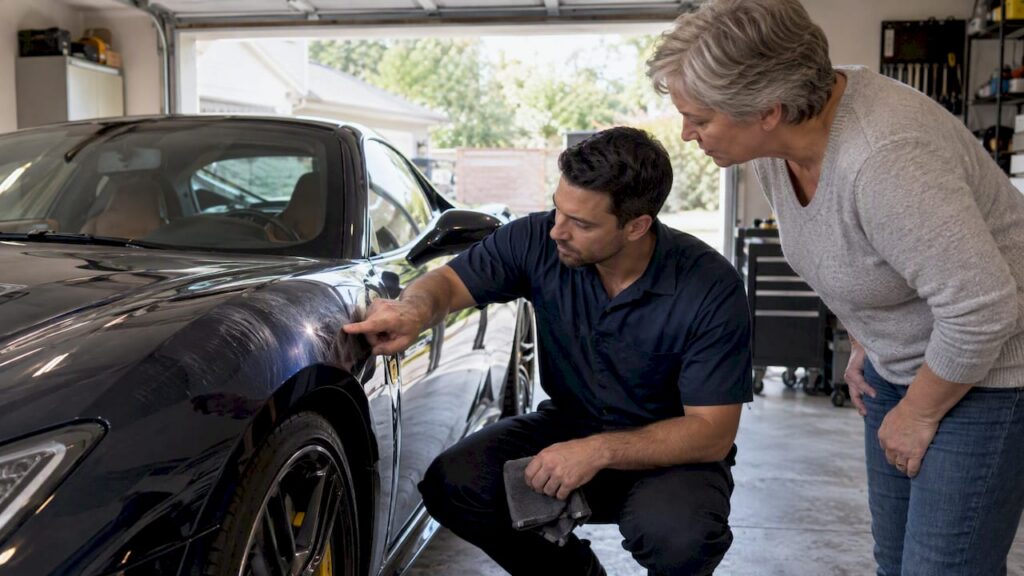
Good exotic car detailing comes down to restraint and measurement. The right detailer inspects the car first, checks paint thickness before touching a polisher, matches products to each material (matte paint, carbon fiber, Alcantara, forged wheels), and tells you plainly what they will not do. If you can get those answers up front, you can trust the rest of the work.
This guide explains what separates exotic and supercar detailing from a standard detail, which services are worth paying for, what to ask, and how mobile service fits in. It also covers tipping and a few red flags.
Table of Contents
- Why an exotic is not just an expensive car
- What a proper exotic detail includes
- Mobile or shop: which suits an exotic?
- Questions to ask before you book
- How much does exotic detailing cost?
- Keeping an exotic looking right between details
- Tipping your detailer
- Finding an exotic detailer through MobileDetailing.io
- A simple plan for a first exotic detail
- FAQ
- Sources
Why an exotic is not just an expensive car
A detailer who is excellent on daily drivers can still hurt a Lamborghini, McLaren or Ferrari. The reasons are practical, not snobbish.
- Thin or soft paint. Some exotic and luxury makers apply less clear coat than mass-market brands, according to a detailing-industry guide to exotic care. That is a manufacturer-to-manufacturer generalization, not a rule for every model, which is exactly why a gauge reading on your specific car matters more than any rule of thumb.
- Mixed materials. Exposed carbon weave, matte and satin factory paint, unlacquered metals, Alcantara and piano-black trim each need different products. A polish that brightens gloss paint can ruin a matte finish by leaving shiny patches.
- Awkward shapes. Aggressive aero, low splitters, deep wheel barrels and tight engine bays are hard to reach and easy to scratch with the wrong brush or an overloaded towel.
- Value at stake. A mistake on a $250,000 car costs far more than the detail. Repainting also usually hurts resale value on a collectible.
None of this means you need a shop with a velvet-rope lobby. It means you need someone who works methodically and can explain the process.
What a proper exotic detail includes
Exact packages vary by detailer, so treat the list below as a framework for comparing quotes, not a price menu. Standard industry descriptions, such as this overview of how car detailing works, describe a full detail as thorough interior cleaning plus exterior washing, clay bar treatment and polishing. Exotics add care around the materials above.
Wash and decontamination
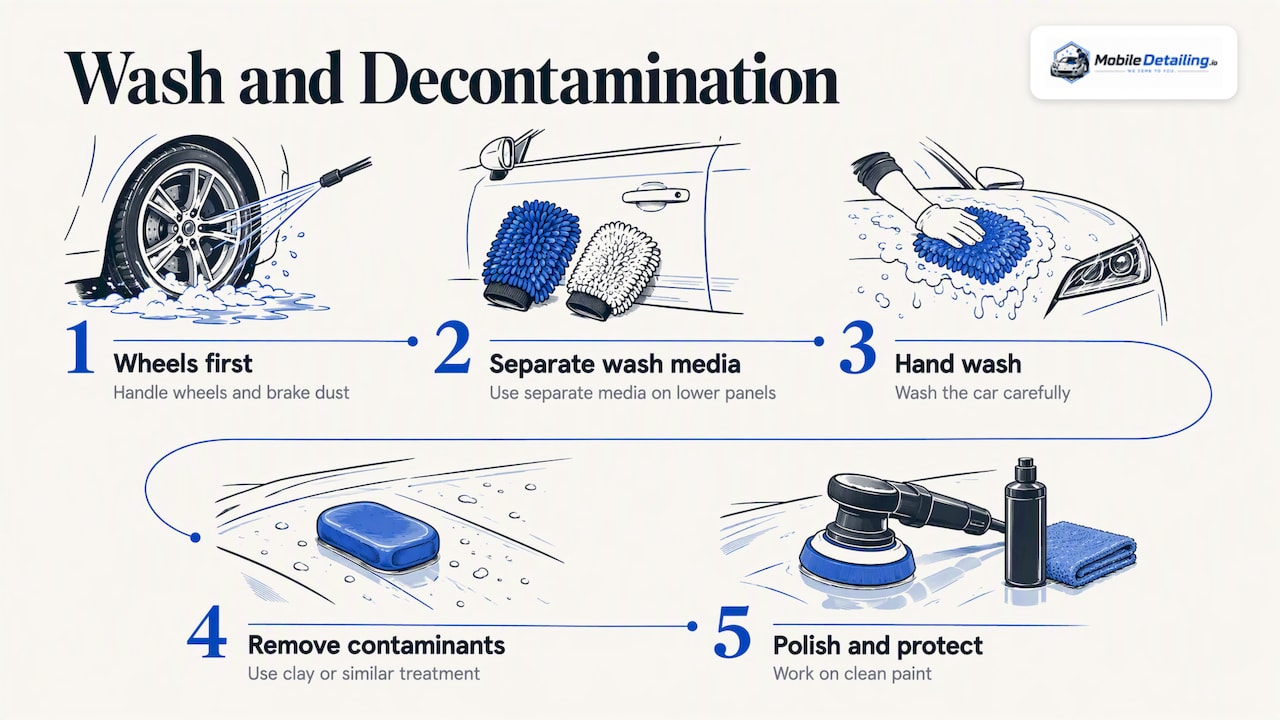
A careful hand wash is the base. Ask how the detailer handles wheels and brake dust first, and whether they use separate wash media for the lower panels. After washing, a clay bar or similar treatment pulls bonded contaminants (rail dust, tree sap, overspray) out of the paint so that polish and protection can work on a clean surface.
For a car that sees track days, ask how they treat baked-on brake dust and tar. Aggressive wheel acids and iron removers are not interchangeable across finishes.
Paint correction
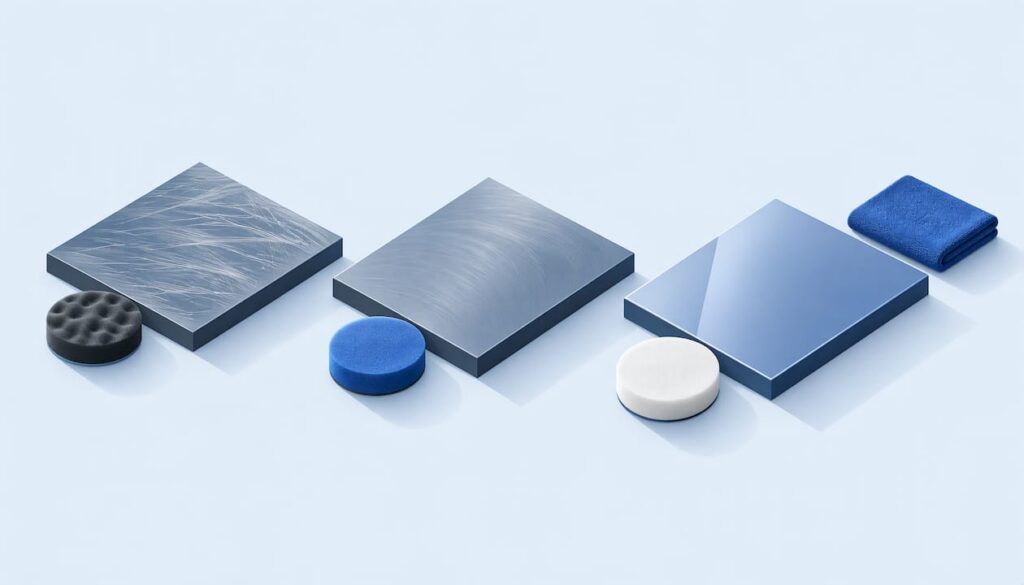
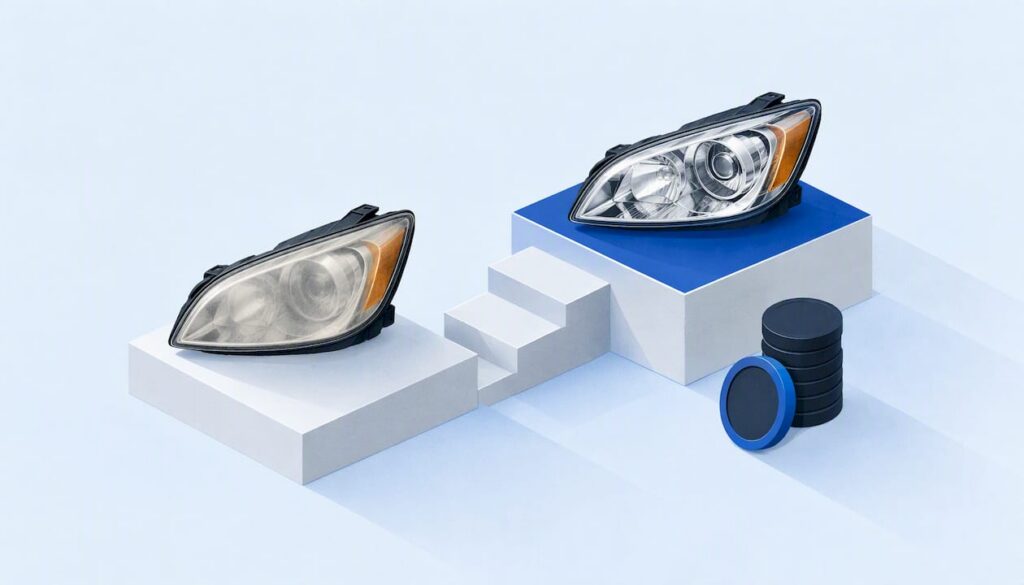
Paint correction is machine polishing that removes swirl marks, light scratches and other surface defects. The Porsche Club of America describes it as the first step before any ceramic coating or paint protection film, and notes that it is often misunderstood.
The key word for exotics is preservation. Every pass of a polisher removes a small amount of clear coat. A skilled correction aims for the best result with the least material removed, and sometimes that means leaving a few deeper defects alone rather than chasing them.
We recommend professional help here. Wet sanding and multi-stage correction are not weekend projects on any car, and on thin exotic paint they can cause damage that only a repaint will fix.
Ceramic coating
A ceramic coating is a liquid protective layer that cures on the paint. It can make a car easier to wash and add resistance to light chemical staining and UV exposure, but claims about years of durability and hardness come mostly from manufacturers. Independent, long-term testing on real cars is limited, so treat any “lifetime” promise with caution and read the warranty terms, including what maintenance voids it. For background on the materials themselves, there is a 2025 peer-reviewed overview of car coating materials in PubMed Central.
Order matters. A coating bonds over whatever is underneath, so defects left in the paint stay visible under it. That is why the correction step comes first, as the Porsche club article explains.
The applicator matters too. Coatings are unforgiving: if you miss a high spot while it cures, it can mean more polishing to remove it. Pick a detailer with a track record on coatings rather than someone offering it as an afterthought. Many coating installers also work with paint protection film, a separate and thicker physical layer. If your car sees highway miles or gravel, ask which protects better against rock chips for your use. Coatings generally do not stop chips.
Interior care
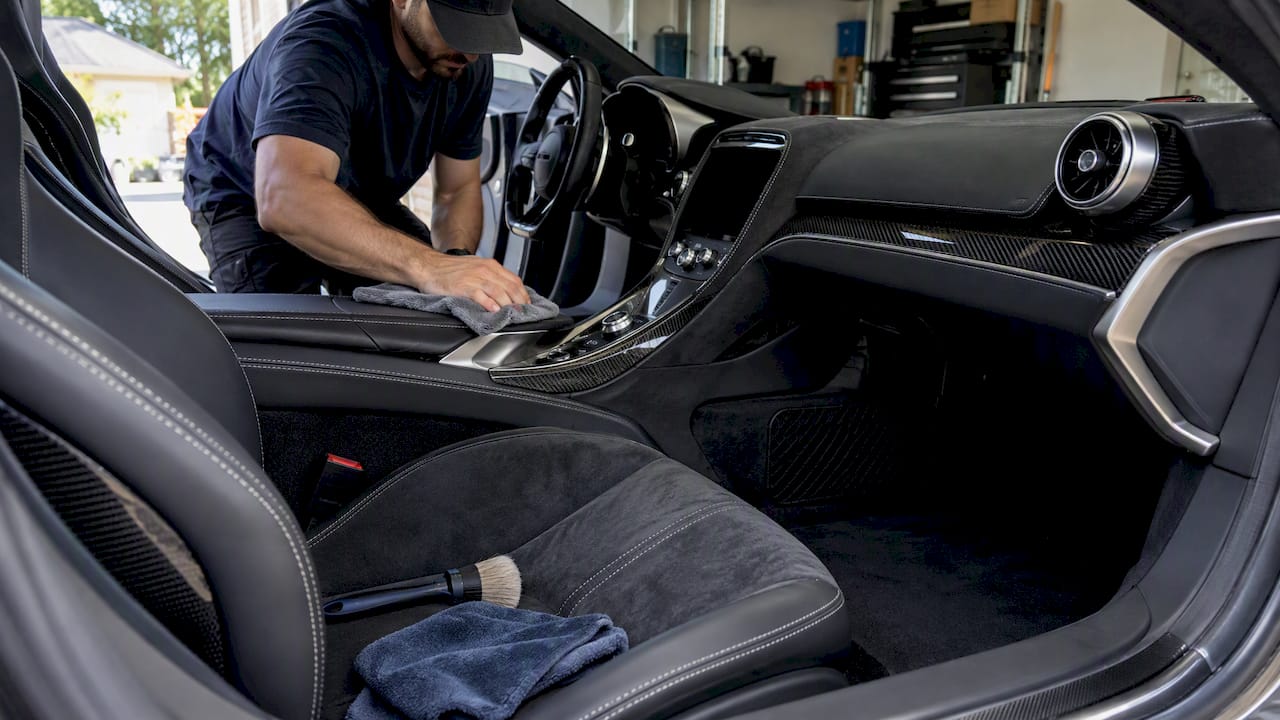
Exotic interiors often mix leather, Alcantara, carbon fiber, aluminum and delicate screens. Good practice is minimal moisture on suede-like fabrics, pH-appropriate cleaners on leather, soft brushes, and no dressing that leaves a greasy sheen on a steering wheel. Ask whether the detailer has worked on your specific material. If the car has been sitting in storage, odor and mildew can also be an issue, so say so when you request a quote.
Trim, badges and small parts
Aging emblems, faded plastics and cracked trim pieces turn up on older exotics and classics. A detailer cleans and protects what is there, but a missing or damaged badge is a restoration issue. If you are chasing a part that is no longer made, this overview of routes to reproduce a discontinued automotive emblem explains the options and trade-offs, and it is worth reading before you commit to a fix.
Mobile or shop: which suits an exotic?
Mobile detailing means the detailer drives to your home, garage or office. For many exotic owners that is a real advantage: the car never leaves your control, you skip the drive and the transport risk, and you can watch the work. It also means the car does not sit in a shop lot with a dozen others.
A shop has real advantages for some jobs, especially multi-day coating work, where controlled lighting, temperature and dust-free curing matter. Many reputable mobile detailers handle that by working in your garage, or by recommending a shop for specific stages. Either way, ask directly.
| Factor | Mobile detailer | Fixed shop |
|---|---|---|
| Convenience | Comes to you | You drop off and pick up |
| Car handling | Fewer people touch it, no transport | Car moves and may be stored on site |
| Lighting and conditions | Depends on your garage or driveway | Often controlled and consistent |
| Best for | Maintenance washes, interior work, many corrections | Long coating cures, major restoration |
| Water and waste | Detailer must contain it on your property | Usually a dedicated drain system |
The water question
Mobile detailing means working outside a commercial wash bay, which brings environmental rules into play. The U.S. EPA has guidance on managing vehicle washing to keep wash water away from storm drains and groundwater, and requirements vary by state and city. A professional should be able to tell you how they contain and dispose of water, and whether they use waterless or rinseless methods. It is a reasonable, non-hostile thing to ask, and a detailer who has no answer is telling you something.
Questions to ask before you book
These separate careful specialists from confident amateurs. You do not need all the answers in technical language; you need clear ones.
- “Do you measure paint thickness before correcting?” A gauge reading tells the detailer how much material is safe to remove. If the answer is a shrug, keep looking.
- “Has the car’s finish been repainted?” If you do not know, say so. Previously refinished panels can be thinner and behave differently. The detailer should check.
- “Which exotics have you worked on recently?” Specific makes or finishes (matte, carbon, PPF-wrapped) are better evidence than a general claim.
- “What is included, and what is not?” Written scope: stages of correction, number of coating layers, interior areas, engine bay, wheels off or on.
- “What does the coating warranty actually cover?” Get it in writing. Note maintenance requirements and who honors the warranty.
- “Are you insured, and does the policy cover my car at my location?” Ask for proof. We cannot confirm any individual detailer’s insurance, so verify it yourself.
- “How do you handle water and chemicals?” See the section above.
- “Can I see before-and-after photos of cars like mine, and talk to a past client?” Reviews help, but recent photos of similar cars are better.
Red flags
- A flat price quoted sight unseen, with no inspection and no mention of paint condition.
- Promises of removing 100% of scratches, or of a coating that is “permanent” or “scratch proof.”
- Pressure to book a full correction and coating when a decontamination wash and sealant would do.
- No written estimate, no business name on the invoice, or payment demanded only by cash app.
- Use of the same compound and pad for everything, or reluctance to say what products they use.
How much does exotic detailing cost?
We do not publish detailer prices, because MobileDetailing.io is a directory and each business sets its own. Prices depend on the car’s size, its condition, how many correction stages it needs, your location, and whether you want a coating. Exotic work typically costs more than standard work because it is slower and carries more risk, but you should expect each quote to reflect that, not hide it.
For context on the market, the trade publication Auto Laundry News reported that the U.S. detailing industry was valued at roughly $10.8 billion in mid-2024, with many operators facing several direct local competitors. That competition is good for you: get at least two or three written quotes with the same scope so they compare fairly. The lowest quote is not automatically best, and the highest is not automatically the most careful.
A useful tip: ask each detailer to separate the quote into maintenance (wash, interior), correction and protection. That lets you do the work in stages, for example, starting with correction and a coating, then keeping the car with regular maintenance washes.
Keeping an exotic looking right between details
The best detail is the one you do not undo. A few habits help whatever service you choose.
- Wash with care. Use clean microfiber, a two-bucket or rinseless method, and never dry-wipe dust. Automatic car washes with brushes are a common source of fine scratches on soft paint.
- Park smart. A garage or car cover keeps off sun, bird droppings and pollen. Bird droppings and bug residue are acidic enough to etch if left to bake, so remove them quickly with a gentle, lubricated wipe.
- Follow the maintenance plan. If you have a coating, the installer will usually specify the wash products and intervals. Using strong degreasers or harsh polishes can reduce its performance.
- Do not use abrasive “quick fixes.” Rubbing compound from a parts store on thin paint is the usual way to turn a minor defect into a major one.
- Inspect regularly. Light-colored cloth and a bright flashlight reveal new swirls and chips early, before they need major work.
Tipping your detailer
For a standard detail, the customary tip is 10% to 15% of the total, per Synchrony’s guide to car detailing. On a $200 service, that works out to roughly $20 to $30. Tipping is not required, and on a multi-day correction or coating, many owners tip the person doing the work rather than a percentage of a large invoice. Do what feels right for the quality and effort.
Finding an exotic detailer through MobileDetailing.io
MobileDetailing.io is a nationwide directory of local mobile detailing professionals. You can search by location, compare businesses offering interior and exterior detailing, ceramic coatings, paint correction and window tinting, and request quotes. Using it is free for vehicle owners. The businesses pay for premium listings and extra features, but you should still check each one using the questions above.
A few listings in the directory mention exotic or high-end work in their names or services. Those include Yosnel Exotic Paint Correction Car Detailing in Miami, FL, VIP Auto Detailing (Paint Correction & Ceramic Coating) in Cary, NC, Prestige Worldwide Exquisite Detailing & Ceramic Coating in Centennial, CO, and Luxury Auto Detail in Columbus, OH. Read each profile for what is actually offered, since listing pages are written by the businesses themselves, and confirm availability and service area before assuming anything.
If you already know what you want, you can request a local quote with your car, location and service details. If you prefer to browse, start from the MobileDetailing.io home page and pick the service category and your city. Ceramic coating is one of the categories you can search, for example ceramic coating in Cleveland.
When you request a quote, include the make and model, color and finish (gloss, matte, satin), any known repaint or PPF, how the car is stored, and what you are hoping to achieve. The more specific you are, the better the first reply will be.
A simple plan for a first exotic detail
- Define the goal. Showroom refresh before a sale, protecting a new purchase, or restoring a car that has been neglected?
- Gather two or three quotes with the same written scope.
- Request an inspection and paint thickness readings before approving any correction.
- Decide the stages. Correction first if needed, then protection, then a maintenance schedule.
- Inspect in good light at handover, and keep the paperwork, especially the coating warranty.
FAQ
Is ceramic coating worth it on an exotic car?
For many owners, yes, as long as the paint is corrected first and the installer is experienced. A coating makes washing easier and adds a sacrificial layer against light contamination, but it does not stop rock chips or deep scratches. Manufacturers’ durability claims are not independently verified, so judge the installer and the written warranty, not the marketing.
Can you detail a supercar at home with a mobile detailer?
Often you can. Maintenance washes, interior work and many corrections are done on location, ideally in a garage with shade and a power source. Long coating cures may be better in a controlled shop. Ask the detailer which stages they would do at your address and how they handle water runoff.
How often should an exotic car be detailed?
There is no single schedule. A garaged, lightly driven car may need a full detail only occasionally, with gentle maintenance washes in between, while a daily-driven or track car needs more regular attention. A coated car follows the installer’s maintenance plan. Correction should be rare, since it removes clear coat each time.
How much should I tip on a $200 detail?
The common range is 10% to 15%, so about $20 to $30 on a $200 service, according to Synchrony. Tip more for exceptional work or a difficult job, but it is a courtesy, not an obligation.
Sources
- Porsche Club of America: Chasing Paint Perfection and Protection, Part 2
- Bahama Detailing: How to Detail an Exotic Car
- Synchrony: Car Detailing, How It Works and Average Pricing
- Auto Laundry News: Detail Trends, Revenue Continues to Grow
- EPA: Managing Vehicle Washing to Prevent Contamination of Drinking Water
- PubMed Central: Development of Car Coating Materials over the Past Decade
- CC3D Labs: Automotive Emblem Reproduction
Recommended
- Find Vetted Exterior Car Detailing Pros in 10 Minutes for U.S. Owners
- Luxury Auto Detail
- Yosnel Exotic Paint Correction Car Detailing
MobileDetailing.io provides general educational information. Products, surfaces and vehicle finishes vary. Follow manufacturer instructions and consult a qualified detailing professional before using abrasive processes or chemical treatments.