Car Owners: Get 2–3 Estimates on Mobiledetailing Instead of Spiffy
If you’re looking for alternatives to on-demand brands like Spiffy, your realistic options are independent mobile detailers, local brick-and-mortar shops, dealership detail departments, franchise chains, and DIY care for routine upkeep. The fastest way to compare them is to request written estimates from two or three providers or use Mobiledetailing to request quotes from local pros right away.
Table of Contents
- What kinds of alternatives exist to on-demand brands like Spiffy
- What should you ask a mobile detailer before you book?
- Common detailing services explained and when you need each
- DIY versus hiring a pro: rules of thumb and cost tradeoffs
- Geographic and availability differences among providers
- Pros and cons of each type of mobile detailing provider
- How much do reviews and reputation matter when choosing a detailer?
- Comparing eco-friendly and specialty detailing options
- Tips for verifying credentials and insurance status of detailers
- Use MobileDetailing.io to find, compare, and request local detailer quotes
- FAQ
- Sources
What kinds of alternatives exist to on-demand brands like Spiffy
Vehicle owners weighing options beyond a single on-demand brand usually land in one of four categories, each with its own tradeoffs in price, convenience, and consistency.
Independent mobile detailers come to your driveway or office with their own equipment and water supply. They tend to offer more schedule flexibility than larger operations and sometimes lower prices, since they carry less overhead. Many specialize in niche work like ceramic coatings or marine detailing, which can mean deeper expertise in that one area.
Local brick-and-mortar detail shops and dealership detail departments work from a fixed location with climate-controlled bays, pressure washers, and extraction equipment that’s harder to run from a van. Dealership departments sometimes have brand-specific product restrictions tied to warranty terms, which is worth asking about before you book.
Franchise chains offer standardized package names and consistent pricing across locations, which helps if you’re comparing quotes in a new city or managing a fleet across several regions.
DIY detailing covers routine maintenance between professional visits: a hand wash, a quick vacuum, interior wipe-downs. It suffices for upkeep but isn’t a substitute for correction work or specialty coatings.
- Independent mobile pros: flexible scheduling, often lower overhead, frequently specialize in one or two services.
- Local shops and dealerships: in-bay equipment and climate control, but dealership work may follow brand-specific product rules.
- Franchise chains: predictable package names and service levels across locations.
- DIY: low cost for routine maintenance, not a substitute for correction or coating work.
What should you ask a mobile detailer before you book?
A short checklist keeps you from signing up for vague pricing or surprise charges, and it mirrors steps the Federal Trade Commission recommends for any vehicle work.
- Get a written estimate. It should list exactly what’s included and excluded, and any additional work beyond that scope should require your approval before the detailer proceeds.
- Ask about products and methods. Modern interiors contain materials that react poorly to generic household cleaners, so ask which products a detailer uses and whether their methods are material-safe for your interior surfaces.
- Verify insurance and guarantees. Ask whether the business carries liability coverage and what happens if something goes wrong during the job; request proof of coverage if you want it in writing.
- Check photos and reviews. Look at examples of completed work and recent local reviews, and confirm the detailer has handled your vehicle type before, whether that’s a daily driver, a classic car, or a boat.
- Confirm logistics up front. Nail down the arrival window, expected job duration, cancellation policy, and accepted payment methods before the appointment.
Watch for red flags along the way: a detailer who won’t put the scope in writing, pushes same-day upsells with no explanation, or gives you a number that keeps changing once they’re on site.
Pro Tip: Keep a copy of every written estimate and text message about the job. If a billing dispute comes up later, that paper trail makes it much easier to resolve.
If a disagreement does happen, the FTC outlines steps for documenting the issue and escalating it to a state consumer protection office if needed.
Common detailing services explained and when you need each
Service names vary by provider, so it helps to know what each one actually covers before you request a quote.
- Interior detail: vacuuming, upholstery shampoo, and stain removal. Good for cars with spills, pet hair, or general grime buildup.
- Exterior detail and hand wash: decontamination, a careful hand wash, and waxing. This is the right call for routine upkeep and before a sale or trade-in.
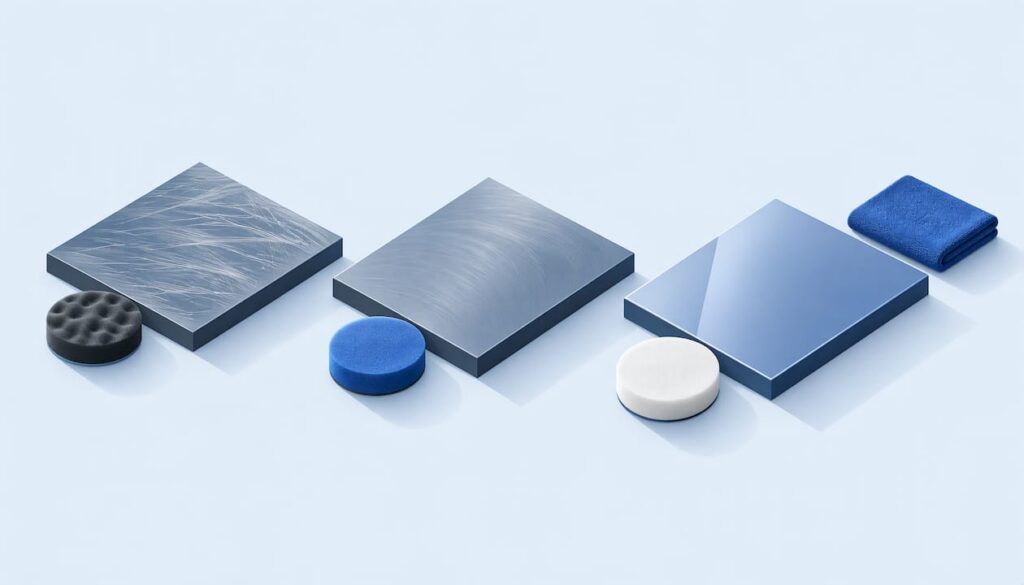
- Paint correction and polishing: removes swirls and light scratches through controlled abrasion. Wet sanding goes a step further and should be left to professionals, since a wrong move can cut through clear coat.
- Ceramic coatings: add a durable protective layer over paint. Longevity depends heavily on surface prep and application quality, which is another reason professional application matters more than the product name on the bottle.
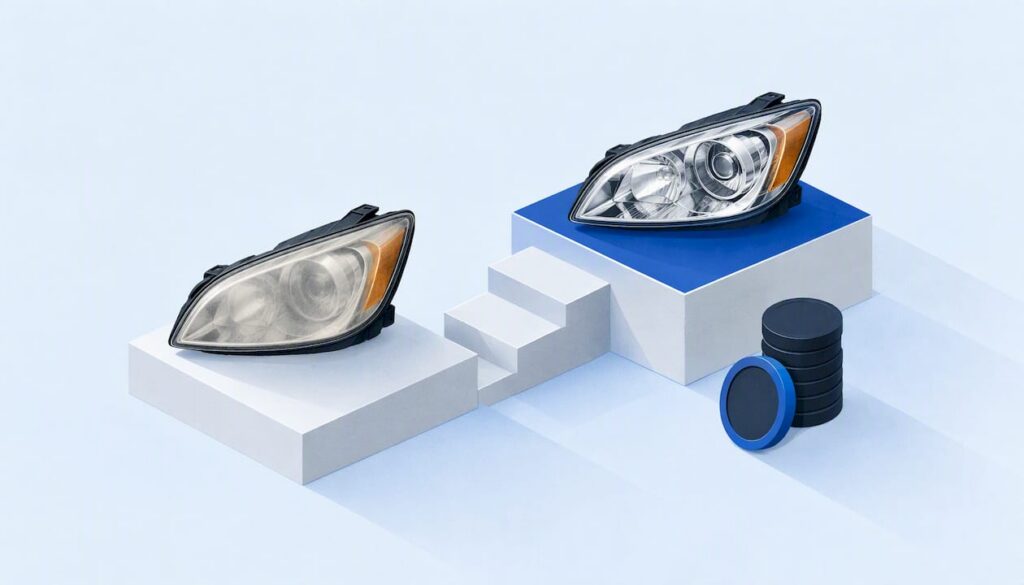
- Specialty services: headlight restoration, odor removal, upholstery repair, and marine, RV, or aircraft detailing, each requiring different tools and chemical handling than a standard car wash.
Be skeptical of anyone offering full paint correction or coating work at a price far below the local range. Consumer Reports notes that deep cleaning and correction work commonly exceed basic wash pricing because of the labor and materials involved.
DIY versus hiring a pro: rules of thumb and cost tradeoffs
Some tasks are genuinely fine to handle yourself with basic supplies: microfiber towels, automotive-specific soap, an interior cleaner rated for your dash and seat materials, and a portable vacuum. A weekly hand wash and a quick interior wipe-down fall into this category.
Other tasks carry real risk if done without training. Paint correction can cut through clear coat if the technique or abrasive grit is wrong. Ceramic coating application requires surface prep and environmental control that’s hard to replicate in a driveway. Both belong with a professional.
- DIY-friendly: routine hand washing, interior vacuuming, quick wipe-downs, basic tire shine.
- Pro-only: paint correction, wet sanding, ceramic coating application, upholstery repair, any hazardous chemical work.
A professional detail typically runs $75 to $400 and takes 1.5 to 4 hours, depending on vehicle size and scope, which gives you a baseline for comparing quotes. For fleets or restoration-level work, the time savings and consistency of hiring a pro usually outweigh the cost difference.
A separate note on value: detailing is not a reliable way to raise a vehicle’s appraised resale number. AAA points to a Consumer Reports test where a professional detail didn’t change the appraised value, even though a clean car can still help it stand out in a private sale.
Geographic and availability differences among providers
Availability varies more than most people expect. Independent mobile detailers are dense in larger metro areas but thinner in rural counties, where you may need to book weeks ahead or accept a longer drive-time fee. Franchise chains cluster near suburban retail corridors, while dealership detail departments are tied to the dealership’s own service hours and may only take walk-ins during slower seasons.
Climate matters too. In regions with harsh winters, mobile detailers sometimes pause outdoor appointments during freezing stretches, shifting demand toward shops with heated bays. In hot, dry climates, dust and pollen accumulation can shorten the useful interval between details, which pushes up local demand in spring and fall.
If you’re searching in a smaller town, don’t assume the same mix of providers exists as in a nearby city. Checking a searchable directory by location, rather than relying on a single brand’s service map, gives a more accurate read on who’s actually available near you and on what timeline.
Pros and cons of each type of mobile detailing provider
Each provider type trades convenience for consistency in a different way.
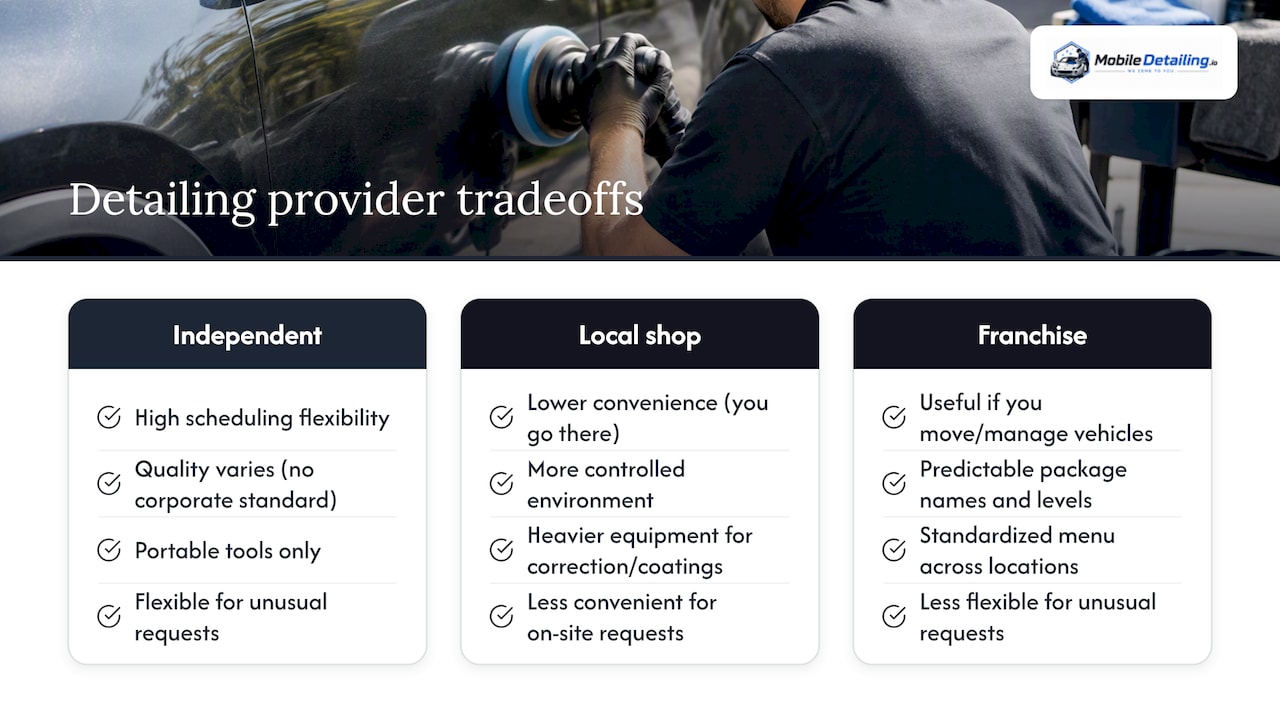
Independent mobile pros offer the most scheduling flexibility and often the best price for specialized work, but quality can vary more from one provider to the next since there’s no corporate standard holding them to a fixed checklist.
Local shops and dealerships bring controlled environments and heavier equipment, which helps with correction work and coatings, but you lose the convenience of someone coming to you, and dealership pricing can run higher for comparable work.
Franchise chains give you predictable package names and service levels across locations, useful if you move or manage vehicles in multiple cities, though the standardized menu can mean less flexibility for unusual requests.
DIY costs the least and requires no scheduling at all, but it only covers routine maintenance. Once a vehicle needs correction, coating, or specialty repair, DIY stops being a real option.
How much do reviews and reputation matter when choosing a detailer?
Reviews and photos of completed work are some of the most useful signals you have before booking, since they reflect real outcomes rather than marketing copy. Look for consistency across multiple reviews rather than a single five-star outlier, and pay attention to how a business responds to criticism when it appears.
Photos matter as much as star ratings. A detailer who shares before-and-after images of vehicles similar to yours, whether that’s a daily driver, a boat, or a classic car, gives you a clearer sense of what to expect than a generic service description. Reputation built over time in your local area also tends to correlate with reliability, since repeat customers and referrals are harder to manufacture than a one-time review.
When you’re comparing two or three quotes, weigh reviews alongside the written estimate and insurance verification rather than letting a star rating override the other checklist items.
Comparing eco-friendly and specialty detailing options
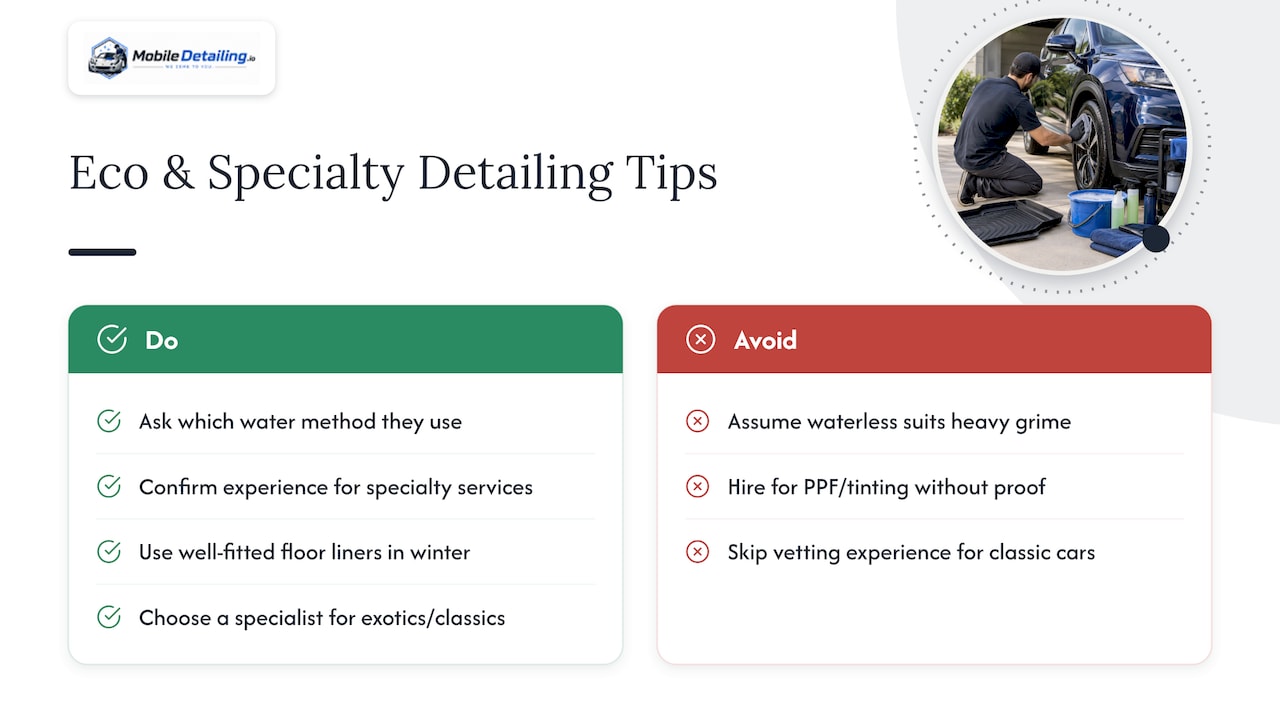
Water use and product choice vary more than most buyers realize. Some mobile detailers advertise waterless or low-water wash systems, which can be useful in drought-prone areas or for apartment complexes with water restrictions, though the tradeoff is that these methods may be less effective on heavy dirt or road grime than a full rinse.
Specialty services like paint protection film, window tinting, and marine or RV detailing require different tools and training than a standard car wash, so it’s worth confirming a provider’s specific experience rather than assuming general detailing skill transfers directly. If protecting interior surfaces between professional visits is a priority, a well-fitted floor liner can reduce the frequency of deep interior cleaning needed, particularly through winter months when salt and slush are the main culprits.
For higher-end, exotic, or classic vehicles, it’s worth seeking a provider with specific experience on those platforms rather than a general detailer, since correction and coating work on specialty paint and trim can carry more risk if done incorrectly.
Tips for verifying credentials and insurance status of detailers
Ask directly whether a detailer carries liability insurance and, if the job involves a high-value vehicle, request documentation before the appointment. A legitimate business should be able to provide this without hesitation.
Confirm how long the business has operated locally and whether it has a physical address or consistent service area, since a provider with a stable local presence is easier to hold accountable than one with no verifiable history. Cross-check reviews across more than one platform rather than relying solely on testimonials posted on the provider’s own site.
Finally, ask about guarantees. A clear policy on redoing unsatisfactory work, or a defined service warranty on coatings, signals a business that stands behind its results rather than one hoping you won’t ask.
Use MobileDetailing.io to find, compare, and request local detailer quotes
Comparing providers is far easier when you can see service listings, photos, and reviews side by side instead of calling around one business at a time. Mobiledetailing works as a searchable directory where local detailers list interior detailing, exterior detailing, ceramic coating, paint correction, and window tinting alongside photos of completed jobs and customer reviews, similar to listings such as SparrowHawk Mobile Detailing in Phoenix or Maximum Mobile Car Detailing in Richmond.
Once you’ve found a few options in your area, request written estimates from two or three of them and run each one through the evaluation checklist above: scope, products, insurance, and cancellation terms. Request a local quote to start comparing detailers near you today.
FAQ
What’s the cheapest alternative to an on-demand detailing brand?
DIY washing and vacuuming cost the least, but they only cover routine maintenance, not correction or coating work. For professional service, independent mobile detailers are often the most budget-friendly category since they carry less overhead than shops or franchises.
How much does mobile detailing typically cost?
Professional mobile detailing generally runs $75 to $400 and takes 1.5 to 4 hours, depending on vehicle size and the services included. Getting two or three written estimates is the best way to see where a specific job falls in that range.
Does detailing increase my car’s resale value?
Not reliably. AAA cites a Consumer Reports test where a professional detail didn’t change a vehicle’s appraised value, though a clean car can still help it present better to a private buyer.
How do I find mobile detailers near me and compare them?
A searchable directory like Mobiledetailing lets you browse local listings with photos, services, and reviews, then request quotes directly. Comparing two or three written estimates side by side is the most reliable way to judge price and scope.
Can I do paint correction or ceramic coating myself?
Paint correction and ceramic coating require surface prep, controlled technique, and environment that are hard to replicate at home, and mistakes can damage the clear coat. These tasks are best left to a trained professional rather than attempted as a DIY project.
Sources
Recommended
- Compare: Price Detailing Services for U.S. Owners & Fleets ($150–$300)
- Skip the Drive: Mobile Detailing for U.S. Cars, $75–$400, 1.5–4h
MobileDetailing.io provides general educational information. Products, surfaces and vehicle finishes vary. Follow manufacturer instructions and consult a qualified detailing professional before using abrasive processes or chemical treatments.