Few Hundred to Six Figures: U.S. Aircraft Detailing Costs, FAA Risks
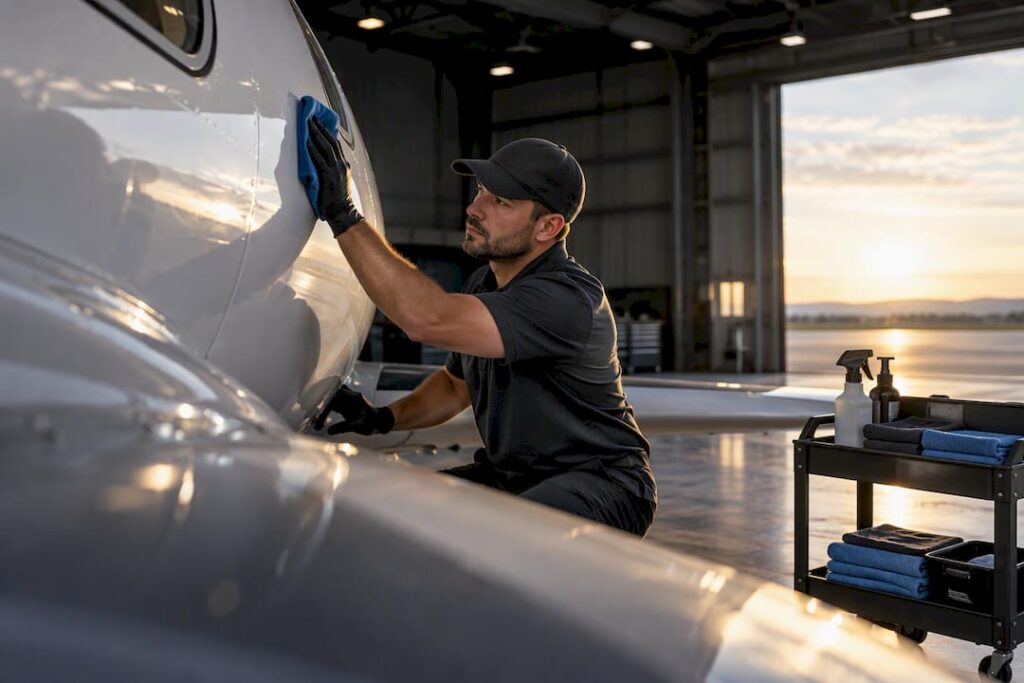
A basic aircraft wash typically costs a few hundred dollars, while a full exterior and interior detail on a piston aircraft generally runs into the low thousands. Extensive restoration work on jets may reach into high five-figure or six-figure territory. The final number depends on aircraft size, paint condition, coatings, and whether the job triggers FAA-related maintenance steps. Before committing to any provider, get an in-person, itemized quote and confirm they use aviation-safe chemicals and carry proper insurance.
Table of Contents
- What Does Aircraft Detailing Cost by Aircraft Type?
- What Factors Drive Jet Detailing Expense?
- Do FAA Rules Affect Aircraft Cleaning Prices?
- How Do You Get an Accurate Aircraft Detailing Quote?
- How Should You Budget for Routine vs. Restorative Detailing?
- Finding an Aviation-Capable Detailer Through Mobiledetailing
- Sources
- FAQ
What Does Aircraft Detailing Cost by Aircraft Type?
The aircraft detailing cost you’ll actually pay depends heavily on which aircraft class you own and which service tier you book. A piston single needs a fraction of the labor and materials that a midsize jet requires, and the price bands reflect that gap.
Market guides that track real quotes across the industry show wide but predictable ranges by aircraft category and service scope. The table below reflects those illustrative cost ranges by aircraft type and scope, which owners can use as a starting budget reference, not a guaranteed quote.
| Aircraft Type | Basic Wash | Full Exterior Detail | Full Interior Detail | Complete Restoration |
|---|---|---|---|---|
| Piston single | A few hundred dollars | Several hundred to a few thousand dollars | Several hundred to a few thousand dollars | A few thousand dollars |
| Piston twin / turboprop | Several hundred dollars | Low to mid thousands of dollars | Low to mid thousands of dollars | Mid to low tens of thousands of dollars |
| Light jet | A few thousand dollars | Mid thousands of dollars | Mid thousands of dollars | Tens of thousands of dollars |
| Midsize jet | Low to mid thousands of dollars | Mid to upper thousands of dollars | Mid to upper thousands of dollars | Tens of thousands of dollars and more |
| Large cabin jet | Mid thousands of dollars and up | Upper thousands to low tens of thousands of dollars | Upper thousands to low tens of thousands of dollars | High five- to six-figure range |
Each service tier covers different work:
- Basic wash: exterior rinse, soap wash, and windshield cleaning, usually the routine option between full details.
- Full exterior detail: wash plus oxidation removal, brightwork polishing, and belly cleaning.
- Full interior detail: carpet extraction, seat and panel cleaning, sanitizing, and odor treatment.
- Complete restoration: paint correction, deep oxidation removal, and interior refurbishment combined, often for aircraft that have gone years without professional attention.
- Ceramic coating add-on: an extra charge layered onto exterior detailing for longer-lasting protection between washes.
Ramp location, humidity, and regional labor rates all shift these numbers. A jet parked at a coastal FBO fighting salt air and bird contamination will usually cost more to detail than the same aircraft based inland. Heavily oxidized paint or long-neglected brightwork can push any tier toward the top of its range, sometimes past it, according to pricing breakdowns from professional restoration shops.
What Factors Drive Jet Detailing Expense?
Quotes vary because the underlying work varies. Understanding the line items behind a quote helps you compare providers fairly instead of chasing the lowest number.
- Condition: oxidized paint, corroded brightwork, and heavy soil multiply labor hours and chemical use compared to a well-maintained aircraft.
- Size and complexity: more skin area and more compound curves mean more time, regardless of how simple the job sounds.
- Specialist services: paint correction, brightwork polishing, coatings, and interior restoration each add distinct pricing beyond a standard wash.
- Logistics: whether the aircraft sits in a hangar or on open ramp, and how far the crew has to travel, affects mobilization fees.
- Provider overhead: aviation liability insurance, trained technicians, and approved chemicals cost the provider money, and that shows up in the quote.
Industry commentary points out that the cheapest bid is often not the best value, since low-cost providers may skip aviation-specific insurance or trained staff entirely. A quote that looks too good compared to the rest of the market usually means something is missing, not that you found a bargain.
Pro Tip: Ask each provider to break out labor, materials, and any specialty add-ons separately. A single lump-sum number hides whether you’re paying for expertise or just a fast rinse.
Do FAA Rules Affect Aircraft Cleaning Prices?
Yes, and this is where aircraft detailing diverges sharply from car or boat detailing. Washing an airplane is not always a cosmetic-only task under federal rules.
The FAA’s InFO 16005 bulletin on automotive detailing companies working on aircraft warns that detailing can trigger maintenance or preventive maintenance obligations under 14 CFR, meaning a simple wash can cross into regulated territory if it disturbs components tied to corrosion prevention programs. That is why the FAA recommends trained personnel and documented procedures rather than treating aircraft washing like a car wash upsell.
Chemical selection matters just as much. AC 43-205 sets qualification and testing criteria for alternative cleaning agents, and it exists because unapproved cleaners can corrode aluminum skins or damage composite surfaces, leading to repairs that cost far more than the detailing job itself. Separately, aviation safety alerts have flagged certain consumer-grade cleaners, including some Simple Green and d-Limonene formulations, as unsuitable for aircraft washing due to corrosion risk.
If detailing does trigger follow-on maintenance steps, 14 CFR Part 43 governs documentation and return-to-service requirements. Practical takeaways for owners:
- Ask providers exactly which chemicals they use and whether those chemicals are qualified under AC 43-205.
- Confirm the crew understands documentation requirements if the job touches maintenance-adjacent work.
- Require aviation-competent staff, not general automotive detailers unfamiliar with airframe materials.
How Do You Get an Accurate Aircraft Detailing Quote?
Detailing providers typically won’t finalize a price over the phone, and that’s a good sign rather than a red flag. Paint oxidation, ramp access, and hangar constraints change labor needs enough that a fair quote requires eyes on the aircraft.
- Request an in-person inspection. A provider who quotes sight-unseen is guessing, and you’ll likely pay the difference later in change orders.
- Ask for an itemized written quote. Expect line items for wash, exterior detail, interior detail, brightwork, and any coating add-ons, priced separately.
- Verify insurance and experience. Ask about aviation liability coverage limits and how many aircraft, not cars, the crew has detailed.
- Check FBO familiarity. A provider who’s worked at your airport already knows the ramp rules and access logistics, which saves time and cost.
- Ask for references. A provider with aviation-specific experience should be able to point to other aircraft owners they’ve served.
Watch for red flags: flat-rate pricing with no inspection, vague or evasive answers about which chemicals will be used, and quotes noticeably below the rest of the market. Sample quote line items to expect include exterior wash, oxidation treatment, brightwork polish, interior extraction, and a mobilization or travel fee.
Pro Tip: Save every quote in writing, even informal ones. If a provider’s final invoice doesn’t match what they promised verbally, you’ll have something concrete to point to.
How Should You Budget for Routine vs. Restorative Detailing?
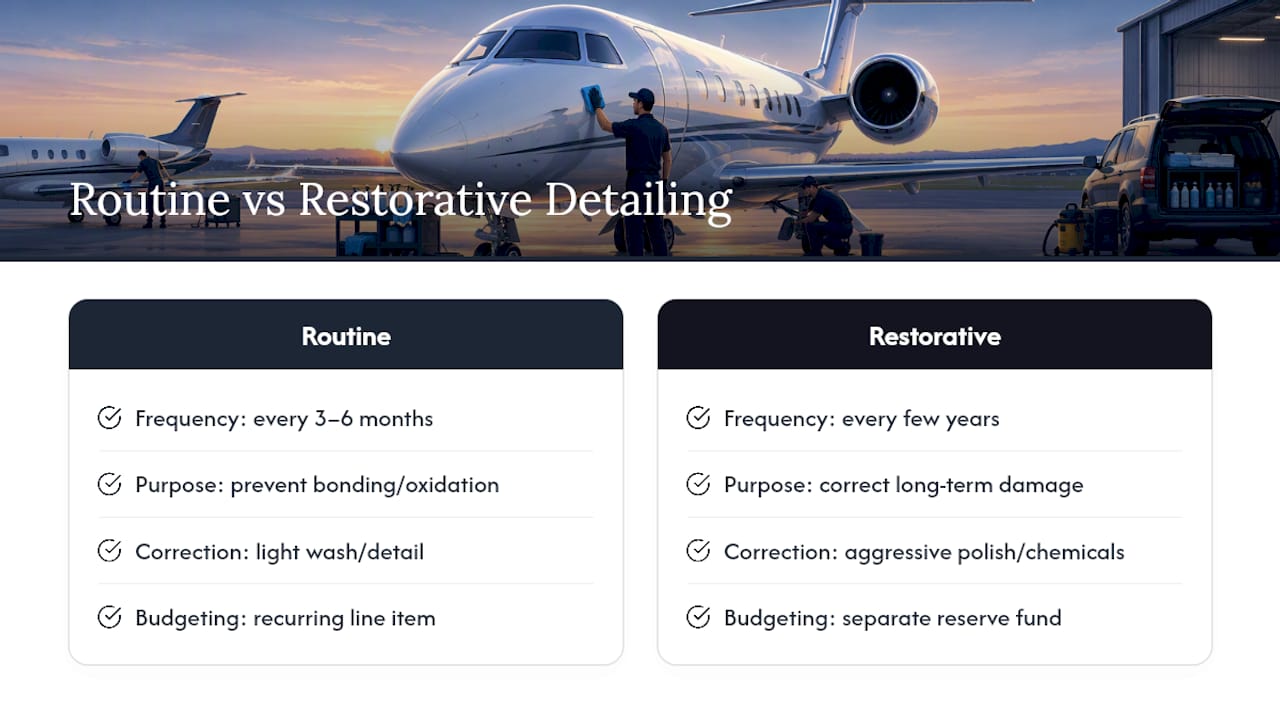
Routine detailing every three to six months keeps contamination from bonding into the paint or oxidizing the finish, and preventing that damage is generally far less expensive than correcting it later with aggressive polishing and chemical treatment. Owners who let years pass between details often end up paying for a restoration instead of a wash.
Plan coatings and paint correction around your aircraft’s usage cycle rather than waiting for visible damage. A jet that flies into coastal or industrial airspace regularly benefits from more frequent protective treatment than one hangared inland. For budgeting purposes, treat routine washes and details as a recurring line item tied to flight hours or calendar intervals, and set aside a separate reserve for the occasional deeper restoration, coating renewal, or brightwork overhaul every few years. Spreading the cost this way avoids the sticker shock of a single large restoration bill.
Finding an Aviation-Capable Detailer Through Mobiledetailing
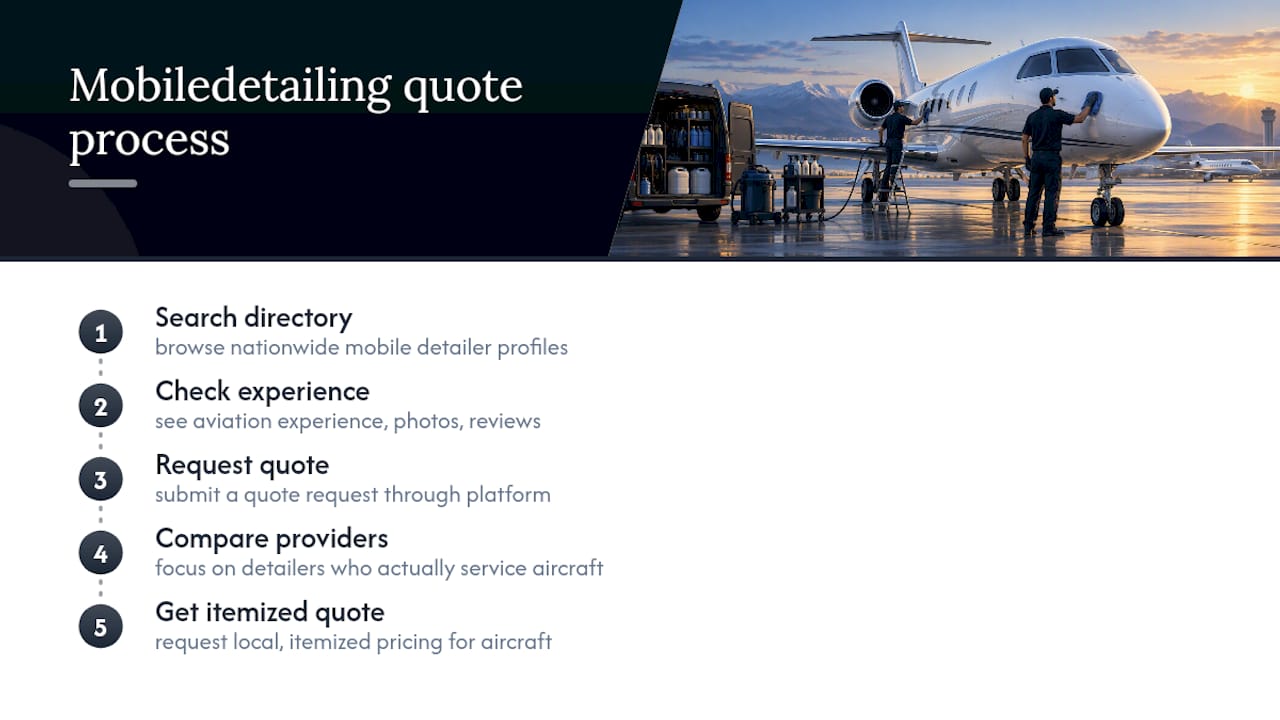
Mobiledetailing gives you a faster path to a real quote than cold-calling FBOs one by one. Mobiledetailing is a nationwide directory that connects aircraft owners with local mobile detailing professionals who list aircraft services alongside their photos, customer reviews, and service details. You can browse profiles to see whether a provider has aviation experience before you ever pick up the phone, then submit a quote request directly through the platform. That means you spend less time chasing estimates from providers who may not even service aircraft, and more time comparing detailers who actually do. Once you’ve reviewed a few local options, request a local quote to start getting itemized pricing for your specific aircraft and service needs.
Sources
For rules and pricing context beyond this guide, consult these primary and industry sources directly:
- Automotive Detailing Companies Working on Aircraft (InFO16005)
- 14 CFR Part 43 — Maintenance, Preventive Maintenance, Rebuilding, and Alteration
- Aircraft Detailing Pricing Explained | Real Aircraft Restoration Costs
FAQ
How Much Does a Basic Aircraft Wash Cost?
A basic exterior wash on a piston single typically costs in the low hundreds of dollars, while larger aircraft and jets run higher based on surface area and access. Actual pricing depends on regional labor rates and whether the aircraft needs heavy-soil treatment, based on illustrative cost ranges by aircraft class.
Why Do Aircraft Detailing Quotes Require an In-Person Inspection?
Paint oxidation, brightwork corrosion, and ramp or hangar access all change labor requirements enough that providers can’t price accurately over the phone. A quote given without inspecting the aircraft first is a guess, not a firm price.
Can Any Cleaning Product Be Used to Wash an Aircraft?
No. The FAA’s AC 43-205 guidance requires cleaning agents to be qualified and tested, since unapproved products can corrode aluminum skins or damage composite surfaces. Providers should be able to name the specific chemicals they use and confirm they’re aviation-safe.
Does Washing an Aircraft Count as Maintenance Under FAA Rules?
It can. The FAA’s InFO 16005 bulletin notes that detailing work can trigger maintenance or preventive maintenance obligations under 14 CFR Part 43, which is why trained personnel and documentation matter even for routine washing.
How Can I Find a Detailer Who Services Aircraft?
Mobiledetailing lists local mobile detailing professionals who offer aircraft services, complete with photos and reviews, and lets owners submit quote requests directly. Current pricing depends on the individual provider and is available once you request a quote through the site.
MobileDetailing.io provides general educational information. Products, surfaces and vehicle finishes vary. Follow manufacturer instructions and consult a qualified detailing professional before using abrasive processes or chemical treatments.