Detail Your Car 2–4 Times a Year: Schedules by Driver Type
Most vehicles need exterior washing regularly, interior cleaning based on usage, and a full professional detail several times per year. Daily commuters, drivers with kids or pets, and anyone facing salted winter roads need to shift toward the shorter end of those ranges. Garage-kept cars driven occasionally can stretch toward the longer end without much risk.
Table of Contents
- Recommended Cleaning Schedules for Different Drivers
- What Changes How Often You Should Detail Your Car
- Signs Your Car Is Overdue for a Professional Detail
- How to Build a Detailing Schedule That Fits Your Car
- DIY, Car Washes, or a Professional: What Handles What
- Seasonal Detailing Checklist by Time of Year
- Booking Detailing on Your Own Schedule
- Sources
- FAQ
Recommended Cleaning Schedules for Different Drivers
The right cadence depends more on how a car is used than on the car itself. AAA Club Alliance recommends washing a vehicle every one to three weeks and waxing two to four times a year, with interior cleaning done regularly since cabin surfaces can harbor more bacteria than people expect. A full professional detail on top of that routine, commonly recommended two to four times per year, covers what a regular wash and vacuum miss, including paint decontamination and deep interior extraction.
Sample schedules to adapt:
- Daily commuter with kids or pets: wash every one to two weeks, vacuum and wipe down weekly, full interior detail every one to two months, full detail three to four times a year.
- Family weekend driver: wash every two to three weeks, interior detail every two to three months, full detail twice a year.
- Garage-kept weekend car: wash monthly, interior detail every four to six months, full detail once or twice a year.
- Seasonal or high-mileage driver: wash every one to two weeks during active seasons, full detail at the start and end of the driving season.
Leather seats need conditioning on top of cleaning to prevent cracking, fabric interiors need more frequent vacuuming to keep soil from grinding into fibers, and specialty finishes like matte wraps or ceramic-coated paint call for pH-neutral products and gentler wash methods than bare clear coat.
What Changes How Often You Should Detail Your Car
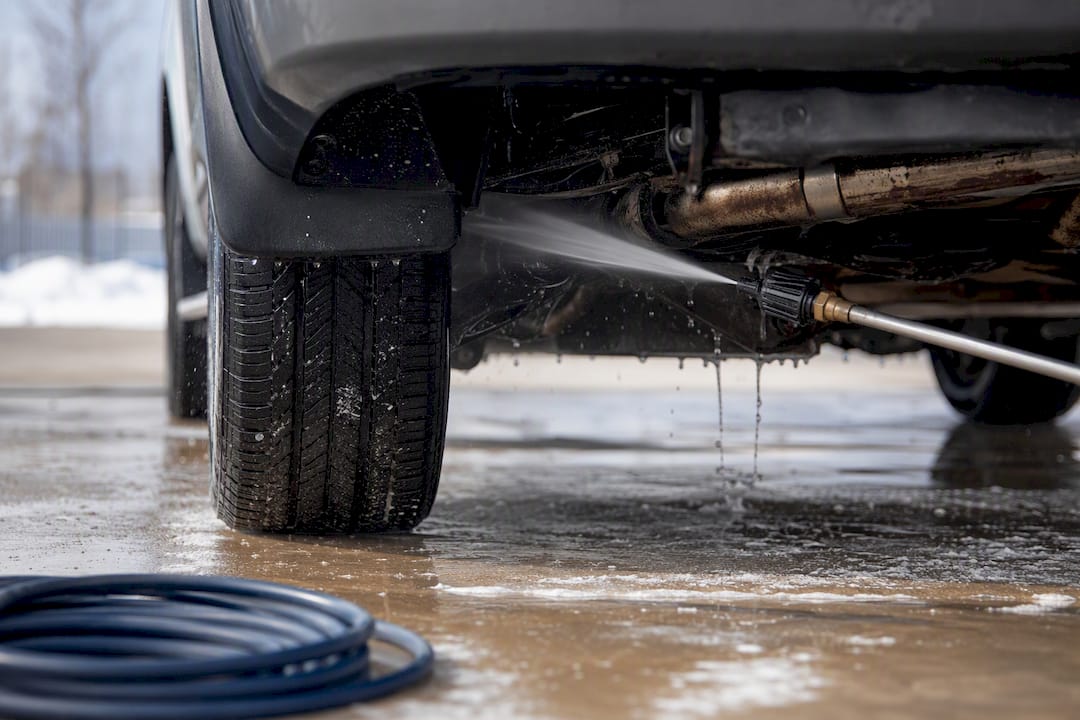
Climate, road conditions, and who rides in the car all push the schedule in one direction or another. Winter road salt is the biggest seasonal factor: Consumer Reports advises a monthly wash during snow season specifically to clear salt before it reaches metal components, plus an undercarriage wash at least once a season in areas where roads are treated.
Beyond salt, several conditions compress the timeline:
- Sun and coastal exposure: UV rays fade and dry out paint sealant faster, while salt spray near coastlines accelerates the same corrosion risk as road salt.
- Pollen and pollution: heavy pollen seasons and urban grime both call for more frequent rinsing to prevent etching.
- Off-road or rural driving: mud, dust, and gravel wear on paint and undercarriage hardware faster than city driving.
- Occupants: kids, pets, and smokers all raise interior detailing needs, since food debris, pet hair, and smoke residue build up faster than normal wear.
A wax or sealant layer typically protects paint for only a few weeks before it needs renewing, which is why Consumer Reports ties a spring polish and wax to the end of winter rather than to a fixed calendar date. A ceramic coating extends that protection window significantly and can stretch wash intervals somewhat, but it does not eliminate the need for regular washing or interior care.
Signs Your Car Is Overdue for a Professional Detail
Some problems are easy to see and others show up in how the car functions.
- Water spots that will not rinse off usually mean mineral deposits have bonded to the clear coat.
- Bird droppings or tree sap left too long can etch paint, especially in direct sun.
- A dull or chalky finish points to oxidation that a regular wash will not fix.
- Persistent odors from smoke, pets, or spills that survive a vacuum session need extraction, not just cleaning.
- Visible mold or mildew in seams and seat tracks signals moisture trapped where a home vacuum cannot reach.
- Heavy soil packed into crevices, vents, and cup holders is a sign routine wiping has fallen behind.
- Reduced visibility through glass from film buildup affects safety, not just appearance.
- Salt or grime crusted on the undercarriage or wheel wells after winter driving is a corrosion risk that needs attention promptly.
- Blocked sensors or backup cameras from road film can affect driver assistance features.
How to Build a Detailing Schedule That Fits Your Car
A quick self-assessment turns generic advice into a workable plan.
- Score your exposure from low (garage-kept, mild climate) to high (salted roads, coastal air, heavy sun).
- Score your usage from occasional weekend driving to daily commuting with regular passengers.
- Score your surface sensitivity, factoring in leather, light-colored paint, or delicate wraps that show wear faster.
- Score your protection level, since wax, sealant, or ceramic coating all buy extra time between full details.
Add those scores up loosely: high exposure and high usage with low protection points toward monthly washes and quarterly full details. Low exposure and low usage with a ceramic coating can stretch toward seasonal full details with washes every few weeks.
Budget matters too. Touchless washes and subscription car wash plans handle routine exterior maintenance affordably between full details, keeping costs down without letting grime build up. Reserve the full professional detail budget for the deeper seasonal work.
Pro Tip: Set a recurring calendar reminder tied to the season, not just the month, so a late snowstorm or an early pollen bloom does not throw off your schedule.
For anyone who would rather not track this manually, requesting quotes through Mobiledetailing makes it easy to compare local pros and set up a repeat schedule.
DIY, Car Washes, or a Professional: What Handles What
Automatic and touchless washes are fine for routine grime, and Consumer Reports notes they generally keep a car looking clean between deeper cleanings. What they cannot do is remove set-in stains, mildew, or bonded paint contaminants, and they will not correct oxidation or scratches.
Certain jobs call for a professional every time:
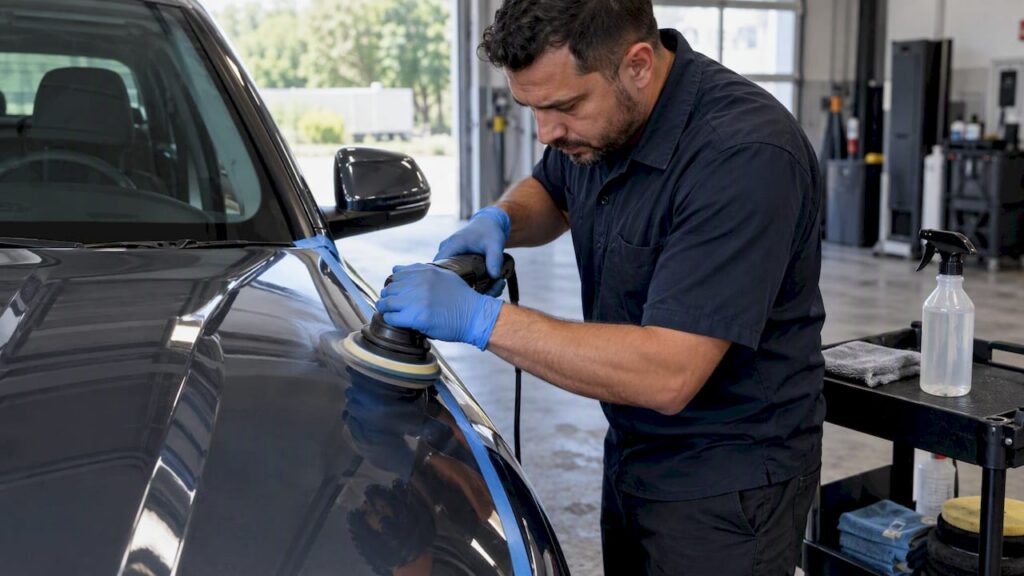
- Paint correction and wet sanding, since improper technique can permanently damage clear coat.
- Ceramic coating application or prep, which requires surface decontamination a home wash cannot achieve.
- Heavy odor or mold remediation, where incomplete extraction lets the problem return.
- Undercarriage salt removal on a schedule, which protects brake lines and suspension components from corrosion.
The difference between a car wash and a full detail usually comes down to depth of cleaning and the tools involved, and paying for that depth periodically tends to cost less than repairing corrosion damage or a paint defect later.
Seasonal Detailing Checklist by Time of Year
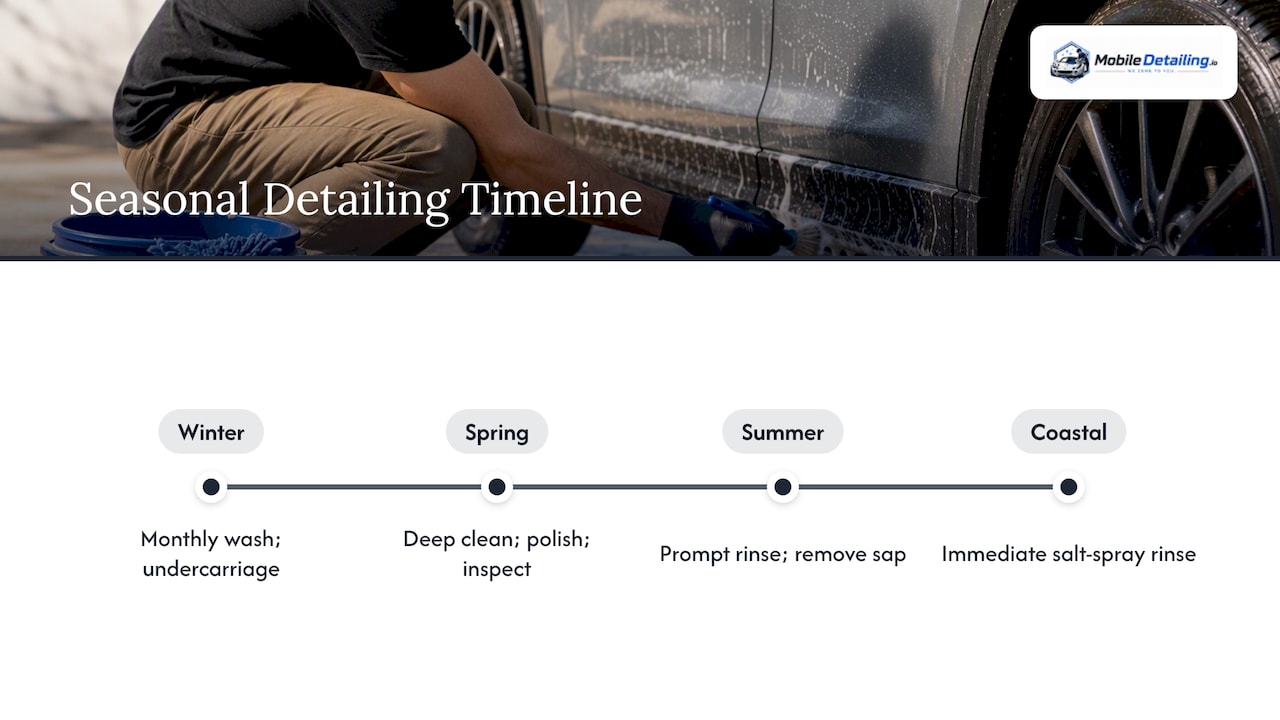
Winter: wash monthly at minimum when roads are salted, prioritizing the undercarriage and wheel wells. Touchless or underbody-focused washes help avoid scratching road grime into a cold, brittle clear coat.
Spring: a deep clean and fresh polish or wax removes winter fallout and restores the protection that faded over the season, matching Consumer Reports’ recommendation for a thorough spring detail that also helps catch early rust or damage.
Summer and coastal areas: rinse promptly after beach trips or salt spray exposure, remove bird droppings and sap quickly before they etch, and reapply UV protection on trim and paint.
Pro Tip: Keep a small detailing kit in your trunk for quick sap or dropping removal between scheduled washes, since a same-day wipe prevents most etching.
A broader seasonal vehicle care checklist can help track these tasks alongside other maintenance items throughout the year.
Booking Detailing on Your Own Schedule
Once you know your cadence, the harder part is finding a reliable professional to keep it on track. Mobiledetailing is a nationwide directory that connects vehicle owners with local mobile detailers offering interior detailing, exterior detailing, ceramic coating, and specialty services, so you can compare options without cold-calling shops one by one.
When requesting a quote, mention specifics that affect price and scope: whether you need an undercarriage wash for winter salt, ceramic coating prep, or interior stain and odor remediation. Detailers listed on the platform, such as businesses like First Class Mobile Detailing in Cary, Golden Detail Mobile Detailing in Tacoma, and Deluxetailing Mobile Detailing in San Antonio, show the range of services and pricing structures you can expect to compare locally. You can get a local quote directly and line up your next appointment around the schedule you just built.
Sources
- Drive Clean: Tips for Keeping Your Vehicle Spotless Inside and Out | AAA Club Alliance
- How Often Should You Wash Road Salt Off Your Car? – Consumer Reports
- Detail your car exterior | ACE/AAA guidance
FAQ
How often do people usually get their car detailed?
Many drivers get a full professional detail two to four times a year, often timed around seasonal changes like spring after winter road salt. Regular washing happens far more often, typically every one to three weeks depending on conditions and driving habits.
What is the $3000 rule for cars?
This is not a standard maintenance guideline referenced by automotive authorities, and definitions of it vary online. If you have seen it applied to detailing or repair decisions, it is worth confirming the source before relying on it.
What is the 30-60-90 rule for car maintenance?
This is not a recognized detailing or maintenance standard from major automotive authorities. General maintenance schedules are typically based on mileage intervals or manufacturer service recommendations rather than a fixed day count.
How much to tip on a $200 car detail?
Tipping for mobile or professional detailing is not standardized, and rates vary by region and provider. Many customers tip in the range typical for other personal services, but there is no official guideline, so check with the specific business or ask what is customary in your area when booking.
Recommended
- When to Choose a Car Wash or a Detail
- 3 Rules to Safely Detail Your Engine Bay: Dwell, Blower, Call a Pro
- Test Before You Recoat: 4 Step Ceramic Coating Maintenance
- Lab Claims: Ceramic Coating Lifespan for Car Owners, 1–7+ Years
MobileDetailing.io provides general educational information. Products, surfaces and vehicle finishes vary. Follow manufacturer instructions and consult a qualified detailing professional before using abrasive processes or chemical treatments.