Boat Hull Cleaning: Methods, Frequency and Cost

The safest way to clean a boat hull is the gentlest one that works. Rinse, then scrub with a soft cloth, plastic scraper or soft brush and a small amount of boat-safe soap. Step up to stronger tools only when the hull is out of the water and you can catch what comes off. Hulls with copper or other biocide bottom paint need extra care, because aggressive scrubbing removes the paint that keeps growth away. How often you clean depends on your paint, your water and your season. Pros commonly charge a few dollars per foot for in-water cleaning.
This guide covers what to use on each hull material, how to handle slime versus barnacles, how often to clean, what the work costs, and when to hand it to a professional.
Table of Contents
- Start with what is on your hull
- Matching tools to the hull material
- How to clean a hull out of the water
- Cleaning the bottom while the boat is in the water
- Special care for biocide paint
- How often should a boat hull be cleaned?
- What does professional hull cleaning cost?
- When to hire a professional
- Find a mobile marine detailer near you
- A simple hull care routine
- FAQ
- Sources
Start with what is on your hull
Before you pick a brush, work out two things: what the hull is made of, and what is on the bottom.
Above the waterline you are usually dealing with gelcoat or paint on fiberglass, bare or painted aluminum, steel, or wood. Stains, scum lines, oxidation and chalky residue are the usual problems. These are cosmetic and chemical, and they are the easy part.
Below the waterline you are dealing with biological growth: slime, algae, grass, barnacles and other hard fouling. Here the bottom coating matters more than the hull material. Most boats carry one of three things:
- A biocide (antifouling) paint, often copper-based, that slowly releases a compound to discourage growth.
- A non-biocide hard or soft coating, such as a slick or epoxy-type finish, that relies on a smooth surface instead of a toxin.
- No bottom paint, common on trailered boats that spend only days in the water.
If you do not know which you have, check the can or invoice from the last paint job, or ask the yard that applied it. That one fact decides how hard you can scrub and how often.
Matching tools to the hull material
Researchers who reviewed hull-cleaning practice found that nylon or polypropylene brushes are used on fiberglass, aluminum, steel and wood hulls, while stiffer plastic or steel brushes are reserved for hard, calcareous fouling. The same review notes that steel or metal brushes are generally limited to steel or aluminum hulls, to avoid damaging the surface.
In practice:
| Hull type | Safe default tools | Avoid |
|---|---|---|
| Fiberglass (gelcoat) | Soft cloth, nylon brush, boat soap | Steel brushes, abrasive pads, harsh acids left on the surface |
| Aluminum | Nylon brush, aluminum-safe cleaner | Chlorine bleach, strong acids not rated for aluminum |
| Steel | Nylon or stiff plastic brush; metal brush only on bare steel | Scraping through the coating |
| Wood | Soft brush, mild soap | Pressure washing close-up, metal scrapers |
| Any hull with biocide paint | Cloth, plastic scraper, soft scrubber, only where needed | Power brushes, metal scrapers, abrasives |
Aluminum deserves special mention. It reacts badly to some cleaners that are fine on fiberglass, so use a product labeled for it and rinse thoroughly.
How to clean a hull out of the water
Hauling the boat is the best moment to do a thorough job. The boat is dry, you can see everything, and runoff can be controlled. A California coastal agency notes that maintenance on land lets you collect and properly dispose of debris, residues, solvents, spills and polluted runoff.
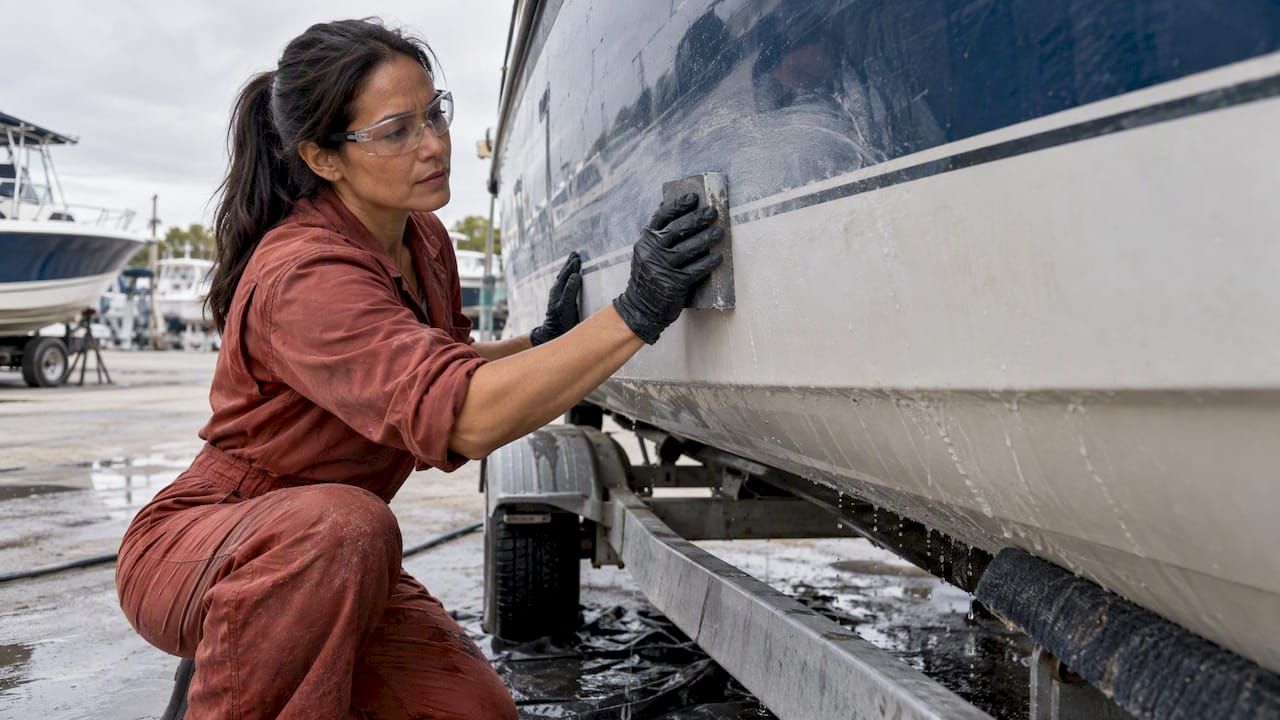
- Rinse first. Wash the hull while the growth is still damp and soft. Slime and light algae often come off with water and a soft brush.
- Scrub with soap from top to bottom. Use a phosphate-free, biodegradable boat soap, and use it sparingly. Work in sections so soap does not dry on the surface.
- Deal with hard growth. Barnacles and tube worms need a plastic scraper on coated hulls. If you are on bare fiberglass or an unpainted metal hull, a stiffer tool may be appropriate, but test a small area first.
- Treat stains and oxidation separately. Waterline scum is usually a surface film. Use a cleaner rated for your hull material and follow the label.
- Rinse thoroughly and inspect. Look for blisters, gouges, worn paint, and exposed spots where the coating has thinned.
- Protect the clean surface. Fresh bottom paint, or a wax or sealant above the waterline, makes the next cleaning easier.
Capture the wash water if you can. Many marinas and boatyards require tarps, vacuum systems or a wash-down pad, so ask before you start.
Cleaners to skip
Maryland’s Department of Natural Resources advises using phosphate-free, biodegradable detergents sparingly and avoiding ammonia, sodium hypochlorite, chlorinated solvents, petroleum distillates and lye. That rules out many of the “homemade” hull cleaners passed around on forums.
The question of the best homemade cleaner comes up constantly, and the honest answer is: warm water, a little mild boat soap and elbow grease beat nearly every mixture. Forum advice about diluted muriatic acid appears in search results, but acid is hazardous to you, your gelcoat, your metal hardware and the water. Leave strong acid work to a trained professional.
Cleaning the bottom while the boat is in the water
Many owners clean in the water to avoid a haul-out. It can be done, but the rules are tighter, because everything you remove goes into the water.
The California factsheet is direct: clean by hand with cloth, plastic scrapers or soft scrubbers, and if the growth cannot be removed that way, or would need metal scrapers, haul the boat out so loosened paint and fouling organisms can be captured. The same guidance says not to create a visible plume of bottom paint in the water.
Some practical points:
- Check your marina rules first. Many marinas ban in-water hull cleaning outright or require a permitted diver. Ask the dockmaster before you get in.
- Be honest about the safety side. Scrubbing a hull means working underwater, often near propellers, in cold or murky water. Do not do it alone, and do not use hookah or tank gear without proper training. A professional diver is the right call for anything beyond a snorkel-depth wipe-down.
- Go gentle. Soft growth such as slime and algae should come off with a cloth or soft pad. If you need a scraper, use plastic.
- Know the larger rule picture. Federal rules have also addressed this. The EPA’s 2008 Vessel General Permit covers underwater ship husbandry discharges and says hull cleaning must minimize the discharge of fouling organisms and antifouling coatings. That permit is aimed at larger vessels, while recreational boats fall under state and local rules, which vary widely.
Technology is moving too. A 2020 review of underwater cleaning systems describes equipment that collects removed fouling instead of releasing it into the water, which is one reason many professional services now use capture or containment methods.
Special care for biocide paint
Biocide paint works by releasing a compound at the surface. Scrub hard and you remove both the growth and the protection, and you send copper into the water.
California State Parks advises regular cleaning to extend bottom-paint life and avoid hard fouling, while warning that aggressive scrapers, abrasives and powered rotary brushes can strip paint and release copper or other biocide. California’s agencies add some specific guidance:
- For biocide coatings, clean only the areas with denser fouling, and do not clean newly painted hulls for at least 90 days.
- Use the least abrasive method that works, and read the paint label, which may restrict cleaning.
If you are repainting anyway, Maryland’s boating program suggests considering low-copper hard paints or non-toxic slick coatings combined with regular underwater cleaning, rather than high-copper paints. A coating choice is part of the cleaning plan, so talk it through with your yard.
Coating work is not a casual weekend job. Applying bottom paint, ceramic-type marine coatings or any product that needs surface prep and cure times is best handled by a professional. So is wet sanding or heavy compounding of oxidized gelcoat.
How often should a boat hull be cleaned?
There is no single schedule. It depends on the coating, the water (warm, brackish and nutrient-rich water grows fouling fastest), and how often the boat moves. Movement helps. A boat that sits at the dock all summer fouls much faster than one used every weekend.
California’s boating agency gives these intervals in its guide to using hull paint:
| Bottom coating | Typical cleaning interval (California guidance) |
|---|---|
| Non-biocide paint | Every 2 to 4 weeks |
| Non-copper biocide paint | Every 3 to 4 weeks |
| Copper paint | Only when needed, no more than every 30 days |
| New paint | Wait at least 90 days |
Those figures come from California, so treat them as a reference point and follow your paint label and local requirements. The state’s water quality staff also stress that cleaning should be condition-based: inspect regularly and clean when you see fouling that needs removing. Frequent, gentle cleaning controls growth cheaply, but unnecessary cleaning of biocide coatings can release paint and pollutants and cut into their protection. For soft non-biocide coatings, the same agency says hand cleaning every 3 or 4 weeks, depending on season and growth, is typical, using cloth, plastic scrapers or soft scrubbers rather than power brushes.
For the above-water part of the hull, a rinse after each outing and a wash every month or two keeps salt, scum lines and oxidation from setting.
Freshwater and trailered boats
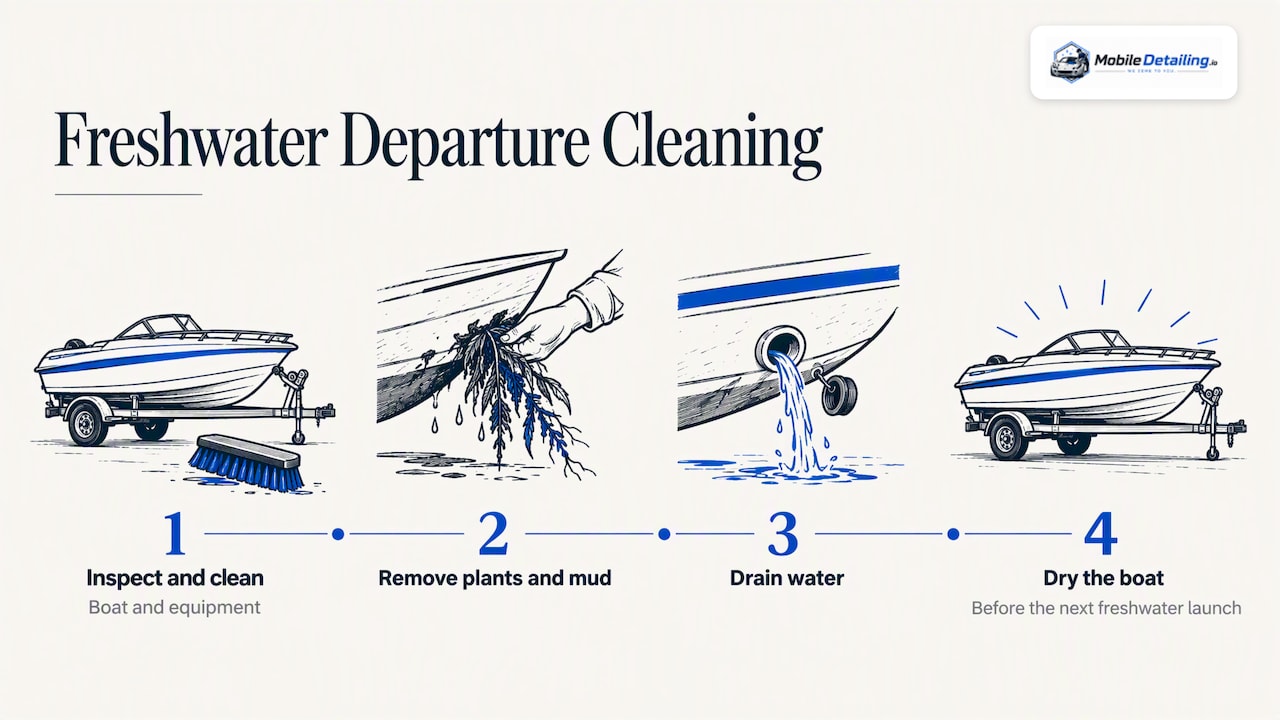
If the boat lives on a trailer, the job looks different. You are not fighting barnacles, you are preventing the spread of invasive species. California’s boating guide on cleaning boats advises that when leaving freshwater you inspect and clean the boat and equipment, remove plants and mud, drain water, and dry the boat before launching into freshwater again. Many states have similar rules, so check yours.
What does professional hull cleaning cost?
Prices vary by region, boat size, how fouled the hull is, and whether the diver visits on a recurring schedule. One industry maintenance guide puts professional cleaning at roughly $2 to $5 per foot, which works out to about $50 to $125 per session for a 25-foot boat. Treat that as a ballpark, not a quote. Heavy growth, warm southern waters and remote marinas can push the number up, and recurring monthly service is often priced lower per visit than a one-time cleaning of a neglected hull.
A few things influence what you are quoted:
- Length of the boat, and sometimes beam or number of hulls on catamarans and pontoons.
- Fouling level. A hull cleaned every month is cheaper to maintain than one that has gone a season.
- Add-ons, such as propeller polishing, zinc anode replacement and a photo or video inspection report.
- Frequency. Regular service reduces drag and fuel burn, and one boatyard guide notes that regular cleaning between haul-outs can pay for itself in fuel savings.
When you compare quotes, ask what is included, how the diver handles debris, and whether they know the paint on your hull. A good provider will ask you the same question first.
For above-the-waterline work, such as washing, oxidation removal and polishing, pricing follows a different pattern. Our breakdown of mobile boat detailing costs per foot explains the range and how to compare quotes.
When to hire a professional
DIY is fine for a light wash of a fiberglass hull on a trailer. Bring in help when:
- The hull has heavy hard fouling, and you would need metal scrapers or in-water scraping.
- You need to clean in the water. Marina rules, diver safety and containment make this a job for someone equipped for it.
- The gelcoat is chalky, deeply oxidized or scratched and needs compounding, wet sanding or paint correction.
- You want a marine ceramic or other protective coating applied. Surface prep and cure conditions decide how well it works, and mistakes are expensive to undo.
- The job involves acids or other hazardous chemicals. Pros use proper protective gear and disposal methods.
Mobile marine detailers come to your dock, storage yard or driveway, so you do not have to move the boat. Services vary by business, and not every detailer handles underwater work, so confirm exactly what is offered before booking. Many specialize in above-the-waterline hull washing, oxidation removal and polishing, which is where most owners see the biggest cosmetic difference.
Find a mobile marine detailer near you
MobileDetailing.io is a free directory where boat owners can search by location, compare local marine detailers, read profiles and send quote requests. Browse marine detailers on MobileDetailing.io, look at city pages such as marine detailing in Detroit, MI or marine detailing in San Francisco, CA, or view individual listings like Clean Marine Detailing in Greenville, NC and Florida Marine Detailing in Gainesville, FL. When you know what you need, you can request a local quote. Listing details and services are set by each business, so describe your hull, bottom paint and mooring situation in the request.
A simple hull care routine
A routine saves more money than any product:
- After every outing: rinse the hull with fresh water, especially after salt water.
- Monthly: inspect the bottom for growth and the waterline for scum. Clean only if the fouling needs it.
- Each season: haul out, wash thoroughly, check paint wear, and plan touch-ups or repainting with your yard.
- Every year or two: have a professional assess oxidation and coatings, and decide whether polishing or a protective coating makes sense.
Keep a short log with dates, water temperature, what you found, and what you did. After a season you will know how quickly your hull fouls and can schedule cleaning around the facts rather than guesses.
FAQ
What is the best way to clean the hull of my boat?
Use the gentlest method that works: rinse, then scrub with a soft cloth, plastic scraper or soft brush and a little phosphate-free, biodegradable soap. Match the brush to your hull material, and avoid metal scrapers and power brushes on painted bottoms. If growth needs aggressive removal, haul the boat out so debris can be captured.
How much does it cost to have a boat hull cleaned?
One industry estimate is about $2 to $5 per foot, or roughly $50 to $125 per session on a 25-foot boat. Your price depends on region, how fouled the hull is and whether you sign up for recurring service. Get at least two written quotes and compare what each includes.
How often should a boat hull be cleaned?
It depends on your bottom paint and local water. California guidance suggests every 2 to 4 weeks for non-biocide paint and every 3 to 4 weeks for non-copper biocide paint, while copper-painted hulls should be cleaned only when needed and no more than every 30 days. Wait at least 90 days after new paint, and follow the label and local rules.
Can I use bleach or acid to clean my hull?
It is not a good idea. Maryland’s boating guidance says to avoid sodium hypochlorite (bleach), ammonia, chlorinated solvents, petroleum distillates and lye. Strong acids can damage gelcoat and metal and harm the water, so leave that work to a professional.
Sources
- Boat Hull Cleaning and Hull Coating Selection Factsheet (California Coastal Commission, 2019)
- Boat Hull Cleaning and Hull Paint factsheet (California Coastal Commission, 2017)
- Best practise for cleaning of ship hulls (Chalmers University of Technology)
- Clean Boating Tip Sheet: Vessel Cleaning and Maintenance (Maryland DNR)
- Clean Boating Tip Sheet: Underwater Hull Cleaning (Maryland DNR)
- Recreational Boater’s Guide to Using Hull Paint (California Division of Boating and Waterways, 2019)
- Boat Cleaning & Maintenance (California State Parks)
- Underwater Ship Husbandry Discharges (U.S. EPA)
- A Guide to Cleaning Boats (California Division of Boating and Waterways)
- Review of Underwater Ship Hull Cleaning Technologies (PMC)
- Boat Maintenance Cost: What You Really Pay Each Year
- Hull Cleaning: How Often & What It Should Cost
Recommended
- U.S. Mobile Boat Detailing Costs $5–$50/ft and How to Compare Quotes
- Boat Owners: 3-Tier Gelcoat Oxidation Removal Plan to Avoid Overcutting
MobileDetailing.io provides general educational information. Products, surfaces and vehicle finishes vary. Follow manufacturer instructions and consult a qualified detailing professional before using abrasive processes or chemical treatments.