Boat Teak Cleaning: Safe Methods, Products and When to Hire a Pro
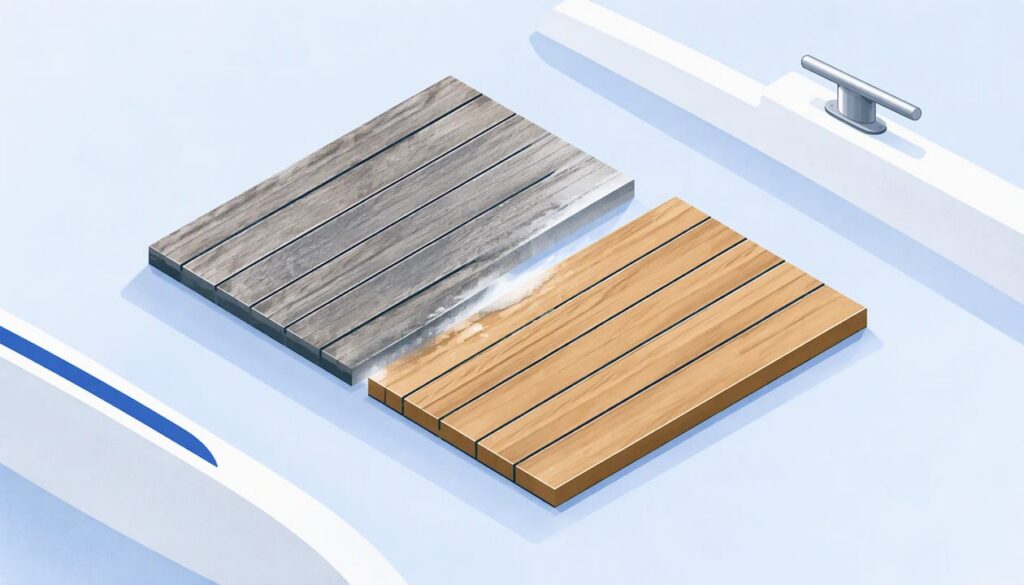
The safest way to clean boat teak is the gentlest one that works: rinse with fresh water, wash with mild soap and a soft brush or pad, scrub across the grain, rinse completely and let the wood dry. Stronger chemistry belongs to badly stained or gray teak, and even then it needs gloves, masking and a hose within reach. This guide walks through that ladder step by step, explains what to do about mildew, stains and gray weathering, covers oil versus sealer versus bare wood, and tells you when it makes sense to hand the job to a mobile marine detailer.
Table of Contents
- Why teak needs a different approach than the rest of your boat
- The gentle routine: soap, soft brush, fresh water
- Mildew, stains and gray teak: what to try, in order
- Using acid teak cleaners safely
- Oil, sealer, varnish or bare: what happens after cleaning
- What about teak on a pontoon boat?
- DIY or hire a mobile marine detailer?
- Find a mobile boat detailer near you
- A simple yearly teak plan
- Common mistakes to avoid
- FAQ
- Sources
Why teak needs a different approach than the rest of your boat
Teak is a dense, oily hardwood, which is why boatbuilders have used it for decks, cockpit seats, swim platforms, handrails and interior trim for generations. It tolerates water well, but it is not indestructible. Sun, salt, rain and foot traffic slowly wear the soft grain between the harder growth rings. Scrub hard, and you speed that wear up.
On a laid teak deck there is a second concern: the seams. Ocean Alexander’s yacht service team warns against stiff brushes, abrasive pads and pressure washers because they can damage both the teak fibers and the caulking between the planks. Once caulking is damaged, water gets under the deck, and that repair costs far more than any cleaning product.
So the goal is not to make teak look brand new in one afternoon. It is to remove dirt, salt and growth with as little abrasion and as little chemistry as possible, and to repeat that gentle routine often enough that you never need the aggressive options.
The gentle routine: soap, soft brush, fresh water
Practical Sailor, a boat-maintenance publication, recommends fresh water or a mild detergent for routine teak washing, applied with a soft-bristled brush or pad. It also advises scrubbing across the grain rather than along it, which removes less of the softer wood between the rings.
Here is a routine that follows that guidance and the care steps in the Ocean Alexander guide:
- Rinse first. Wet the teak with fresh water to lift loose dirt, salt and grit. Grit dragged under a brush acts like sandpaper.
- Mix a mild solution. A small amount of boat soap or mild detergent in a bucket is enough. More soap does not clean better, and it takes longer to rinse.
- Scrub gently across the grain. Use a soft brush or a soft pad. Work one section at a time so the wood does not dry out between steps.
- Rinse thoroughly. Soap residue left in the grain attracts dirt and can leave streaks.
- Let it dry completely. The Ocean Alexander guide says to let the deck dry fully before judging or treating it. Teak looks darker and cleaner wet, so a verdict on a damp deck is unreliable.
Keep the water pressure low. A garden hose with an ordinary nozzle is fine. A pressure washer is not.
A note on soap and the water around your boat
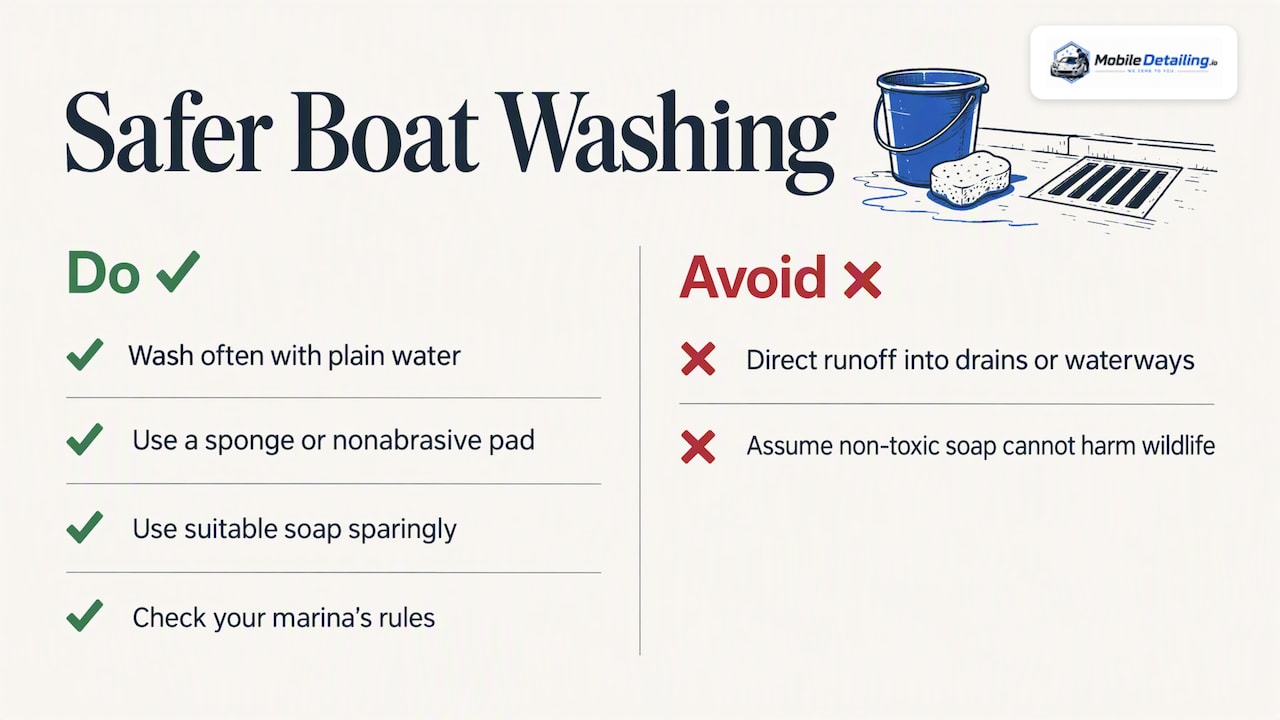
Where your rinse water goes matters. New Jersey’s Department of Environmental Protection, in its marina cleaning guidance, recommends washing often with plain water and a sponge or nonabrasive pad, and using phosphate-free, biodegradable, non-toxic soap sparingly when you need it. Even non-toxic soaps can harm aquatic wildlife, so the less that runs into the water, the better. If your boat is on a trailer or lift, wash on a surface where runoff does not go straight into a storm drain or the lake. Check your marina’s rules too, since many restrict what can be used on the dock.
What the same guidance says about the cleaners you pick
The New Jersey guidance also says to clean teak with mild soap and abrasive pads or bronze wool and to avoid standard solvent-based teak cleaners. That is a state environmental agency’s view, written with marina water quality in mind, so it leans conservative. It is still a useful tiebreaker: if a plain soap and a soft pad get the job done, there is no reason to reach for a solvent.
Mildew, stains and gray teak: what to try, in order
Not all dirty teak is the same problem. Match the fix to what you actually see.
| What you see | Likely cause | Start with |
|---|---|---|
| Dull film, green or black spots | Mildew, algae, dirt | Soapy fresh water, soft brush, thorough rinse |
| Dark spots from spills | Food, drink, sunscreen | Spot wash first, then a stronger cleaner only if needed |
| Even silver-gray color | Sun and weather exposure | Decide whether you want gray (see below) |
| Dark, blotchy, ground-in grime | Neglect or old finish | One-part or two-part teak cleaner, used by the label |
Mildew and routine grime
Discover Boating, an industry-backed consumer resource, says regular teak cleaning is best handled with soapy water. Acid-based one-part or two-part cleaners are meant for darker or more weathered teak, and they come with instructions you need to follow exactly. Start with soap and a soft brush even if the wood looks bad. You may be surprised how much of the “damage” is surface film.
Gray weathering
Gray teak is not rotten teak. It is the surface of the wood oxidizing in the sun. Some owners like the silver look and leave it alone; others want the honey color back. Practical Sailor lists oiling, varnishing and letting teak weather naturally to silver-gray as valid maintenance philosophies, and recommends starting with the least abrasive cleaning method. That framing is worth keeping in mind: you are choosing a look and a maintenance schedule, not fixing a defect.
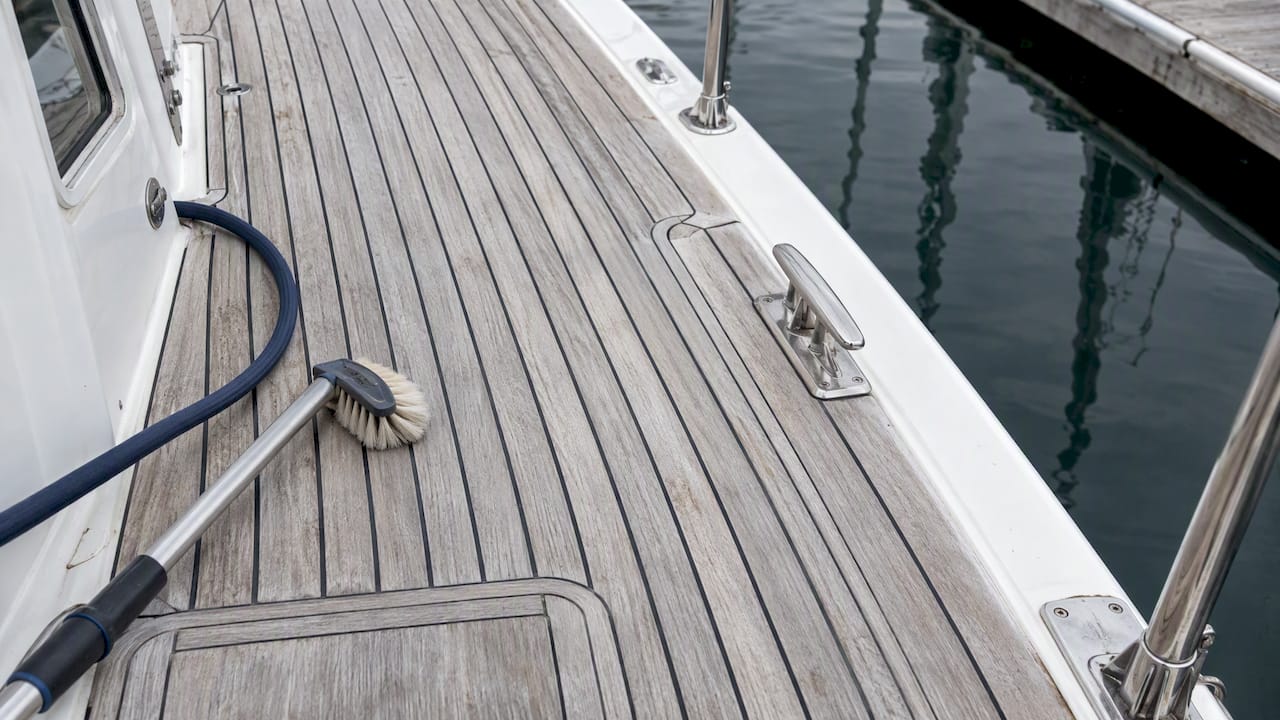
If you want the color back, a teak cleaner and brightener is the usual next step. Practical Sailor’s view of two-part cleaners is blunt: they are a heavy-duty option best reserved for badly soiled teak or for preparing the wood for a finish, while routine upkeep should rely on water, mild soap and gentle cross-grain scrubbing.
Using acid teak cleaners safely
Many teak cleaners contain strong acids or alkalis. BoatUS notes that they can burn skin or eyes and damage paint, fiberglass, anodized aluminum, chrome and other materials near the teak. Its practical advice for anyone using them: wear rubber gloves, keep a hose ready, flush the work area thoroughly, consider eye protection and avoid breathing fumes.
Discover Boating adds a point that surprises many owners: remove teak pieces from the boat before using acid-based cleaners where you can, because the cleaner can harm gel coat, paint and metals. Loose items such as teak seat slats, tables and grates are easy to move to a driveway or grass-free work area. A laid deck obviously cannot be removed, which is one reason acid cleaning on installed decks is a job for experience.
If you do it yourself on installed teak:
- Read the label first and follow the dwell time. Do not let product dry on the wood.
- Wet the teak and the surfaces around it with fresh water before you start.
- Mask or rinse off adjacent gel coat, anodized trim, stainless and painted surfaces.
- Work in small sections, rinse each one thoroughly, and keep the hose running within reach.
- Do not mix products. Cleaners with different chemistry can react.
If any of that sounds like more risk than you want near your gel coat or rails, that is a fair reason to hire someone. Hazardous chemical work is exactly what a trained detailer handles routinely.
Oil, sealer, varnish or bare: what happens after cleaning
Clean teak is thirsty and exposed, so the next decision is what, if anything, goes on it. There is no single right answer, and the experts you read will disagree.
- Leave it bare. Low maintenance. The wood weathers to silver-gray, and you keep up with periodic soft washing. Practical Sailor treats this as a legitimate approach.
- Oil. Restores warmth of color quickly, but usually needs frequent reapplication, and oiled surfaces can hold dirt and mildew if they are not kept clean.
- Sealer. Lasts longer than oil on many products and can give some protection from UV. Application rules vary by brand, so follow the manufacturer’s directions.
- Varnish. Common on interior teak and trim. It gives a glossy, protective film but needs sanding and recoating when it fails.
Where it gets contentious is decks. Some experienced owners argue against oils and sealers on teak decks after chemical cleaning because they can attract dirt and may affect seam caulking. That is a maintenance opinion, not a rule, so ask whoever built or serviced your deck what they recommend, and check your boat manufacturer’s care guide. Interior teak that never sees UV or foot traffic is a different case from a cockpit deck.
Whichever way you go, wait for the wood to dry fully after cleaning before applying anything. Finish sealed over damp wood traps moisture.
What about teak on a pontoon boat?
Most pontoon boats carry little structural teak, but many have teak-look or real teak accents, tables, rails or swim-platform trim. Treat any real teak the same way as above: soft brush, mild soap, fresh water, no pressure washer.
The larger pontoon cleaning job is usually the aluminum logs (the tubes), the vinyl and the fence panels. Here is a practical order of operations that keeps your teak safe in the process:
- Do the logs and any acidic aluminum cleaning first, and keep that runoff off teak and canvas.
- Rinse the whole boat thoroughly.
- Wash the vinyl, carpet and teak accents last, using mild soap.
- Dry and inspect before you apply any protectant.
For the logs, the basic method is to rinse away loose dirt and salt, wash with boat soap and a soft-bristle brush, and rinse again. Heavily oxidized aluminum needs an aluminum-specific cleaner, used in small sections with gloves, eye protection and good ventilation, rinsed before it dries. Avoid wire brushes and abrasive pads on aluminum, since they scratch the finish. Product labels set the dwell times, so follow them rather than a general rule. If you want a cleaner that is formulated to be gentle on mixed materials, manufacturers publish product sheets; for example, Presta describes its hull and deck cleaner as phosphate-free, biodegradable and aluminum-safe, but that is the maker’s own claim and you should still test on a small spot first.
DIY or hire a mobile marine detailer?
Routine soap-and-brush maintenance is a good do-it-yourself job. A professional is worth the money in these situations:
- The deck is laid teak with caulked seams and you are not sure how much scrubbing it can take.
- The teak is badly gray, blotchy or stained and you are weighing an acid cleaner next to gel coat, anodized trim and painted surfaces.
- You want a finish applied evenly, or you are working out whether to oil, seal or leave it.
- The boat is large or hard to reach, so cleaning from a dock or storage yard is awkward.
- You are short on time. A mobile detailer comes to the marina, storage lot or your driveway, so you do not have to trailer the boat to a shop.
If you plan to have a bigger job done, such as polishing gel coat or applying ceramic coatings, ask the same detailer to look at the teak at the same visit. Wet sanding, paint correction, coatings and hazardous chemical work are professional jobs, and teak restoration sits close to that line when it involves acids.
Questions to ask before you book
- Which products will you use on the teak, and will you mask the surrounding gel coat and metal?
- How will you handle rinse water and runoff at my marina or storage yard?
- Do you scrub across the grain with soft tools, and do you avoid pressure washers on the deck?
- What do you recommend for finishing the wood, and why?
- Can you give me the scope and price in writing before you start?
A good detailer will answer those without hesitation. Price is something to get in writing for your own boat, since size, condition and location all change the scope.
Find a mobile boat detailer near you
MobileDetailing.io is a nationwide directory where boat owners can search by location, compare local detailers and send a quote request for free. Listings cover marine detailing along with interior and exterior work, ceramic coating and more, so you can handle teak, gel coat and canvas with one provider if you like. Owners in the Great Lakes region can start with marine detailing in Detroit, MI, and those on the West Coast can look at marine detailing in San Francisco, CA.
Some examples of listed marine businesses in different parts of the country include Swift Marine Boat Detailing in Hialeah, FL, Florida Marine Detailing in Gainesville, FL, and Clean Marine Detailing in Greenville, NC. Open a profile to see the services, photos and reviews that business has published, then confirm the details with them directly. When you are ready, you can request a local quote and describe your teak: where it is on the boat, what condition it is in and what look you want.
A simple yearly teak plan
Teak stays in good shape when you spread the work out rather than letting it pile up. This is a general pattern, not a manufacturer schedule, so adjust it to your climate and how often the boat is used.
- After most outings: rinse with fresh water, especially after salt exposure. Wipe up sunscreen, food and drink spills before they set.
- Every few weeks in season: wash with mild soap and a soft brush, scrub across the grain, rinse and let dry.
- Once or twice a year: inspect the wood, seams and any finish. Decide whether you need a brightener or a finish touch-up.
- Before storage: clean, rinse fully and dry the teak, then cover the boat in a way that allows airflow. Trapped moisture is what grows mildew.
Sunscreen deserves its own line. It is one of the most common sources of dark spots on teak, and it is much easier to wash off promptly than to clean out later.
Common mistakes to avoid
- Pressure washing the deck. It strips softer wood and can damage seams.
- Scrubbing along the grain with a stiff brush. It leaves a ridged, worn surface.
- Using an acid cleaner without protecting nearby surfaces. Gel coat, paint, chrome and anodized aluminum can all be harmed, according to BoatUS.
- Letting cleaner dry on the wood. Follow the label dwell time and rinse.
- Treating before the wood is dry. Oils and sealers go on dry teak only.
- Sending soapy runoff straight into the water. Use less soap and check local rules.
FAQ
What is the best thing to clean boat teak with?
For routine cleaning, fresh water, mild soap and a soft brush or pad are the safest place to start. Scrub across the grain and rinse well. Save one-part or two-part teak cleaners for dark or heavily weathered wood, and follow the label closely.
Can I use a pressure washer on a teak deck?
It is best not to. Pressure can wear away the softer wood and damage the caulking between the planks, and yacht service guidance specifically warns against it. A hose with a regular nozzle and a soft brush is enough for routine cleaning.
Should I oil or seal teak after cleaning?
That depends on the look you want and how much upkeep you will do. Many owners oil or varnish for a golden color, while others let teak weather to silver-gray and simply wash it. Opinions on decks differ, so ask your boat’s manufacturer or a marine professional about your specific deck before you pick.
Can a mobile detailer clean the teak on my pontoon or boat?
Many mobile marine detailers do, and some can also handle the aluminum logs, vinyl and gel coat in the same visit. Ask which products they use on teak and how they protect nearby surfaces. You can compare local providers and send a quote request through MobileDetailing.io.
Sources
- Maintain Mindfully, New Jersey Department of Environmental Protection
- Teak Deck Care and Cleaning, Ocean Alexander
- Two-Part Teak Cleaners, Practical Sailor
- Essential Marine Cleaners, Practical Sailor
- How to Clean a Boat, Discover Boating
- Teak Cleaning Tips, BoatUS
- Marine Maintenance Guide, Presta
Recommended
MobileDetailing.io provides general educational information. Products, surfaces and vehicle finishes vary. Follow manufacturer instructions and consult a qualified detailing professional before using abrasive processes or chemical treatments.