Stop Rewaxing: Ceramic Coating Lasts a Year or More, and Find a Pro
For most owners who want long-term protection and less frequent washing, a professionally applied ceramic coating is the smarter investment. For budget-minded DIYers who just want a deep shine and don’t mind reapplying every few months, wax still gets the job done. The gap between them comes down to bonding chemistry, upfront cost, and how much prep work you’re willing to pay for or do yourself.
Table of Contents
- Ceramic Coating vs Wax: What Each Product Actually Is
- What Car Wax and Sealants Actually Do
- Ceramic Coating vs Wax: Comparing the Factors That Matter
- The Real Cost of Ceramic Coating vs Wax Over Time
- Application and Prep: What Actually Happens Before the Shine
- Living With It: Maintenance and Waxing Over a Coating
- How to Choose Between Coating and Wax: A Practical Checklist
- Finding a Qualified Detailer Through MobileDetailing.io
- Sources
- FAQ
Ceramic Coating vs Wax: What Each Product Actually Is
Ceramic coating and wax solve the same basic problem, protecting your clear coat from the elements, but they do it in completely different ways. Understanding that difference is the whole point of comparing coatings and wax, and it’s why the two products aren’t really interchangeable despite sitting on the same store shelf.
A ceramic coating is a liquid polymer, usually silicon dioxide based, that cures into a semi-permanent, glass-like layer chemically bonded to the clear coat. That bond is covalent, meaning the coating doesn’t just sit on top of the paint the way wax does. It becomes part of the surface. That bond is what gives coatings their resistance to UV breakdown, bird droppings, tree sap, and road grime, and it’s why they hold up so much longer than an organic, sacrificial layer like carnauba wax.
Here’s what a properly applied ceramic coating actually does:
- Blocks UV rays that cause paint oxidation and fading over time
- Resists etching from acidic contaminants like bug splatter and bird droppings
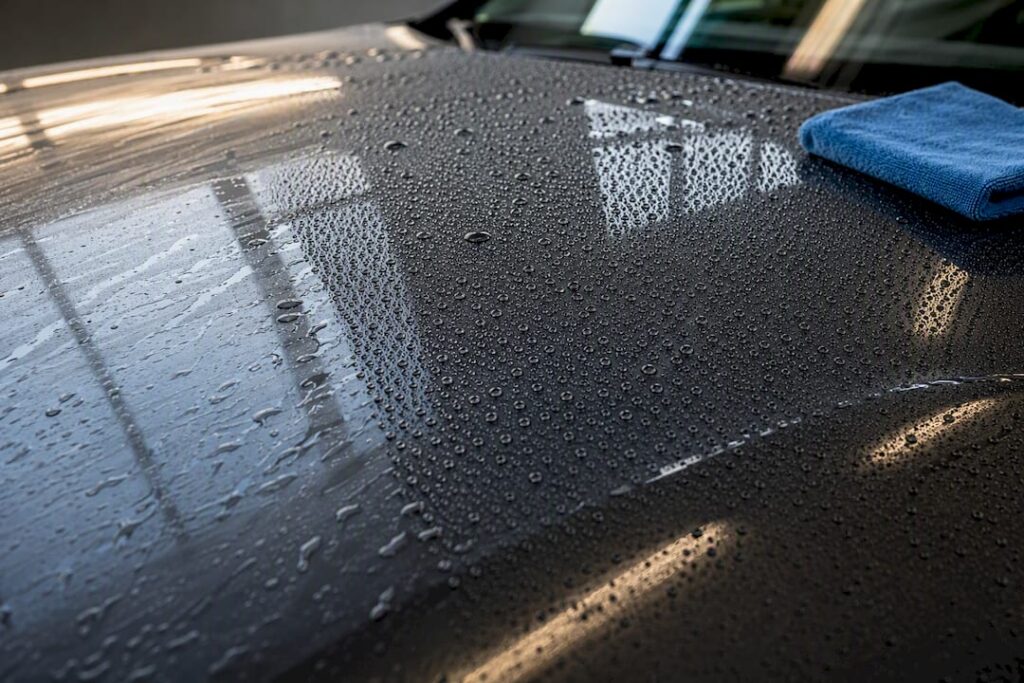
- Creates a hydrophobic surface that makes water bead and roll off
- Adds a hard, glossy finish that’s more resistant to light chemical staining
- Reduces how tightly dirt and grime cling to the paint between washes
What it does not do, no matter what a bottle at the auto parts store claims, is make your car immune to scratches or rock chips. Ceramic coating sits at a hardness level that helps with fine swirl marks and light abrasion, but a shopping cart or a gravel road will still leave a mark. Anyone shopping for coatings based on scratch-proof claims alone is setting themselves up for disappointment.
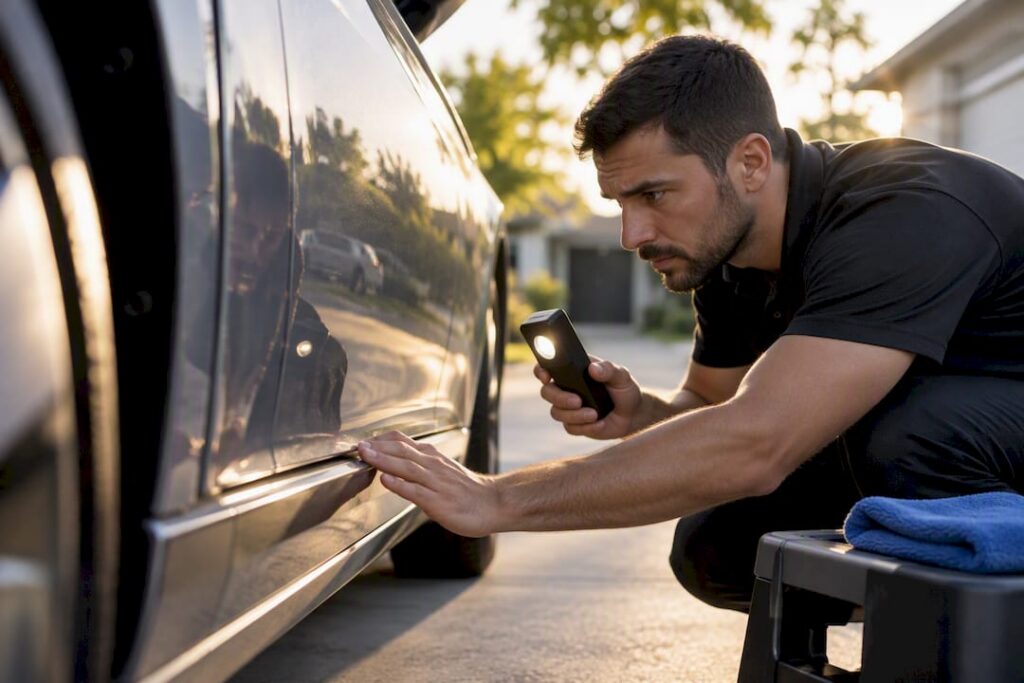
Coating performance also depends heavily on what’s underneath it. A coating applied over swirl marks, oxidation, or contaminated paint locks those flaws in for the long haul. Proper surface prep, washing, clay bar decontamination, and paint correction when needed, is not optional; skipping it is the single most common reason coatings fail early or never bond correctly. That’s also why most reputable coating jobs are done by trained professionals rather than as a weekend garage project.
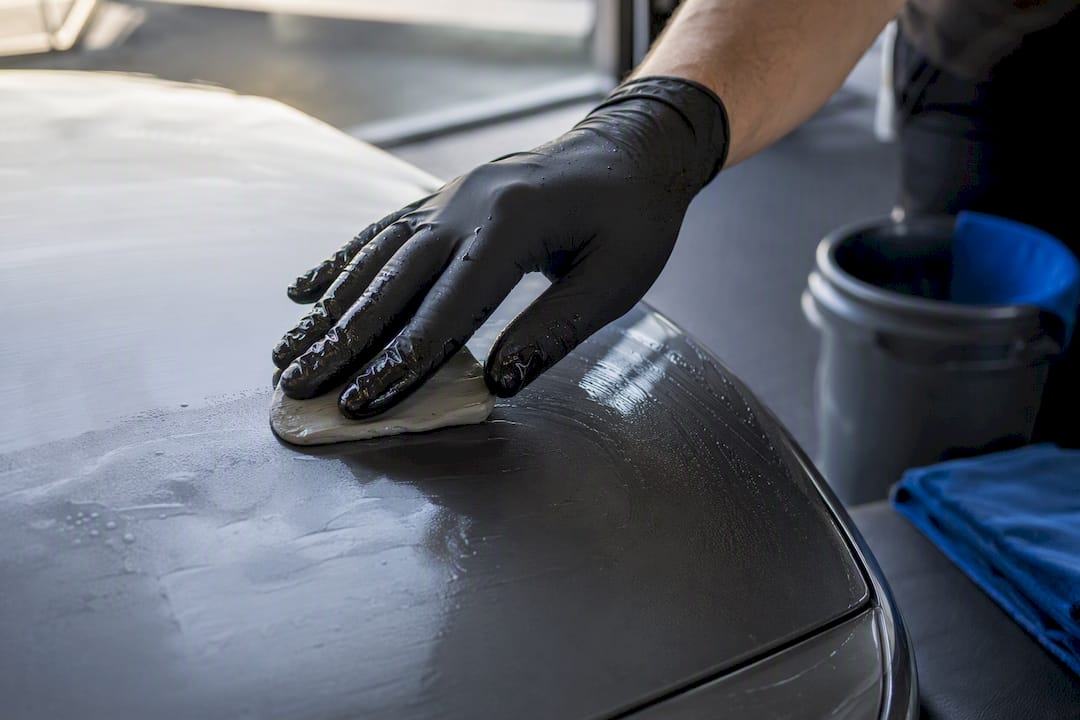
Pro Tip: If a shop offers to apply a ceramic coating without inspecting or correcting your paint first, ask why. A coating locks in whatever condition your paint is in on application day, flaws included.
What Car Wax and Sealants Actually Do
Wax works on a completely different principle: it’s a sacrificial layer that protects your paint by wearing away instead of your clear coat taking the damage. Carnauba wax, made from the leaves of a Brazilian palm tree, has been the classic choice for decades because of the warm, deep shine it gives dark-colored paint in particular. Synthetic sealants are the lab-made cousin, generally lasting a bit longer than natural carnauba but with a slightly different look.
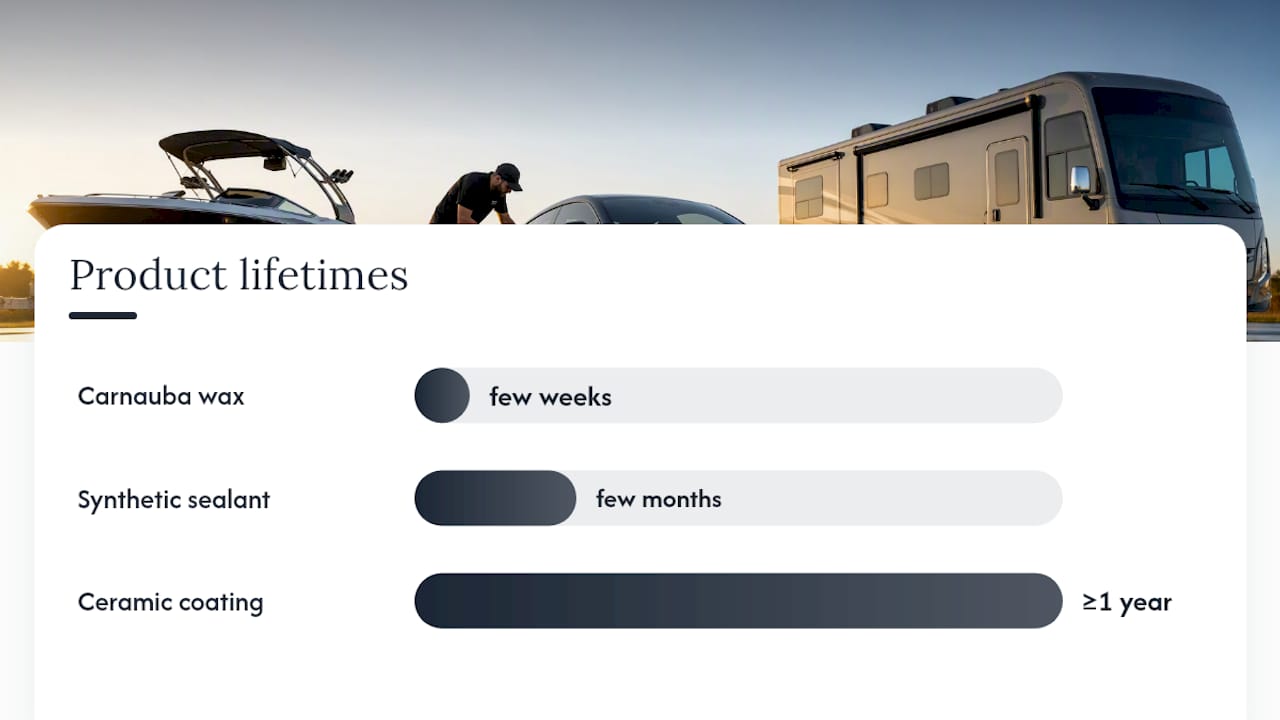
Both work the same basic way: they sit on top of the clear coat rather than bonding into it, forming a barrier against UV rays, water, and light contamination. That barrier degrades with heat, washing, and sun exposure, which is exactly why wax needs constant reapplication to keep working.
Wax’s real advantages show up in cost and accessibility, not longevity:
- A quality carnauba wax or synthetic sealant costs a fraction of a coating kit
- Application is forgiving. There’s no strict humidity or temperature window and little risk of a lasting mistake
- Most owners can apply it in a driveway with basic tools and no special training
- It delivers near-instant gloss, which matters if you’re prepping for a show or a sale
The tradeoff is durability. Wax typically lasts anywhere from a few weeks to a few months, depending on the product and how much exposure the car gets, compared to a year or more for many ceramic products. For someone who genuinely enjoys the ritual of washing and waxing their car regularly, that’s not a downside. It’s part of the hobby.
Ceramic Coating vs Wax: Comparing the Factors That Matter
Lined up side by side, the practical differences between coatings and wax break down into four areas that actually affect your decision: durability, cost, upkeep, and who each one fits best.
- Durability. A well-prepped ceramic coating from a reputable product line can last multiple seasons depending on product tier and maintenance. Wax measures its lifespan in shorter periods, with environmental factors further shortening it.
- Cost. Wax costs relatively little whether you buy a bottle for DIY use or pay a detailer for a wax application as part of a routine service. Ceramic coatings cost significantly more upfront, and that price climbs further if your paint needs correction before the coating goes on.
- Maintenance. Coated cars still need regular washing, just less frequent and less intensive since dirt doesn’t cling as aggressively. Waxed cars need more frequent attention and periodic reapplication to keep the protective layer active.
- Best-fit scenario. Coatings make the most sense for owners keeping a vehicle long-term, daily drivers exposed to harsh sun or road salt, and anyone who wants to wash less often. Wax fits owners who enjoy hands-on car care, are testing the waters before a bigger investment, or just want a quick shine before selling or showing a vehicle.
None of this makes one option objectively “better” in a vacuum. A show car owner who details every weekend might prefer the flexibility and low commitment of wax. A commuter who wants to wash their car once a month instead of every weekend is the person coatings were built for.
The Real Cost of Ceramic Coating vs Wax Over Time
The sticker price on a bottle of wax versus a coating kit tells you almost nothing about actual value. What matters is cost per year of protection, and that math shifts the picture considerably.
DIY wax products generally run cheap, and even professional wax application as an add-on service stays modest compared to coating work. DIY ceramic coating kits sit in the middle range, while professional ceramic coating jobs cost more, sometimes substantially more, especially when paint correction is part of the package. That correction step, removing swirl marks, light scratches, and oxidation before the coating goes on, is often the biggest swing factor in a quote and one many first-time coating buyers don’t budget for.
Here’s what actually drives the price on a coating job:
- The condition of your existing paint (heavy correction adds hours of labor)
- The tier and brand of coating product used
- The number of coating layers applied
- Vehicle size and the complexity of trim, wheels, and glass included in the job
- Whether the shop offers a written maintenance or performance warranty
Coating longevity depends as much on installer skill and prep work as on the product itself. Even a premium coating underperforms badly on paint that wasn’t properly cleaned, decontaminated, and corrected first. That’s worth remembering before choosing a shop based on price alone.
Be skeptical of any shop promising a coating that requires zero maintenance for years, or one offering a price dramatically below competitors for the same scope of work. Those are usually signs of shortcuts in prep, product quality, or both.
Application and Prep: What Actually Happens Before the Shine
The gap in effort between applying wax and applying a ceramic coating is enormous, and it’s a big part of why professionals handle most coating jobs.
Proper coating application generally follows this sequence:
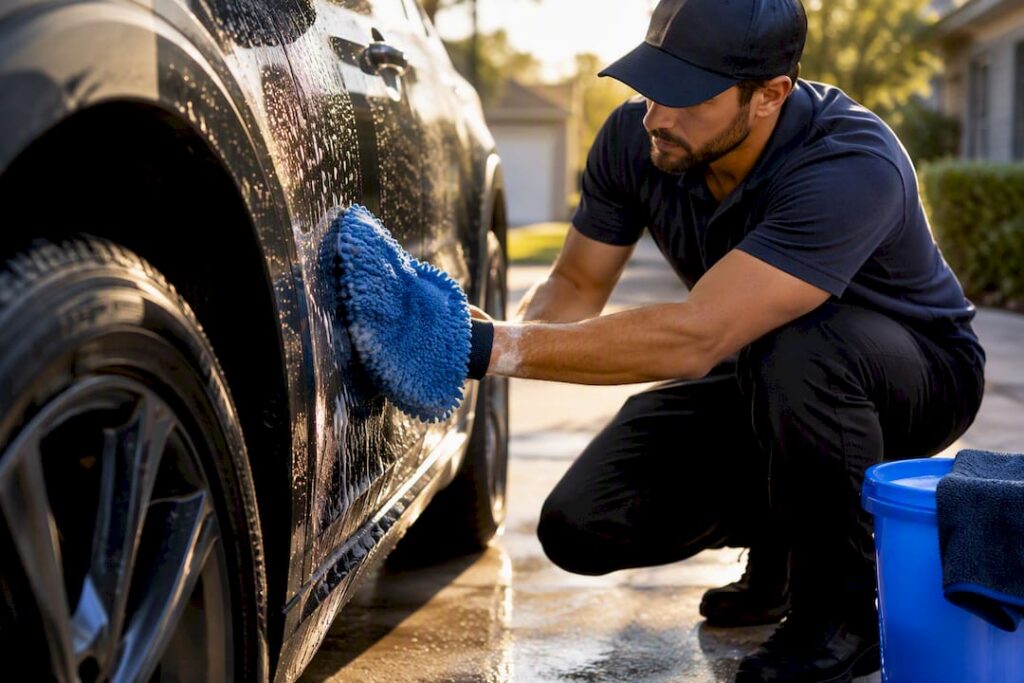
- A thorough wash to remove loose dirt and grime
- Clay bar or chemical decontamination to strip bonded contaminants off the paint
- Paint correction (machine polishing) to remove swirl marks, light scratches, and oxidation
- An isopropyl alcohol wipe-down to strip any oils or residue before the coating bonds
- Controlled application of the coating itself, in sections, under the right temperature and humidity conditions, followed by a curing period
Skip or rush any of those steps and the coating either fails to bond correctly or locks existing flaws into the paint permanently. That’s why this process typically happens in a controlled garage or bay rather than a driveway, and why it’s rarely a good DIY project for a first timer.
Wax application, by comparison, tolerates a lot more error. Wash, dry, apply a thin coat, let it haze, buff it off. Most people can learn it from a single video and get acceptable results the same afternoon.
The mistakes that actually ruin outcomes on either side are predictable: applying a coating over unclean or uncorrected paint, working in direct sun or high humidity, skipping the IPA wipe-down, or, on the wax side, applying too thick a layer and struggling to buff it off, or waxing over dirt and grinding grit into the clear coat.
Pro Tip: Before hiring anyone for coating work, ask what their process includes step by step. If “paint correction” isn’t mentioned at all, ask why. It’s rarely a job you can skip and still get the results shown in a shop’s photos.
Living With It: Maintenance and Waxing Over a Coating
Owning a coated or waxed car changes how you wash it, not whether you need to wash it. Coatings do not eliminate maintenance; they reduce how hard that maintenance is.
- Use the two-bucket method or a pH-neutral car wash to avoid stripping either protection prematurely
- Wash coated cars roughly every two to four weeks depending on exposure; waxed cars often need more frequent attention
- Avoid automatic car washes with abrasive brushes, which shorten the life of both wax and coatings
- Check for water beading; when it flattens out instead of forming tight beads, that’s usually a sign the coating or wax layer is wearing thin
Coatings make washing noticeably easier because dirt and grime don’t bond as tightly to the surface, but that ease doesn’t extend to chip resistance. A coated car still needs careful washing technique to avoid introducing new swirl marks.
Waxing over an existing ceramic coating is technically possible and won’t damage the coating, but it can mute the water behavior and gloss characteristics the coating is designed to produce. Some owners still do it occasionally for an extra gloss boost before an event, treating wax as a topper rather than a primary protectant. If your coating suddenly stops beading water well or starts attracting dirt faster than it used to, that’s the signal it’s time to have it inspected or reapplied.
How to Choose Between Coating and Wax: A Practical Checklist
Matching the right protection to your situation comes down to four questions: budget, current paint condition, how long you plan to keep the car, and how much maintenance you actually want to do.
- Tight budget, enjoy hands-on care: Wax or a synthetic sealant, reapplied every couple of months, is the practical choice.
- Keeping the car for years, want less frequent washing: A professionally applied ceramic coating pays off over time despite the higher upfront cost.
- Paint has visible swirl marks, oxidation, or light scratches: Budget for paint correction before any coating goes on. Skipping it undermines the whole investment.
- Selling or showing the car soon: Wax delivers fast, visible gloss without the lead time a coating job requires.
When requesting quotes, ask detailers these questions directly:
- Does the quote include paint correction, or is that a separate line item?
- What brand or tier of coating product is being used, and what’s its expected lifespan?
- What does the maintenance plan or warranty actually cover, and what voids it?
- How long will the vehicle need to sit before it can get wet or be driven?
Pro Tip: Treat vague warranty language as a red flag. A shop that can clearly explain what’s covered, what’s excluded, and how long the coating is expected to perform is far more trustworthy than one that just promises “lifetime protection.”
Watch out for prices that sit dramatically below every other quote you’ve gotten for the same scope of work. That’s almost always a sign of skipped prep, a diluted product, or both. Hybrid wax-and-ceramic products marketed as offering “the best of both worlds” deserve the same scrutiny. Their real-world durability varies widely, and marketing claims often outpace independent testing.
Finding a Qualified Detailer Through MobileDetailing.io
Once you know whether you’re leaning toward a coating or a wax job, the next step is finding someone qualified to do it right, because the outcome depends as much on the installer as the product. MobileDetailing.io is a nationwide directory that connects vehicle owners with local mobile detailing professionals offering everything from routine wax applications to full paint correction and ceramic coating packages.

When you submit a request through such platforms, it helps to include specifics: your vehicle’s make and model, the current condition of the paint (swirl marks, oxidation, prior coating or wax history), the outcome you want, and your availability. That level of detail helps detailers in your area send back accurate, comparable quotes instead of generic estimates. A solid quote should spell out what maintenance or performance expectations come with the job so you know exactly what you’re paying for before work begins. If your paint needs correction first, look for a detailer through the site’s paint correction and ceramic coating service categories, and ask any professional you’re considering to walk you through their prep process before booking. Ready to compare local options? Get a local quote and start the conversation with detailers who service your area.
Sources
- Ceramic Coating vs Wax – Chemical Guys
- Ceramic Coating vs. Wax: Which is better? – Turtle Wax
- Meguiar’s direct (detailer resources)
- 3M (product and technical resources)
FAQ
Is Ceramic Coating Better Than Wax?
For long-term protection and lower maintenance frequency, yes. Ceramic coating bonds to the clear coat and resists UV and chemical damage far longer than wax, though wax remains a cheaper, easier option for short-term shine.
Is There a Downside to Ceramic Coating?
The main downsides are cost and the fact that it isn’t scratch-proof or chip-proof despite what some marketing implies. It also requires proper paint prep and correction beforehand, which adds time and expense.
Do I Need to Wax My Car if It Has Ceramic Coating?
No, a properly applied coating doesn’t require wax on top to function. Some owners still apply wax occasionally for extra gloss, but it can mute the coating’s water behavior and shouldn’t be treated as a substitute for reapplying the coating itself.
Which Comes First, Wax or Ceramic Coating?
Ceramic coating goes on first, applied directly to clean, corrected paint. Wax, if used at all, comes afterward as an optional topper, never underneath a coating.
How Long Does Ceramic Coating Actually Last Compared to Wax?
Many ceramic products are marketed to last a year or more, while wax typically holds up for a few weeks to a few months depending on the product and exposure. Actual results depend heavily on prep quality and driving conditions in both cases.
MobileDetailing.io provides general educational information. Products, surfaces and vehicle finishes vary. Follow manufacturer instructions and consult a qualified detailing professional before using abrasive processes or chemical treatments.