12–24-Hour Cure: Convertible Top Cleaning Workflow for Fabric and Vinyl
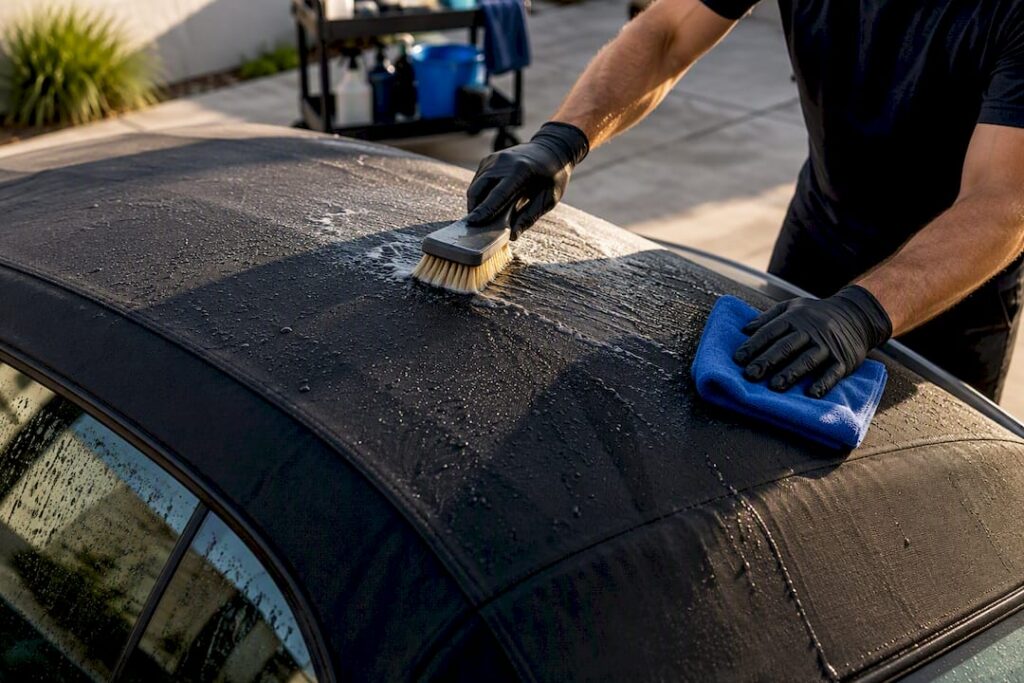
Most convertible soft tops can be cleaned safely in a driveway if you match the technique to the material. Skip the pressure washer and skip the household cleaners with bleach, ammonia, or vinegar. Instead, run the routine detailers actually use: low-pressure rinse, a cleaner made for your top’s material, gentle brushing, a full rinse, complete drying, then a protectant. Fabric and vinyl tops need slightly different products, and a few problem spots (torn seams, leaking seals) call for a professional instead of a hose.
Table of Contents
- What Kind of Convertible Top Do You Have?
- How Do You Safely Clean a Convertible Top Step by Step?
- How Do You Remove Stains, Sap, and Mildew From a Convertible Top?
- How Should You Dry and Protect the Top After Washing?
- How Often Should You Clean and Protect a Convertible Top?
- When Should You Call a Professional Detailer?
- Find a Mobile Detailer for Your Convertible Top
- Sources
- FAQ
What Kind of Convertible Top Do You Have?
Before you touch a hose to your car, figure out what you’re actually cleaning. Convertible tops generally fall into three categories: woven fabric (canvas or vinyl-coated cloth), solid vinyl, and retractable hardtops made of painted metal or composite panels. Each reacts differently to water, cleaners, and brushes, so guessing wrong can mean a stained top or a cracked coating.
A simple water test settles the question fast. Pour a small amount of water on the surface: fabric will darken slightly as it absorbs moisture, while vinyl beads the water and stays dry to the touch. Hardtops are obvious by look and feel, but they still have rubber seals worth checking.
Before any washing, walk the top and check these spots:
- Seams and stitch lines for fraying or separation
- Fold lines where the top creases when lowered
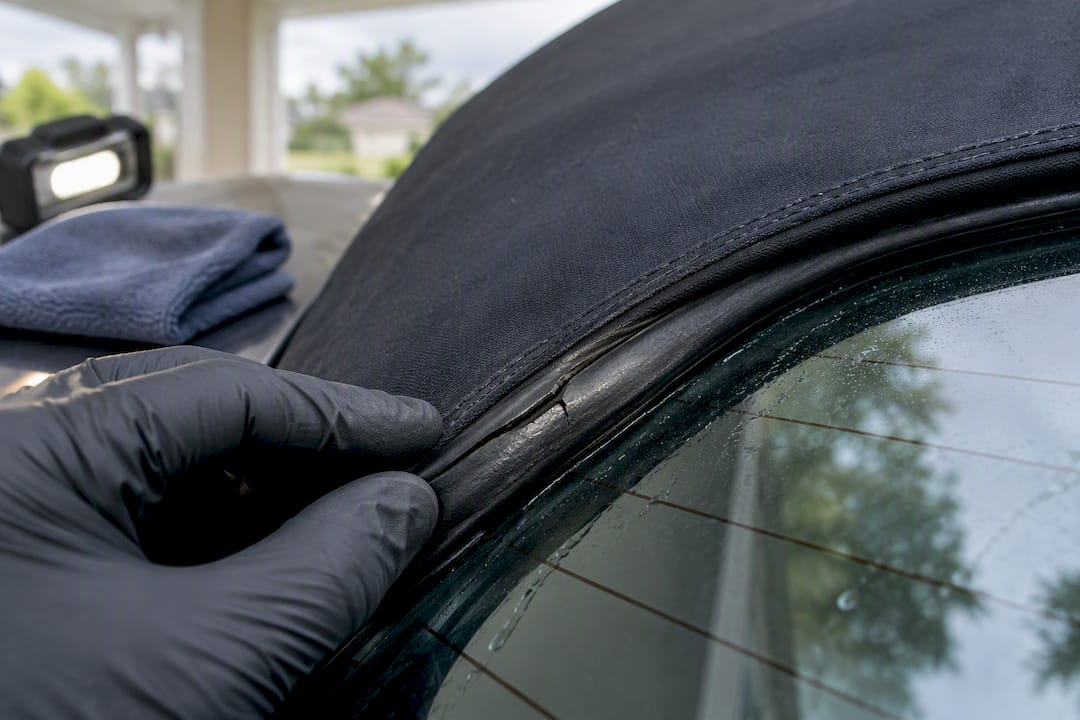
- The rear window perimeter for cracked or lifting edges
- Rubber seals around the top’s frame for stiffness or gaps
Owner’s manual guidance from manufacturers like Honda specifically warns against aiming high-pressure water at these seals, since it can distort them and eventually cause leaks. That single warning is worth remembering every time you reach for a hose.
How Do You Safely Clean a Convertible Top Step by Step?
Once you know your material, the actual convertible top cleaning process follows a consistent order. Rushing any step, especially the rinse, is how residue and streaking happen.
- Prep the area. Park in the shade, not direct sun, since cleaners can dry too fast and leave spots. Clear debris from the top’s fold storage compartment and vacuum loose grit off the fabric or vinyl surface before it gets wet. Removing dirt first prevents it from grinding into the material once you start brushing.
- Pre-rinse with low pressure. Use a garden hose or a pressure washer set to its lowest setting, held well back from the surface. Keep the top raised and rinse seams and folds carefully rather than blasting them directly.
- Apply the right cleaner. Use a cleaner formulated for your specific material, whether that’s a canvas-safe formula or a vinyl-specific one, and follow the label’s dwell time. Simple Green’s automotive guidance recommends dedicated convertible-top products over general household cleaners, since bleach, ammonia, and vinegar can strip protective coatings.
- Agitate gently. Work a soft-bristle brush in straight, overlapping strokes, never circular scrubbing, which can distort woven fabric fibers or dull vinyl.
- Rinse until the water runs clear. Check by touch as well as sight. Any slick or gritty residue left behind will interfere with the protectant you apply later.
Pro Tip: Never let the cleaner dry on the surface between steps 3 and 4. If it starts drying before you rinse, mist it lightly with water to reactivate it rather than scrubbing it dry.
Fabric tops need a fabric-specific protectant after they dry completely. Vinyl tops need a vinyl protectant, and you should avoid anything with petroleum-based silicones, which can permanently harm vinyl coatings and actually attract more dirt over time. Detailer workflows across the industry converge on this same rinse, clean, rinse, dry, protect sequence for good reason: it’s the order least likely to trap grit or leave residue.
How Do You Remove Stains, Sap, and Mildew From a Convertible Top?
Bird droppings and tree sap are acidic and sticky, and they cause real damage the longer they sit. Delaying treatment raises the odds of a permanent stain, so treat spots as soon as you notice them rather than waiting for the next full wash.
- Soak the spot with water or a diluted cleaner for a few minutes to soften it before touching it.
- Lift the residue with a soft cloth using light dabbing motions, not scrubbing, which can grind contaminants deeper into fabric weave.
- For algae or mildew, use a product formulated to kill biological growth, following the label’s dilution ratio exactly.
- Rinse the treated area thoroughly and let it dry fully before deciding whether a second treatment is needed.
Always test any cleaner or stain treatment on a small, hidden patch first, like an inside seam or the underside of a fold. Wait a few minutes to see how the material reacts before treating the visible stain. This single habit prevents the worst outcome in convertible top care: discovering a cleaner bleaches or discolors fabric only after you’ve already used it on the whole roof.
How Should You Dry and Protect the Top After Washing?
Drying is where a lot of otherwise careful cleaning jobs go wrong. Keep the top raised while it dries, and blot excess water with a microfiber towel rather than letting it air dry with pooled moisture sitting in the folds.
- Never lower or fold the top while it’s still damp; trapped moisture is the leading cause of mildew growth inside the fold structure.
- Let the surface air dry fully, checking seams and the underside near the rear window, which trap moisture longest.
- Apply protectant only once the surface is completely dry to the touch.
For fabric tops, apply a fabric-specific protectant and give it time to cure. Detailer guides commonly recommend waiting roughly 12 to 24 hours before exposing the top to rain or another wash. For vinyl, use a vinyl-specific protectant and skip anything containing silicones or petroleum distillates, which can degrade the coating and leave it attracting more grime than before you treated it.
Pro Tip: If rain is forecast within the cure window, wait for a dry stretch before protecting the top. A protectant that gets rained on before it cures rarely bonds the way it’s supposed to.
How Often Should You Clean and Protect a Convertible Top?
A predictable schedule beats reacting to visible dirt, since a lot of the damage (UV breakdown, early mildew, seal stiffening) happens before staining is obvious.
- Weekly: Quick visual check of seals, fold lines, and the top’s storage compartment for debris or trapped moisture; wipe off bird droppings or sap immediately.
- Every 3 months: Full wash and rinse using the material-specific method above, adjusted more frequently if you park outside or drive in coastal, high-humidity, or heavy-pollen areas.
- Seasonally or per product label: Reapply fabric protectant or vinyl protectant, since sun and washing gradually wear it down.
- Every 3 to 6 months: Apply silicone grease to rubber seals per manufacturer guidance to keep them supple and leak-resistant.
When parking, favor shade and a breathable cover over a sealed tarp, which can trap humidity against the fabric. Storing the top raised when the car sits for extended periods also reduces creasing and moisture buildup compared to leaving it folded down for weeks.
When Should You Call a Professional Detailer?
Some problems are beyond a driveway fix. If a stain survives two or three correct cleaning attempts, if fabric is torn or fraying at a seam, if you spot water intrusion or delamination around the rear window, or if a seal is visibly cracked and leaking, it’s time to bring in a professional rather than keep experimenting with products.
When requesting a quote, give the detailer specifics: the top’s material (fabric or vinyl), clear photos of the problem areas, a description of the symptoms, and what you’ve already tried. That context lets a mobile detailer give you an accurate estimate instead of a guess. Comparing local pros through MobileDetailing.io is a fast way to see who handles convertible tops specifically before you commit.
Find a Mobile Detailer for Your Convertible Top
MobileDetailing.io is a nationwide directory that connects vehicle owners with local mobile detailing professionals, and convertible top cleaning is exactly the kind of job worth outsourcing when a stain won’t lift or a seal needs attention rather than a home remedy. Instead of hunting through search results for a shop near you, the platform lets you compare detailers who list interior and exterior detailing, ceramic coating, and specialized services in one place, then request quotes directly.
To get a useful estimate, mention your top’s material, attach a few photos of the trouble spots, and note any symptoms like leaking or discoloration. Head to Mobiledetailing to browse local pros and request a quote for your convertible top.
Sources
Guidance in this article draws on Cars for automated wash risks, Honda’s owner’s manual for seal care warnings, Simple Green’s cleaning guidance for product recommendations, and AutoEvolution’s detailer walkthrough for workflow and cure-time guidance.
- Honda owner’s manual guidance — convertible top seals and care
- How to clean a convertible top — Simple Green
- Canvas or vinyl — how to clean your convertible’s retractable top like a pro — AutoEvolution
FAQ
How do I make my convertible top black again?
A faded black fabric top usually needs a fabric dye/restorer product designed for convertible tops, applied after a full clean and complete drying. These restorers redeposit color into the weave rather than just coating the surface, so skipping the cleaning step first will trap dirt under the new color.
How do I clean algae and moss off my convertible roof?
Treat the area with a product formulated to kill biological growth, following its label dilution, then agitate gently with a soft brush before rinsing thoroughly. Dry the top completely before applying any protectant, since sealing over damp fabric encourages the growth to return.
Is it okay to take a soft-top convertible through a car wash?
Automated car washes with spinning brushes can snag fabric and force water into seams and seals, so they’re best avoided. Touchless automated washes are a safer option, though a hand wash using the low-pressure, material-specific method above still gives the most control.
What kind of cleaner should I use on a white convertible top?
Use a cleaner made specifically for convertible top fabric rather than a general household cleaner, since bleach and other harsh chemicals can yellow white fabric instead of brightening it. If a white top has stubborn graying or mildew stains, a mobile detailer found through MobileDetailing.io can assess whether a specialty whitening treatment or a top replacement makes more sense.
MobileDetailing.io provides general educational information. Products, surfaces and vehicle finishes vary. Follow manufacturer instructions and consult a qualified detailing professional before using abrasive processes or chemical treatments.