$150–$600 U.S. Interior Car Detailing: Prices and Buyer Checklist
Professional interior car detailing is a deep, multi-step cleaning and restoration of a vehicle’s cabin, going well past a vacuum and wipe-down to include extraction cleaning, steam sanitizing, and conditioning of every surface you touch. A typical interior-only detail runs roughly $150 to $320 depending on vehicle size and condition, with three-row vehicles and heavy messes pushing higher. Start by requesting a few quotes and comparing what each one actually includes.
Table of Contents
- What Does a Full Interior Car Detail Include?
- How Much Does Interior Car Detailing Cost?
- Express, Full Interior, or Something Bigger? Choosing the Right Service
- How to Choose a Professional Interior Detailer
- What to Expect: Timeline, Prep, and Tipping
- Finding and Comparing Detailers Without the Guesswork
- Sources
- FAQ
What Does a Full Interior Car Detail Include?
A real interior detail is a checklist, not a vibe. If a detailer quotes you a flat price without describing the steps, you’re likely getting a rinse-and-vacuum job dressed up with detailing language.
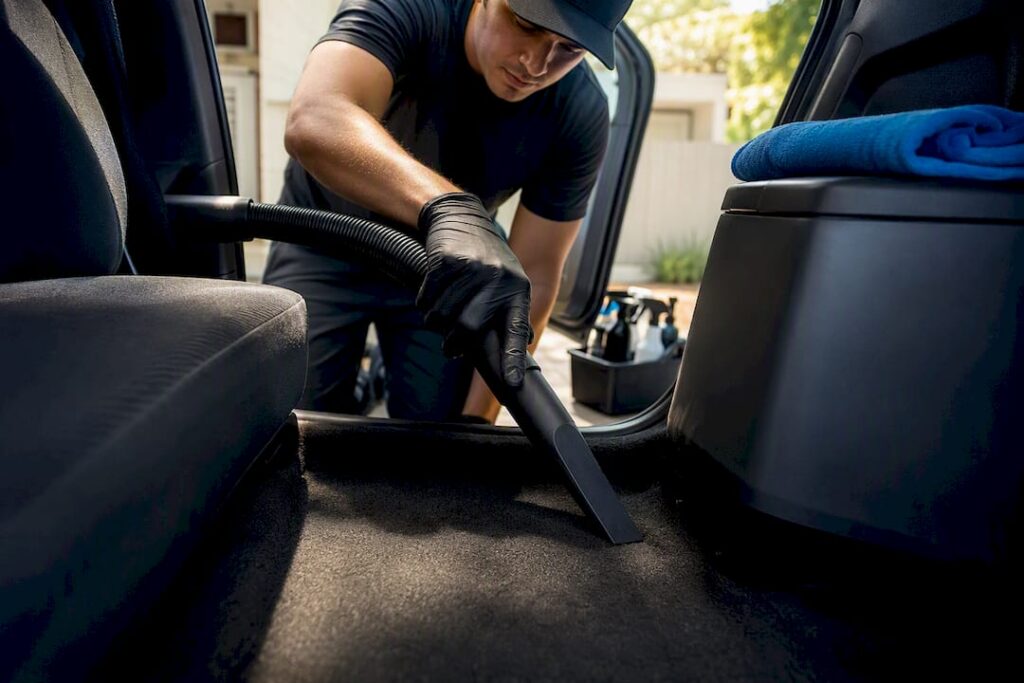
The professional standard starts with deep vacuuming, but not a single pass. Detailers typically vacuum carpets and upholstery multiple times, pulling embedded dirt and hair from seams, under seats, and between console panels that a home vacuum never reaches. That’s followed by hot-water extraction, which forces heated water and cleaning solution deep into carpet and fabric fibers, then pulls it back out along with the grime it loosened. This is the step that actually removes ground-in stains rather than just masking them.
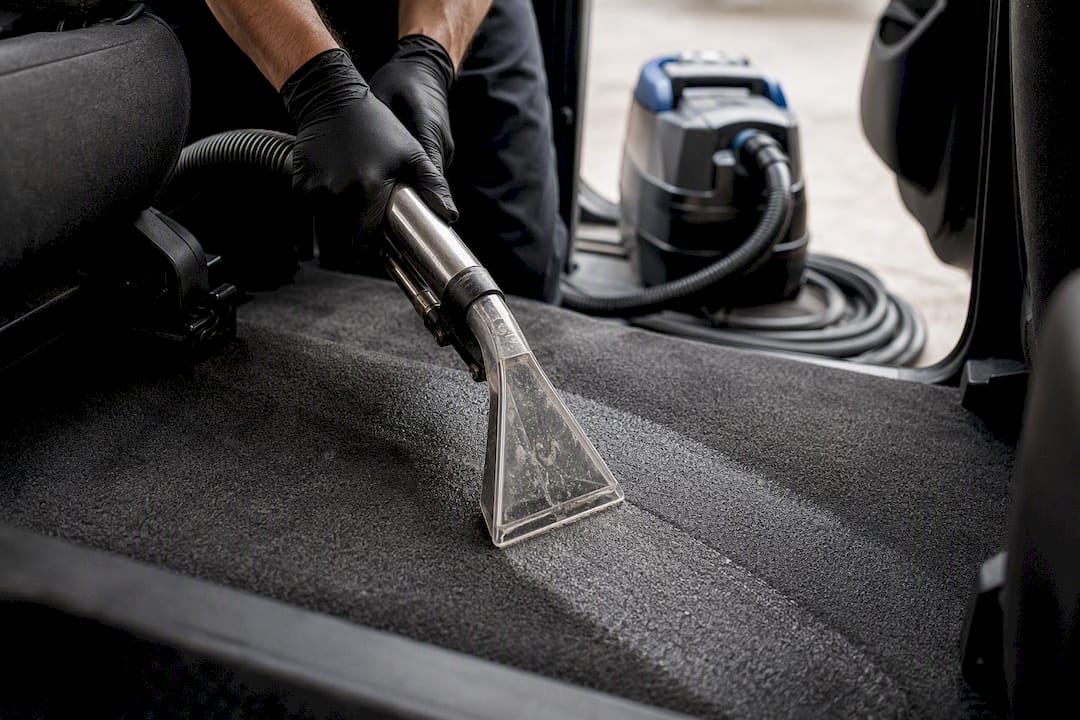
Steam sanitizing comes next, and it’s where mobile and shop-based pros earn their fee. Steam cleans and disinfects air vents, cupholders, door jambs, and other high-touch spots where bacteria and odor-causing residue collect. According to Clean Fleet Report’s breakdown of professional interior detailing, a legitimate full interior detail combines this steam and extraction work with detailed cleaning of glass, dashboard, console, and door panels, plus pH-balanced leather cleaning and conditioning for leather-equipped interiors. Skipping the pH-balancing step on leather isn’t a cosmetic shortcut. Standard cleaners can strip the finish and accelerate cracking over time.
Here’s what a professional-grade interior detail typically covers:
- Multi-pass vacuuming of carpets, mats, seats, and trunk
- Hot-water extraction of carpets and fabric upholstery
- Steam sanitizing of vents, cupholders, and high-touch surfaces
- Interior glass cleaning (inside windshield, windows, mirrors)
- Dashboard, console, and door panel detailing
- pH-balanced leather cleaning and conditioning (if applicable)
- Odor remediation for smoke, pets, or mildew, when needed
Odor remediation deserves its own mention because it’s often quoted separately from the base detail. Light odors usually get resolved through the steam and extraction process alone. Persistent smoke, mold, or pet odor typically requires ozone treatment or enzymatic cleaners applied after the standard cleaning, which is why detailers price it as an add-on rather than folding it into the base service. Professionals lean on steam and hot-water extraction rather than surface sprays precisely because sprays mask odor temporarily while extraction removes the source.
Pro Tip: Ask whether extraction is included or offered as an upgrade. Some “full detail” packages substitute a wet-vac shampoo pass for true hot-water extraction, which cleans faster but pulls out far less embedded dirt.
How Much Does Interior Car Detailing Cost?
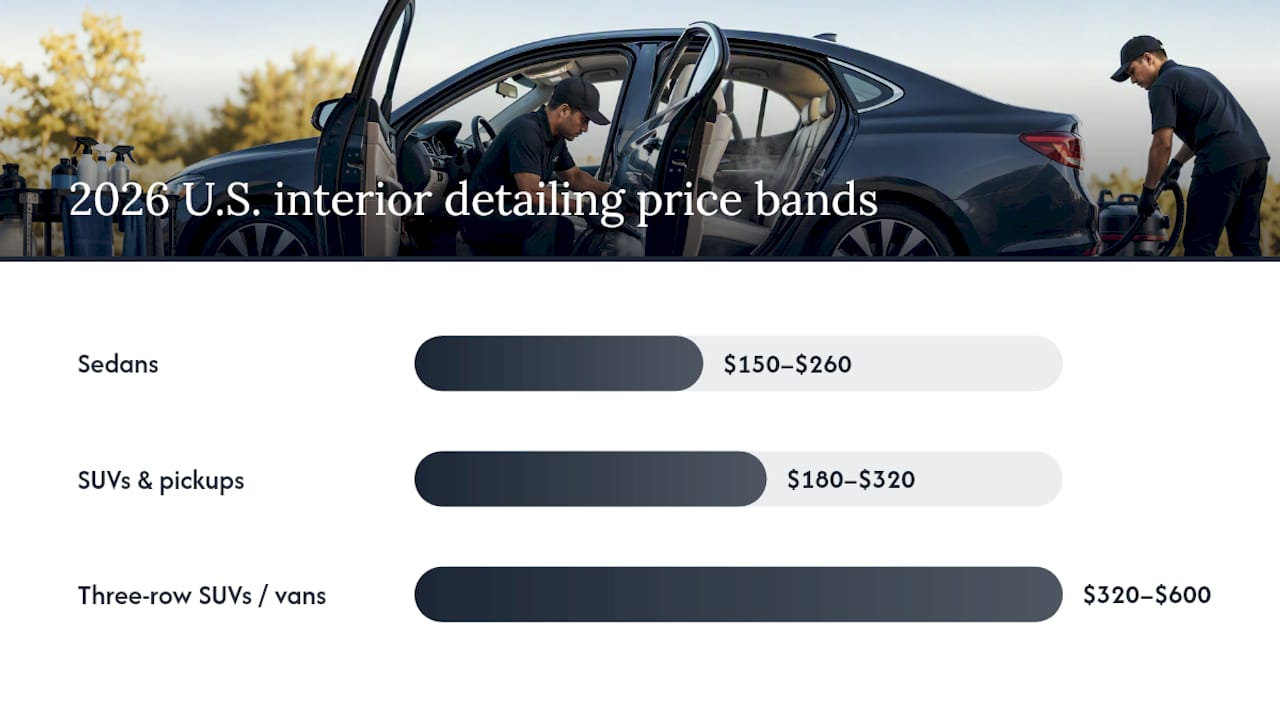
Interior detailing prices scale with vehicle size first, condition second, and add-ons third. Based on 2026 mobile detailing pricing data, a sedan’s full interior detail typically runs $150 to $260, while SUVs and pickups land in the $180 to $320 range. Three-row SUVs, vans, and larger family vehicles climb to $320 to $600, reflecting the extra square footage of carpet, seating rows, and glass involved.
Those numbers assume a moderately dirty vehicle. Condition changes the math fast. A car that’s vacuumed weekly and never eats a spilled coffee sits at the low end of its class range. A vehicle with embedded pet hair, ground-in mud, or months of neglected crumbs pushes toward the top of the range or beyond it, because extraction and stain treatment take longer and burn more product per session.
Common add-ons layer on top of the base price:
- Pet hair removal: often $25 to $75 depending on severity, since embedded hair requires specialized tools beyond a standard vacuum
- Smoke odor remediation: can add $50 to $150 or more, particularly for ozone treatment on persistent cigarette or cigar smoke
- Biohazard or heavy stain cleanup: priced individually and sometimes quoted after an in-person inspection, given the variability involved
Where you live and when you book also move the number. Mobile detailers in high cost-of-living metro areas typically charge more than rural or suburban shops, and demand spikes in spring and early summer tend to push prices toward the higher end of the posted range. Pricing drivers documented by ServiceTracked list vehicle size, condition, market, seasonality, and add-ons as the five factors that explain most of the variance you’ll see between quotes for what looks like the same job.
By 2026, pricing across the mobile detailing industry has settled into fairly predictable bands, which is good news for comparison shopping. It also means a quote that’s dramatically below the range for your vehicle class is worth a second look rather than an easy yes.
That predictability is exactly why a transparent, line-item quote matters more than a single bottom-line number. A detailer who breaks out base price plus specific add-ons is telling you what you’re actually paying for. One who gives you a single flat number, with no mention of pet hair, smoke, or condition surcharges, is leaving room to add fees later or cut corners on the parts that take the most time. ServiceTracked’s pricing guide notes that detailers increasingly price this way specifically to avoid disputes and protect their own margins on the add-on work.
Express, Full Interior, or Something Bigger? Choosing the Right Service
Not every car needs the full treatment every time. Matching the service tier to your car’s actual condition saves money without sacrificing results.
-
Express or maintenance detail. A quick vacuum, wipe-down of hard surfaces, glass cleaning, and light spot treatment. This fits a car that already gets detailed every few months and just needs upkeep between full services. Expect 30 to 60 minutes of work.
-
Full interior detail. The complete scope covered above: multi-pass vacuuming, hot-water extraction, steam sanitizing, leather care, and detailed surface cleaning. This is the right call for a car that hasn’t seen professional attention in six months or more, or one with visible stains, odor, or heavy daily-use grime. Plan for one and a half to three hours depending on vehicle size.
-
Specialist remediation. Heavy smoke exposure, deeply embedded pet hair, mold from a leak, or biological stains push beyond standard detailing into specialist territory, often requiring multiple visits or extended ozone treatment cycles.
Mobile detailers often come to your location, which can be convenient but may depend on access to power and water or the detailer bringing their own supplies. Shop-based detailers often have more consistent water pressure and climate-controlled space, which matters in extreme heat or cold. Neither format is inherently better. It comes down to your schedule, your parking situation, and whether the vehicle’s problem (heavy odor remediation, for instance) benefits from a controlled shop environment.
How to Choose a Professional Interior Detailer
The gap between a mediocre detail and an excellent one usually comes down to who you hire, not which product line they use. A few direct questions before booking will tell you most of what you need to know.
Ask how long the job will take. A legitimate full interior detail on a sedan rarely finishes in under 90 minutes; if someone quotes 45 minutes for a full detail, that’s a scope problem, not an efficiency win. Ask exactly which steps are included, specifically whether hot-water extraction and steam sanitizing are part of the base service or an upsell. Ask what products they use on leather and fabric, since the wrong cleaner on leather can cause lasting damage. And ask what happens if you’re not satisfied. A professional operation has a rework policy, even an informal one.
A trustworthy quote looks like a receipt, not a single number. It should list the base service, any condition-based surcharge, and each add-on separately, along with a realistic time estimate.
Watch for these red flags:
- A price dramatically below the going rate for your vehicle class with no explanation
- No before-and-after photos or portfolio to review
- Vague answers about what products touch your leather or fabric
- No stated policy for redoing unsatisfactory work
- Reviews that all read like they were written the same week
On the trust side, look for detailers with a real photo history of past jobs, reviews that mention specifics rather than generic praise, and clear, prompt communication when you ask questions. For mobile detailers specifically, confirm the travel fee (if any), whether they need access to your water and power or bring their own supply, and what their policy is for rescheduling around bad weather.
Pro Tip: Request at least two quotes for anything beyond an express detail. Price gaps of more than 20 to 30 percent between quotes for the same scope usually mean one detailer is cutting a step, not that one is simply cheaper.
What to Expect: Timeline, Prep, and Tipping
An express detail typically wraps in 30 to 60 minutes. A full interior detail runs one and a half to three hours depending on vehicle size and how dirty it started out. Add another 30 to 60 minutes if odor remediation or heavy pet hair removal is on the ticket.
Before the detailer arrives, clear out personal items, child seats, and anything in the trunk. Point out specific problem spots (a wine stain on the back seat, a persistent smell near the vents) so nothing gets missed. Once the work is done, walk through the vehicle with the detailer before they leave. Check under seats, in cupholders, and along door seams, and speak up immediately if something looks incomplete.
On tipping, the norms are straightforward:
- 15 to 20 percent of the total bill is standard for hands-on detailing work, similar to tipping guidance for skilled service work
- A flat $10 to $20 works for smaller express or interior-only jobs
- Mobile detailers sometimes see tips toward the higher end of that range, since they’re working solo and handling their own travel and setup
Tipping isn’t obligatory, but it recognizes what detailing work actually is: skilled, physically demanding, hands-on labor closer to a specialized service than a quick transaction. If results fall short, most reputable detailers will offer a documented follow-up or a rework window rather than a refund fight, so raise concerns before you leave rather than after.
Finding and Comparing Detailers Without the Guesswork

Comparing detailers by phone calls and word-of-mouth eats up a weekend. Mobiledetailing is a nationwide directory built specifically to shortcut that process: search by location, pull up local mobile detailing pros side by side, and review their photos, services, and customer feedback before you ever pick up the phone.
That matters because the checklist above only works if you can actually verify it. A directory listing that shows portfolio photos and detailed service descriptions lets you check for hot-water extraction, steam sanitizing, and leather care claims before booking, rather than discovering the gaps on-site. Browsing interior detailing listings by location also makes it easy to request quotes from multiple pros at once and compare them the way the guide above recommends, line item against line item.
If you’re ready to move past comparison shopping, request a local quote and get responses from mobile detailers in your area who can walk you through their exact process and pricing before you commit.
Sources
- What Professional Car Interior Detailing Actually Includes (And Why It Matters) — Clean Fleet Report
- Mobile detailing pricing guide 2026 — ServiceTracked
- How Much to Tip at a Car Wash or for Auto Detailing — Waldev
- Stop tipping your mechanic for routine work—here’s what actually deserves a tip — HowToGeek
FAQ
How much should it cost to detail the inside of a car?
A professional interior-only detail typically runs $150 to $260 for a sedan and $180 to $320 for an SUV or pickup, with three-row vehicles reaching $320 to $600 depending on condition and add-ons.
What does a full interior car detail include?
A full interior detail covers multi-pass vacuuming, hot-water extraction of carpets and upholstery, steam sanitizing of vents and high-touch surfaces, glass cleaning, dashboard and console detailing, and pH-balanced leather cleaning and conditioning where applicable.
How much should I tip for a $200 car detail?
Standard guidance suggests 15 to 20 percent for tipping, while a flat $10 to $20 is also common for smaller jobs.
How do I detail my own car interior?
DIY detailing typically covers vacuuming, wiping down hard surfaces, shampooing fabric seats, and conditioning leather, following step-by-step guides like Malco Automotive’s, but deep extraction, steam sanitizing, and serious odor remediation generally require professional equipment to do well.
MobileDetailing.io provides general educational information. Products, surfaces and vehicle finishes vary. Follow manufacturer instructions and consult a qualified detailing professional before using abrasive processes or chemical treatments.