Act Within 48 Hours: Safe Car Interior Mold Removal, DIY or Vetted Pro
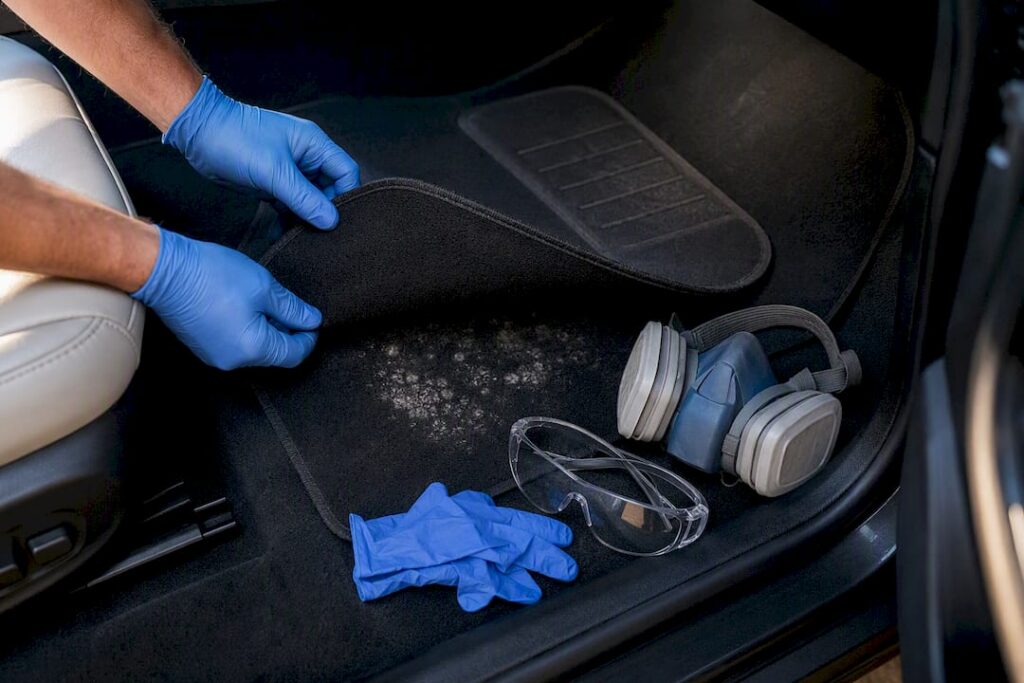
Small, surface mold spots on fabric or plastic are safe to tackle yourself with the right cleaner and protective gear. Widespread growth, mold inside the HVAC system, saturated seat foam, or anything tied to flood damage needs a professional. Before touching anything, ventilate the car, pull out wet items, and put on an N95 respirator, goggles, and gloves.
Table of Contents
- Why Mold Grows Inside a Car in the First Place
- Mold or Just Dirt? How to Tell the Difference
- How to Remove Mold From Car Interiors Step by Step
- Don’t Forget the HVAC System and Cabin Air Filter
- Drying and Prevention: The Step Most People Skip
- When DIY Isn’t Enough: Calling in a Professional
- What Mold Removal Actually Costs and How Long It Takes
- Finding a Local Detailer Through MobileDetailing.io
- Get Matched With a Mobile Detailer Who Handles Interior Mold
- Sources
- FAQ
Why Mold Grows Inside a Car in the First Place
Mold needs moisture, and a car interior traps it in more places than most owners realize. Once spores land on damp fabric or foam, they can establish a colony within 24 to 48 hours.
The most common moisture sources inside vehicles include:
- Leaking sunroof seals or worn door and window weatherstripping that let rain seep in unnoticed
- Clogged air conditioning drain lines, which back up condensation into the carpet and footwells
- Spilled drinks or food that soak into upholstery and never fully dry
- Wet gear, gym bags, or swimsuits left on seats or floors after a workout or a day at the lake
- High humidity climates or long-term storage in a garage without airflow
The HVAC system deserves special attention because it doesn’t just sit near moisture; it actively spreads it. Every time the air conditioner runs, it pulls air through a cabin filter that can harbor fungal growth, then pushes that air, and any spores riding along with it, straight into the space where you breathe.
Mold exposure isn’t just an odor problem. The EPA notes that mold produces allergens, irritants, and in some cases toxic substances, and that people exposed to it can develop nasal congestion, throat irritation, coughing, and skin irritation. Anyone with asthma or a mold allergy tends to react faster and more severely, which is exactly why PPE isn’t optional once you decide to clean it yourself.
Mold or Just Dirt? How to Tell the Difference
Not every dark spot on a seat is mold, and not every musty smell means visible mold. Here’s how to sort it out before you start scrubbing.
Look for these visual and physical signs:
- Fuzzy, raised texture rather than a flat stain, often in green, black, white, or orange patches
- Discoloration clustered in low-airflow spots: under floor mats, beneath seats, along door pockets, or inside the trunk liner
- Growth that follows a moisture pattern, spreading outward from a seam, seatbelt anchor, or carpet edge rather than sitting randomly
Smell matters as much as sight. A persistent musty, earthy odor, especially one that gets stronger when the air conditioner kicks on, points to microbial volatile organic compounds (MVOCs) that mold releases as it grows. If you notice sneezing, watery eyes, or a scratchy throat only while driving and the symptoms fade once you’re out of the car, that’s a strong signal something biological is living in the cabin, even if you can’t see it yet.
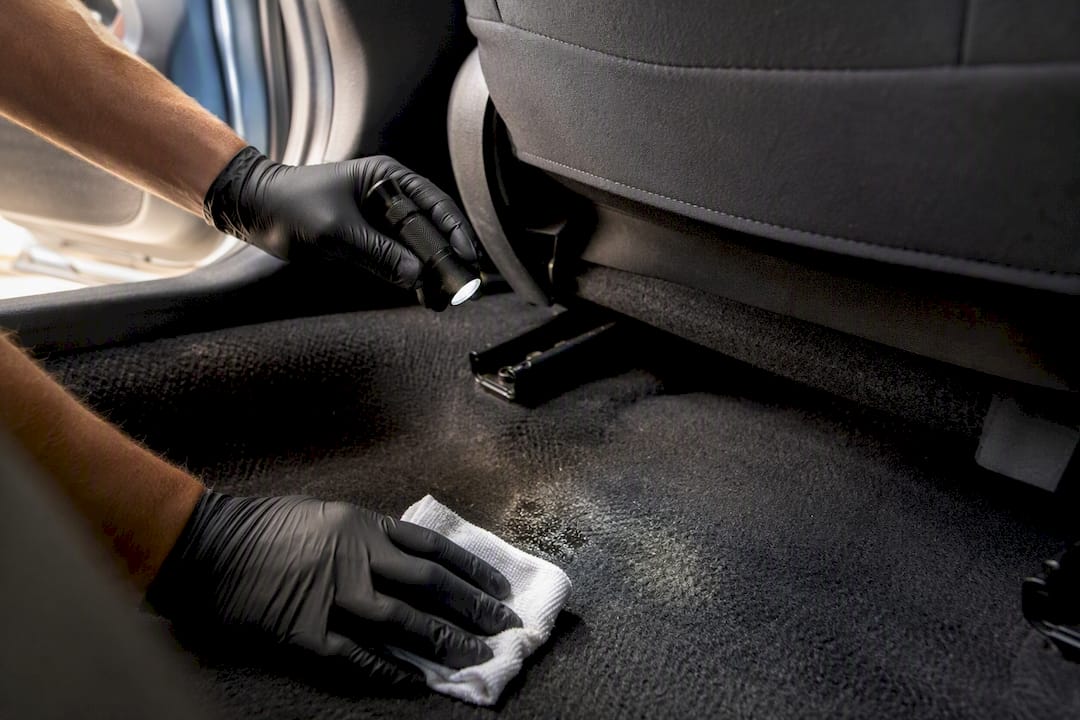
A few quick checks help confirm what you’re dealing with: lift every floor mat and check the carpet underneath, run a flashlight under the seats and along seat tracks, and wipe a suspect patch with a damp white cloth. Dirt smears; mold usually doesn’t wipe away cleanly and may leave a stain behind. If the smell is strong but you can’t locate a source after a real search, that’s a case for professional testing rather than guessing.
How to Remove Mold From Car Interiors Step by Step
This process works for surface mold and limited embedded growth in fabric, carpet, or vinyl. It is not a substitute for professional remediation when mold has spread through padding or ductwork.
Gear up before you open a single door. Put on an N95 respirator (a basic dust mask will not filter mold spores), sealed goggles, and disposable gloves. Open all doors and windows, or better yet, do the entire job outside or in an open garage with a fan running as recommended in professional detailing guidelines to remove car odour safely and effectively (diagnose the source first). Disturbing mold releases spores into the air, and you don’t want to breathe them or trap them inside a closed cabin.
- Remove everything that can come out. Floor mats, seat covers, phone chargers, anything loose goes outside for separate cleaning or disposal.
- HEPA vacuum every surface first. A HEPA-filtered vacuum captures spores instead of recirculating them through a standard vacuum’s exhaust. Go slowly over carpet, seams, and crevices.
- Apply an appropriate cleaner. Diluted white vinegar (roughly one part vinegar to one part water) or a commercial enzyme cleaner both break down mold on fabric and hard surfaces. Spray, don’t soak.
- Agitate and blot. Use a soft brush on fabric and a slightly firmer one on plastic or vinyl trim, working the cleaner into the stain, then blot with a microfiber cloth. Avoid scrubbing so hard that you push moisture deeper into foam padding.
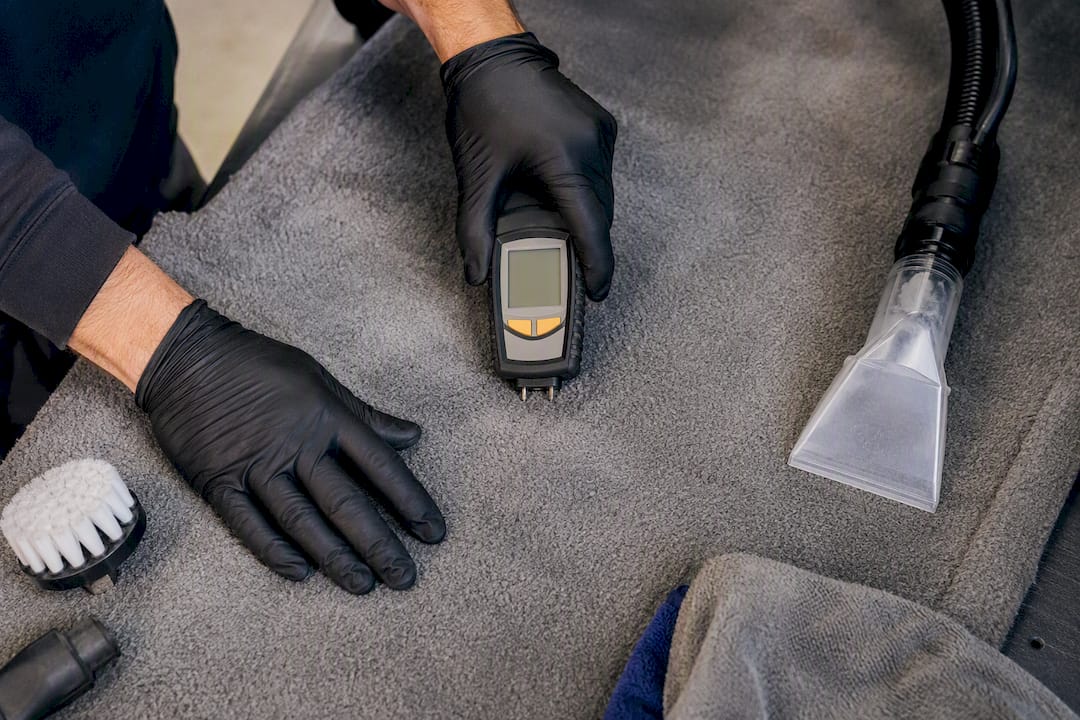
- Extract the moisture. A wet/dry vacuum or a rented carpet extractor pulls out the liquid you just introduced. Skipping this step is the single biggest reason mold comes back, since leftover dampness just feeds a new colony.
- Repeat on stubborn spots. Heavily stained areas often need a second pass of cleaner, agitation, and extraction before the discoloration lifts.
- Treat the headliner with minimal moisture. Headliner fabric is glued to a foam backing that delaminates when it gets too wet, so use a barely damp cloth and a light touch rather than spraying directly.
- Finish with a disinfectant pass and full drying. Wipe hard surfaces with an automotive-safe disinfectant, then move to complete drying before anything goes back inside the car.
A few material-specific notes matter here. Leather and vinyl tolerate cleaning better than fabric because they don’t absorb moisture, but leather still needs a conditioner afterward to prevent cracking. Seat foam is the hardest material to fully treat at home. Once mold reaches foam padding, DIY cleaners usually only address the surface layer, and the colony can regrow from inside the cushion. Keep any liquid well away from seat wiring, airbag sensors, and connectors under seats.
Skip bleach. It’s a common instinct, but bleach doesn’t penetrate porous materials like fabric or foam the way it does on hard tile, and it can discolor upholstery, corrode metal trim, and produce dangerous fumes when it contacts other cleaning products. Ammonia carries similar risks and should never be mixed with bleach under any circumstances. A guide to safe removal sequencing recommends sticking with vinegar or enzyme-based cleaners specifically because they’re effective without the corrosion and fume risks.
Pro Tip: Test any cleaner on a hidden patch of upholstery first. Vinegar’s smell fades within a day, but some enzyme cleaners can slightly lighten dyed fabric, and you’d rather find that out on a seam under the seat than on the dashboard.
For a broader refresher on general upkeep between mold incidents, MobileDetailing.io’s guide to interior detailing covers the routine cleaning that keeps moisture and grime from building up in the first place.
Don’t Forget the HVAC System and Cabin Air Filter
Cleaning the visible interior and ignoring the ventilation system is like mopping a flooded floor while the pipe keeps leaking. A 2023 study on car air conditioning filters found fungal contamination including Aspergillus and Penicillium species, and recommended replacing filters more often than most owners do, typically on a regular schedule advised by the manufacturer.
That contaminated filter sits directly in the path of the air blowing into your face every time the fan runs.
A few DIY steps address this without opening the dash:
- Replace the cabin air filter. It’s usually a five-minute job behind the glovebox, and it’s the single most direct fix for airborne spore exposure.
- Spray an HVAC-safe antimicrobial treatment into the fresh-air intake, typically located at the base of the windshield or under the hood.
- Run the AC on recirculate for a short cycle after applying the treatment, which helps move the product through the accessible ducts.
- Repeat the fan-only cycle a few times over the following days to keep air moving and drying out any residual dampness near the evaporator core.
If the musty smell keeps coming back every time the fan kicks on, or you can actually see mold growth inside the vents themselves, that’s beyond what a filter swap and a can of spray can fix. Evaporator cores sit deep in the dash and require disassembly to reach, which is a job for a professional with the right equipment.
Drying and Prevention: The Step Most People Skip
Cleaning gets the attention, but drying is what actually prevents mold from coming back. The CDC’s cleanup guidance is direct on this point: moisture control is the core of mold prevention, and areas should dry within 24 to 48 hours to stop new growth before it starts.
- Set up fans inside the cabin pointed at the carpet, seats, and footwells with all doors open.
- Run a dehumidifier in an enclosed garage, or park the car in direct sunlight with windows cracked if outdoor drying is your only option.
- Cycle the HVAC fan periodically, even without the AC compressor running, to keep air moving through the cabin.
- Check for lingering dampness by pressing a dry paper towel into the carpet after 24 hours; if it comes away damp, keep drying before reassembling anything.
Once the interior is fully dry, a short list of habits keeps mold from returning. Swap the cabin air filter on a schedule rather than waiting for a smell to remind you. Clear sunroof drain tubes and AC condensate lines at least once a year, since a clogged drain is one of the most common hidden leak sources. Inspect door and window seals for cracking, especially on cars over five years old. Never leave wet towels, umbrellas, or gym clothes in the car overnight. In humid regions, a small moisture-absorbing canister tucked under a seat adds a low-effort layer of protection.
Pro Tip: If you live somewhere humid and park outside, crack a window an inch on dry days. A closed, hot car with damp carpet is close to a greenhouse for mold spores.
When DIY Isn’t Enough: Calling in a Professional
Some situations are simply outside what a vacuum and a spray bottle can fix safely. Watch for these signs that it’s time to call someone with the right equipment:
- Mold has reached the HVAC ducts or evaporator core, not just the surface vents
- Seat foam or carpet padding is saturated and holds moisture after multiple drying attempts
- The car sat in floodwater or standing water for any length of time
- A musty odor keeps returning within days of cleaning, even after drying the cabin
- You or a passenger have ongoing respiratory symptoms, headaches, or skin irritation that track with time spent in the car
Professional detailers and remediation specialists have tools that go beyond household cleaning. Common methods include HEPA containment and vacuuming to prevent spores from spreading during the job, thermal or steam treatments that reach into fabric and foam without oversaturating it, HVAC fogging to treat ductwork that’s impossible to access by hand, and, in severe cases, removing and replacing contaminated carpet or padding entirely.
Before hiring anyone, ask for an itemized scope of work rather than a flat quote, confirm they use HEPA filtration during removal, and ask what moisture level they’re targeting before calling the job done. A legitimate detailer should also be able to explain their timeline and how they dispose of contaminated material.
What Mold Removal Actually Costs and How Long It Takes
DIY cleaning is generally inexpensive if the mold is limited to a small patch. Basic supplies like gloves, an N95 mask, and suitable cleaners are needed, with the job taking a few hours including drying time.
Professional remediation costs more because it involves specialized equipment and, often, more extensive contamination than an owner initially realizes. Reported ranges for professional car mold removal run from about $150 to $3,000, with most jobs landing between $400 and $1,200 depending on scope.
- Minor surface cleaning on one or two seats tends to sit at the low end of that range
- Jobs involving HVAC decontamination or fogging add cost because of the extra labor and equipment involved
- Full carpet or foam replacement after flood damage or long-term saturation pushes toward the higher end
Whatever the estimate, get more than one written quote and compare them line by line. A quote that’s dramatically lower than others may be skipping HVAC work or drying verification entirely, which means the mold could simply come back in a few weeks.
Finding a Local Detailer Through MobileDetailing.io
MobileDetailing.io is a nationwide directory connecting vehicle owners with local mobile detailing professionals, including many who handle interior mold and odor issues alongside standard cleaning. Searching by location surfaces businesses that list HVAC cleaning, odor removal, and deep interior sanitization among their services.
Before requesting a quote, have some basic information ready: how the mold started (a leak, spill, or flood), which areas are affected, and whether the smell returns after airing the car out. When you compare quotes, ask each detailer whether they use HEPA filtration, what drying standard they work toward, and whether the work carries any kind of guarantee. Comparing itemized quotes side by side, rather than a single bottom-line number, makes it easier to spot who’s actually planning to address the HVAC system versus who’s just cleaning what’s visible.
Get Matched With a Mobile Detailer Who Handles Interior Mold

Hiring blind is the real risk with mold jobs. Some detailers stop at shampooing the carpet, others treat the HVAC system and verify the cabin is fully dry before calling it finished, and the difference between the two determines whether the smell comes back in a month. Mobiledetailing exists to close that gap: instead of calling shops one by one and hoping their interior work covers mold, you search by location and compare local mobile detailing businesses that list interior sanitization, odor removal, and HVAC cleaning among their services, side by side with reviews and photos.
For anyone who read through the DIY steps above and decided this particular job, especially one involving HVAC contamination or saturated padding, is better left to someone with a HEPA vacuum and steam equipment, that’s exactly the situation this platform is built for. Request a local quote and describe the mold issue, including where it started and whether the smell returns after airing the car out, so the detailers who respond can give you an itemized estimate instead of a guess.
Sources
- Can mold cause health problems? — EPA
- Fungal contamination of AC filters in passenger cars — PMC (2023)
- Car Mold Removal Cost Guide for U.S. Buyers — CostInsider
- Car Mold Removal Guide (2026) — Out of the Mold
FAQ
How much does it cost to fix mold inside a car?
DIY cleaning is generally inexpensive if the mold is limited to a small patch. Professional remediation ranges from about $150 to $3,000, with most jobs falling between $400 and $1,200 depending on whether HVAC work or material replacement is needed.
Can black mold be removed from a car?
Small patches of black mold on hard surfaces or fabric can often be treated with vinegar or enzyme cleaners followed by full drying, but black mold that has reached seat foam, carpet padding, or the HVAC system needs professional remediation with HEPA containment. Black mold carries the same allergen and irritant risks the EPA describes for mold generally, so treat any large colony with the same caution regardless of color.
How do detailers remove mold?
Professional detailers commonly use HEPA vacuuming and containment, thermal or steam sanitization, and HVAC fogging to reach mold embedded in padding and ductwork that household tools can’t access. Severe cases may require removing and replacing contaminated carpet or foam.
Can a car with mold be saved?
Most cars with mold can be fully restored, especially when the problem is caught early and the moisture source gets fixed alongside the cleaning. Cars with long-term flood exposure or extensive foam and HVAC contamination take more work to save, but replacing affected components rather than the vehicle is almost always the outcome, even in severe cases.
How often should I replace my cabin air filter to prevent mold?
Replace the cabin air filter at least once a year, or sooner if you notice a musty smell when the fan runs. Research on car AC filters found fungal contamination building up well within that timeframe in many vehicles.
MobileDetailing.io provides general educational information. Products, surfaces and vehicle finishes vary. Follow manufacturer instructions and consult a qualified detailing professional before using abrasive processes or chemical treatments.