Motorcycle Owners: Detailing $50–$400 and Quote Checklist
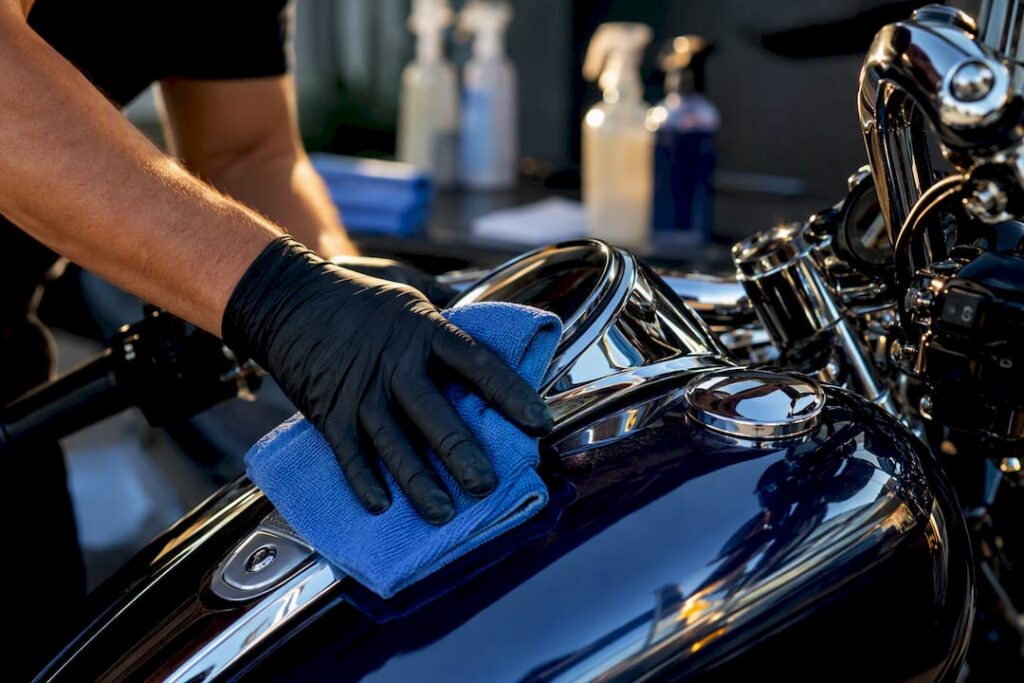
Motorcycle detailing is a structured cleaning and protection process that goes beyond a garden-hose rinse: decontamination, paint correction, chrome care, and a sealant or coating to lock in the shine. Most owners get the best results booking a vetted mobile detailer through a resource like Mobiledetailing for anything involving polish, coatings, or heavy grime, while basic rinses and chain wipe-downs are fine to handle solo. Expect typical professional motorcycle detailing to cost from a modest amount for a basic wash up to several hundred dollars for a full service, with total time often spanning a few hours.
Table of Contents
- What Does Motorcycle Detailing Include?
- What’s the Right Order for Detailing a Motorcycle?
- How Much Does Motorcycle Detailing Cost, and How Long Does It Take?
- How Do You Protect Chrome, Matte Finishes, and Leather?
- How Often Should You Detail a Motorcycle?
- Should You Hire a Pro or Detail It Yourself?
- Get Matched With a Vetted Mobile Motorcycle Detailer
- Sources
- FAQ
What Does Motorcycle Detailing Include?
A basic wash covers little more than soap, water, and a wipe-down. Full detailing is a different animal entirely, built around decontaminating and protecting every surface on the bike, not just making it look clean for a weekend.
Most professional packages break down into these core steps:
- Pre-rinse and chemical decontamination, using a clay bar or iron remover to strip bonded grime before any polish touches the paint
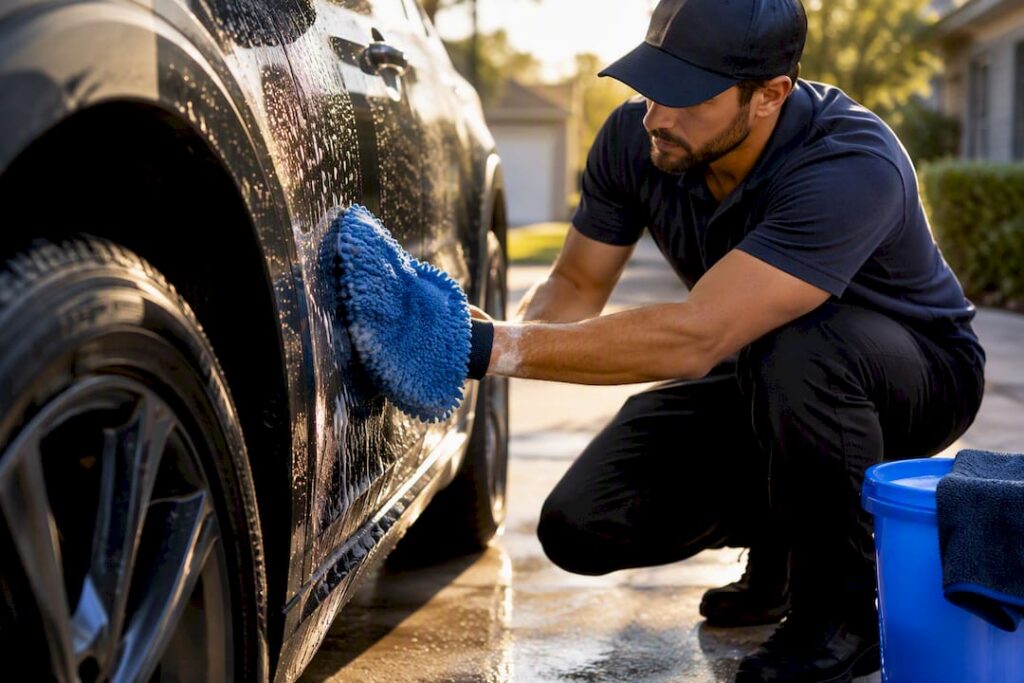
- Hand wash with separate wash media for wheels, brakes, and chain versus painted body panels
- Chain and drivetrain cleaning with degreasers safe for O-rings and seals
- Forced-air drying to clear water from crevices, switches, and connectors
- Polish and sealant or wax application, sometimes upgraded to a ceramic coating
Common add-ons include paint correction for swirl marks and light scratches, ceramic coating for long-term gloss and protection, rust removal on exposed hardware, leather conditioning for seats and saddlebags, and pre-storage prep. Wet sanding, structural repairs, and mechanical work fall outside standard detailing and belong with a repair shop. Providers typically tier their offerings as express, standard, full, or restoration packages, so ask exactly which steps are bundled before comparing prices.
What’s the Right Order for Detailing a Motorcycle?
Sequence matters more on a motorcycle than on a car, mostly because exposed cables, electronics, and unshielded engine components sit right next to the surfaces you’re scrubbing. Skip a step or do it out of order, and you risk swirl marks, corrosion, or a fried connector.
- Let the engine cool completely and move the bike into shade with stable support before touching it.
- Pre-rinse top to bottom with low water pressure. Skip pressure washers near bearings, seals, and electrical connectors.
- Decontaminate the paint with an iron remover or clay bar before any polishing step. Professional-detailer guides consistently recommend this order because polishing over embedded grit just grinds it into the clear coat, undoing the work before it starts, according to La Jolla Detail’s motorcycle detailing guide.
- Degrease the chain and engine area with motorcycle-safe products, keeping solvents away from sensitive connectors and rubber seals.
- Force-dry every crevice with an air blower. Water trapped around switches or wiring harnesses invites corrosion and electrical trouble down the line, a concern detailers take seriously enough to make forced-air drying standard practice.
- Polish, then seal, wax, or apply a ceramic coating as the final protective layer.
- Lubricate the chain, inspect fasteners, and photograph the bike before and after.
Pro Tip: Keep two completely separate buckets and wash mitts on hand, one dedicated to wheels and chain, the other reserved only for painted bodywork. It costs a few extra dollars and saves you from scratching paint with grit you can’t even see.
How Much Does Motorcycle Detailing Cost, and How Long Does It Take?
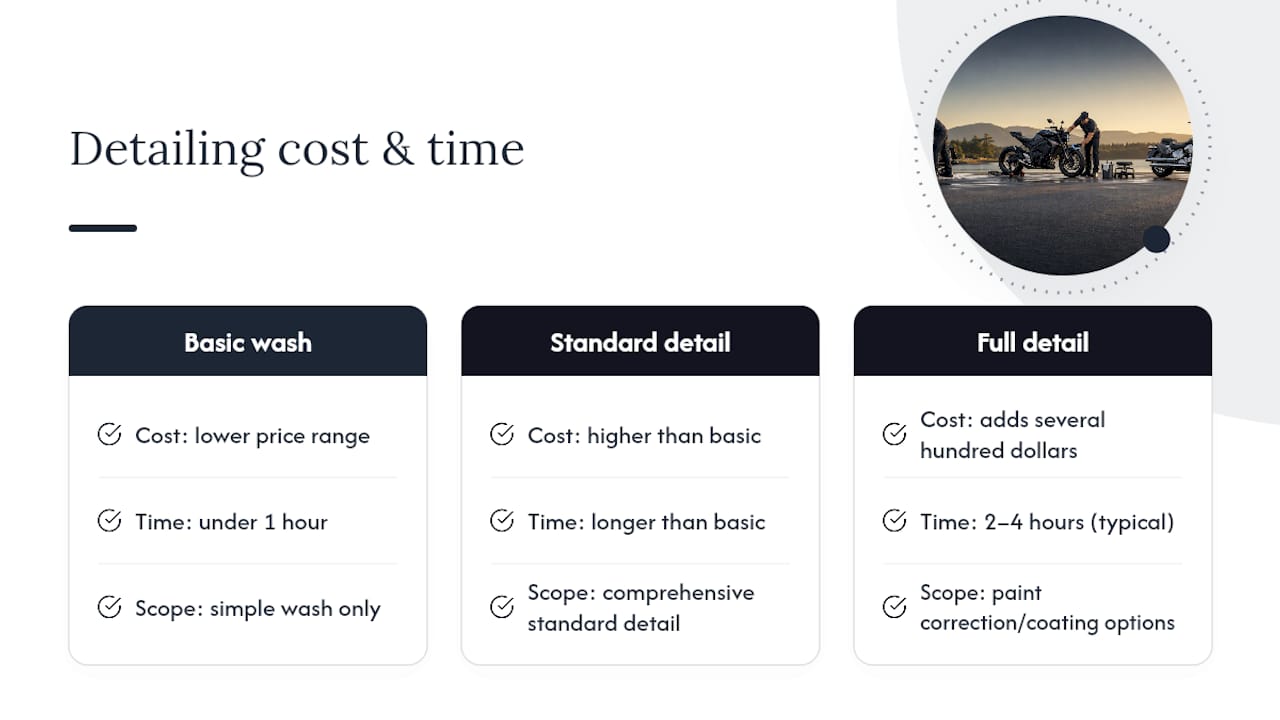
Prices scale with scope, not just bike size. A basic wash commonly costs in the lower price range and takes less than an hour. More comprehensive standard details cost more and take longer. Full detailing with paint correction and ceramic coating options add further cost and time, potentially several hundred dollars more., according to industry pricing data from MobileDetailingExpert. Treat these as ranges, not fixed quotes. A heavily chromed cruiser with saddlebags takes longer than a stripped-down sport bike.
Time follows the same pattern. A full professional detail generally takes two to four hours depending on complexity, and paint correction or coating application adds meaningfully more. Coatings need clean, cured surfaces to bond properly, so rushing this step defeats the point of paying for it.
When comparing quotes, ask about the specific products used, whether travel fees apply for mobile service, and what workmanship warranty (if any) covers the coating or correction work. A detailer who can’t answer those questions clearly is worth a second look elsewhere.
How Do You Protect Chrome, Matte Finishes, and Leather?
Different surfaces need different chemistry, and using the wrong product is how owners accidentally damage the finish they’re trying to protect.
- Chrome plating is thin, and Harley-Davidson specifically warns that abrasive cleaners and pads can damage it permanently. Stick to chrome-specific, non-abrasive cleaners, then seal the surface to slow future oxidation.
- Matte finishes and vinyl wraps require matte-safe products exclusively. Standard gloss polish or wax can permanently alter the finish on both factory matte paint and custom wraps.
- Plastics and rubber need conditioners formulated to avoid solvent damage. Harsh degreasers can dry out and crack rubber seals over time.
- Leather seats and bags should be cleaned and conditioned with leather-specific products, always tested on a small hidden area first.
- Exhaust and headers need heat-tolerant protection. Standard coatings can burn off near exhaust surfaces, so ask a detailer what they use in that zone specifically.
A detail that skips these distinctions and treats every surface the same is a red flag worth noting before you book.
How Often Should You Detail a Motorcycle?
Frequency depends on how much you ride and where. Regular riders generally benefit from a full detail every two to three months. Weekend riders can often stretch that to once or twice per season. Riders in coastal areas or on salted winter roads should detail more often, since salt and moisture accelerate corrosion on chrome and exposed metal.
- Rinse the bike after any rain exposure and re-lube the chain after washing.
- Before long-term storage, run a full clean and dry cycle, seal chrome and paint, add fuel stabilizer, disconnect or trickle-charge the battery, and cover with a breathable material.
- Before the first ride out of storage, rewash, inspect fasteners and fluids, and re-lubricate the chain.
Neglected cosmetics don’t just look bad. They actively reduce resale value, while a bike kept on a consistent detailing schedule tends to hold its value better at trade-in or sale time.
Should You Hire a Pro or Detail It Yourself?
Paint correction, ceramic coatings, heavy rust removal, and anything near electrical components call for professional skill and equipment. These jobs require surface prep and product knowledge that’s hard to get right on a first attempt, and a coating applied over an improperly prepped surface won’t bond correctly or last as promised.
Basic washing, light polishing, and chain cleaning are reasonable DIY tasks for an experienced owner with the right separate tools for wheels versus paint.
Before booking anyone, ask these questions directly:
- Have you detailed this specific bike type or finish before (chrome-heavy cruiser, matte wrap, carbon fiber)?
- What products will you use, and are they matte-safe if my bike has a wrap?
- What’s your time estimate for this scope of work?
- Are you insured, and can you provide references or before/after photos?
- Does the coating or correction work come with any warranty?
Red flags include vague answers about products, no insurance documentation, no portfolio or reviews, and pressure to skip decontamination steps to save time. Any of those should send you looking elsewhere.
Get Matched With a Vetted Mobile Motorcycle Detailer
Mobiledetailing is a directory built specifically to connect vehicle owners with local mobile detailing professionals, including specialists who list mobile motorcycle detailing, ceramic coatings, paint correction, and leather care. Instead of calling around town or gambling on an unfamiliar name from a search result, you can compare local businesses side by side, with their service scope, photos, and reviews.

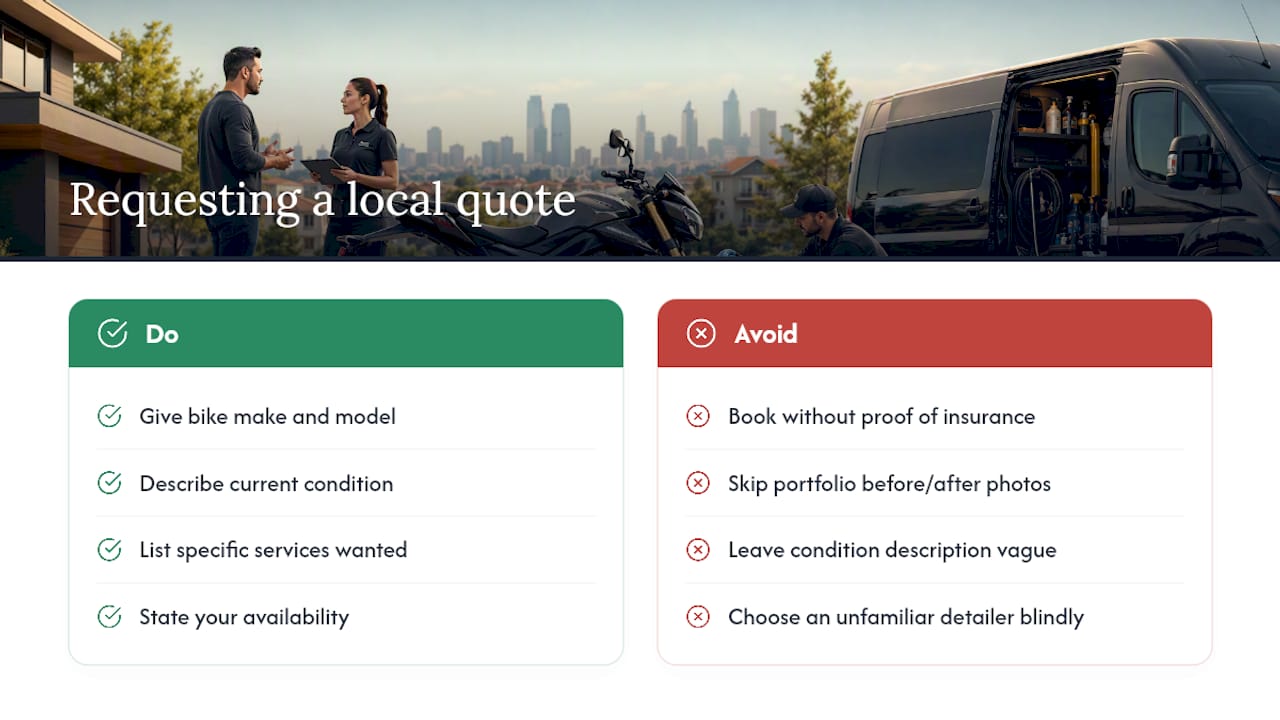
When you request a local quote, include your bike’s make and model, its current condition (light dust versus heavy grime or rust), the specific services you want (standard wash, full detail, ceramic coating), and your availability. That level of detail helps detailers quote accurately instead of guessing, and it saves you a round of back-and-forth messages.
Comparing providers through a directory also reduces risk. You can review portfolio photos, read prior customer feedback, and confirm insurance coverage before a stranger ever touches your bike. Before you book, ask for proof of insurance and recent before/after photos of similar motorcycles, chrome-heavy cruisers or matte-wrapped bikes included, so you know the detailer has handled your specific finish before.
Sources
For manufacturer-specific guidance on chrome and fragile finishes, Harley-Davidson’s chrome care advice is a solid primary source. For a deeper procedural walkthrough, La Jolla Detail’s motorcycle detailing guide and RightCarDetailing’s step-by-step breakdown cover safety cautions in more depth.
- How to clean chrome | Harley-Davidson
- Ultimate Motorcycle Detailing Guide for San Diego | La Jolla Detail
- Motorcycle Detailing: The Complete Guide | MobileDetailingExpert
FAQ
What’s the Average Cost to Detail a Motorcycle?
A basic wash runs $50 to $90, a standard detail costs $100 to $200, and a full detail with paint correction runs $200 to $400, with ceramic coating add-ons costing several hundred dollars more depending on coverage.
How Much Does It Cost to Deep Clean a Motorcycle?
A deep clean, meaning decontamination plus a full wash and polish rather than a quick rinse, typically falls in the standard-to-full detail range of $100 to $400 depending on condition and add-ons like coating.
What Does Motorcycle Detailing Include?
It includes pre-rinse, chemical decontamination, hand washing, chain and wheel cleaning, forced-air drying, and a polish with sealant, wax, or ceramic coating, plus optional add-ons like paint correction and leather conditioning. You can compare local providers offering these packages by requesting a quote through Mobiledetailing.
What Is the 12 Second Rule for Motorcycles?
Definitions of this rule vary across sources and it isn’t a standardized detailing or manufacturer guideline, so treat any specific claim about it with caution and confirm details directly with a professional detailer if you’ve seen it referenced.
MobileDetailing.io provides general educational information. Products, surfaces and vehicle finishes vary. Follow manufacturer instructions and consult a qualified detailing professional before using abrasive processes or chemical treatments.