Car Odor Removal: Safety First DIY Steps Pros Use After Two Cycles
The correct sequence for odor removal in a car is find the source, deep-clean and dry it, then apply an eliminator matched to that specific smell, followed by ventilation. Skipping straight to air fresheners or a single ozone run rarely works because most stubborn odors sit in foam, padding, or the HVAC system, not just the surface. Replace the cabin air filter as part of this process, and call a professional detailer if the smell survives two full DIY cycles or involves mold or bodily fluids.
Table of Contents
- How Do You Get Rid of a Bad Smell in a Car Fast?
- What’s the Full DIY Workflow for Removing Car Odors?
- Which Odor Removal Products Actually Work?
- When Should You Hire a Professional Detailer?
- Is Ozone Treatment Safe for Cars?
- How Do You Keep Car Odors from Coming Back?
- Get a Local Mobile Detailer for Stubborn Car Odors
- Sources
- FAQ
How Do You Get Rid of a Bad Smell in a Car Fast?
Start here if the smell hit you the second you opened the door and you want quick, meaningful progress before committing to a full deep clean.
- Open every door and window for at least 15 minutes to clear trapped gasses before you touch anything.
- Pull out trash, wet items, and forgotten food. A gym bag or spilled coffee cup under a seat is a common culprit that gets missed.
- Vacuum everywhere, including under the mats, inside the trunk well, and beneath the front seats where crumbs and moisture collect.
- Check the cabin air filter. A clogged, damp filter is one of the most overlooked sources of a musty smell, and it’s a cheap part to swap.
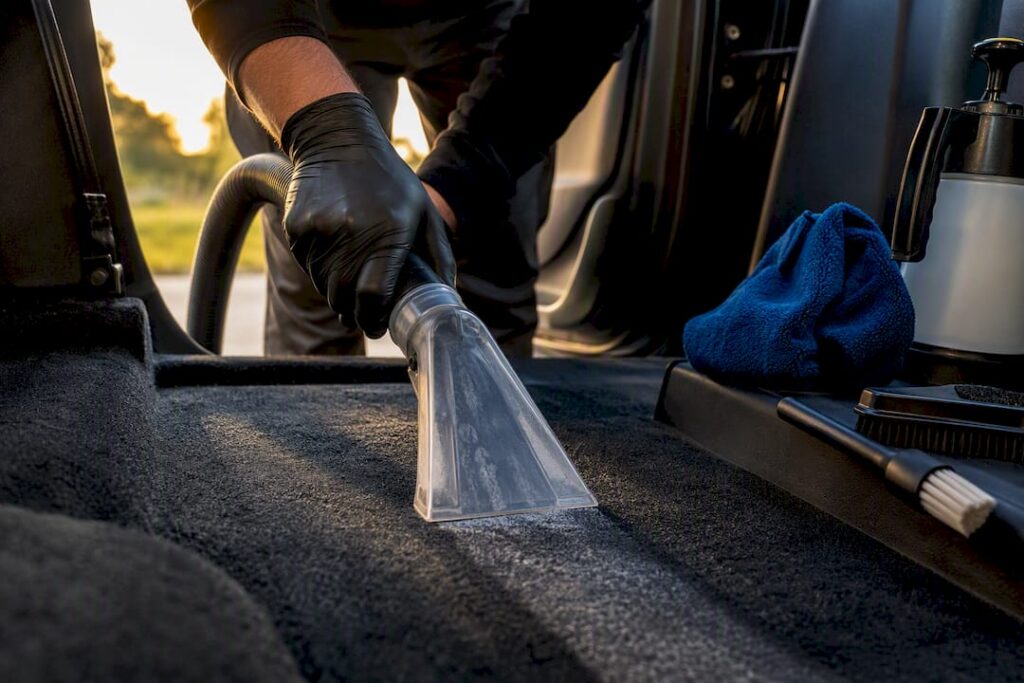
- Spot-treat visible spills and run a wet/dry extractor on any soaked carpet or upholstery you find.
- Match the product to the smell. Enzyme cleaners handle biological messes, oxidizers work on smoke, and activated charcoal is for ongoing maintenance rather than active odors.
If you’ve run through this checklist twice and the odor removal car project still isn’t working, that’s your signal to stop DIY-ing and book a professional inspection. Persistent smells after two thorough cleanings usually mean the contamination has reached somewhere a vacuum and spray bottle can’t go.
What’s the Full DIY Workflow for Removing Car Odors?
Getting this right means treating it like a diagnosis first, then a cleaning job, not the other way around.
Diagnose before you clean
Smell the car with the engine off and windows closed for a minute, then turn the fan on recirculate. If the odor gets stronger the moment air starts moving, the source is likely in the HVAC system or evaporator core, not the seats. Press on carpet and seat cushions in different spots. Any spot that feels damp or springs back slowly is holding moisture, and moisture plus fabric is exactly how mildew smells develop. Pop the trunk and check the spare tire well, which floods more often than owners realize.
Gather what you need
You don’t need commercial-grade gear for most jobs. A shop vacuum with a wet/dry setting, a soft-bristle brush, a wet/dry extractor or a rented carpet cleaner, microfiber towels, an enzyme-based pet or bio-odor cleaner, and a bottle of automotive interior cleaner will cover most situations. Cleaning the dashboard and trim surfaces properly also matters more than people expect, since dust and residue on hard surfaces trap and re-release odor compounds every time the cabin heats up.
Clean in the right order
- Remove all loose debris and take out floor mats to clean them separately.
- Vacuum thoroughly, using a crevice tool along seat seams and door pockets.
- Run hot-water extraction or shampoo on carpet and upholstery, working in small sections so you’re not oversaturating any one area.
- Apply an enzyme treatment directly to biological stains like pet accidents, vomit, or old food, letting it dwell per the label, usually 10 to 15 minutes, before blotting.
- Spot-treat remaining stains and rinse with a clean, barely damp towel to avoid leaving cleaner residue behind, which can smell almost as bad as the original odor.
Address the HVAC system
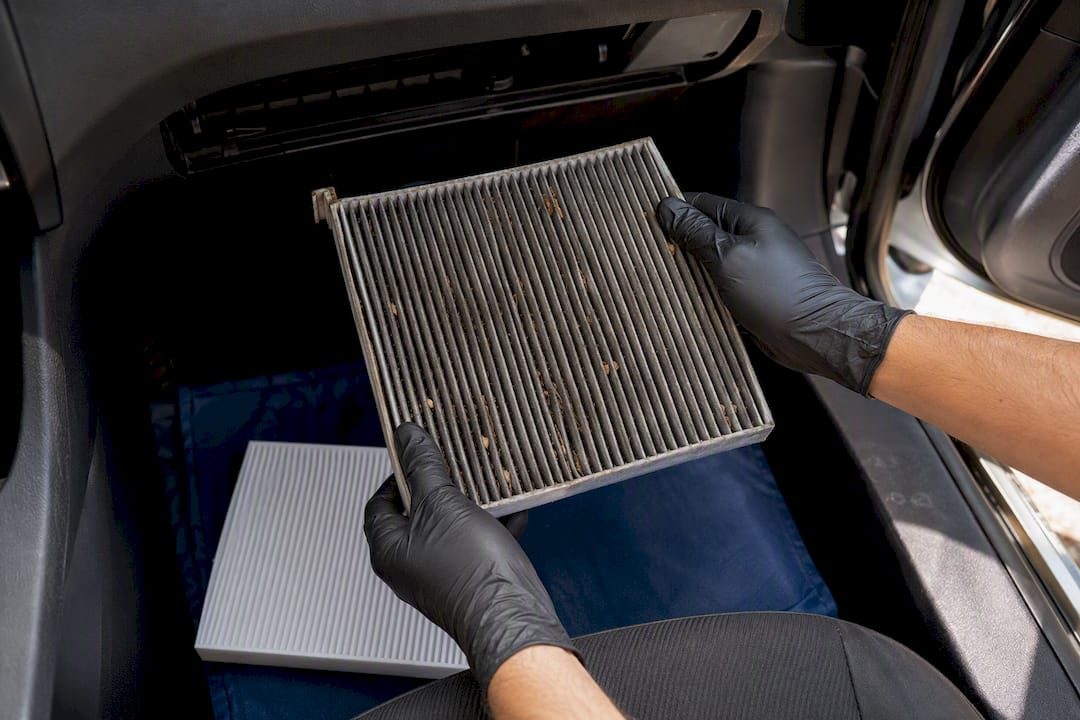
Remove and inspect the cabin air filter. If it’s discolored, damp, or has visible debris, replace it. This single step resolves a surprising number of “musty AC” complaints on its own, and detailing guidance consistently points to it as a high-value, low-cost fix, since a smell that intensifies when the fan first kicks on is a strong sign the problem lives in the ductwork or evaporator, not the upholstery. After the filter swap, run a vent-safe HVAC sanitizer through the system on recirculate, following the product’s instructions for dwell time.
Dry, verify, repeat if needed
Run the fan on high with windows cracked for 30 to 60 minutes to pull moisture out before you close the car up. Damp carpet left to sit in a sealed cabin is how a treated odor becomes a mildew smell within 48 hours. Let the car sit closed for a few hours, then smell-test it cold. If it’s barely changed, the source is probably embedded deeper than surface cleaning can reach.
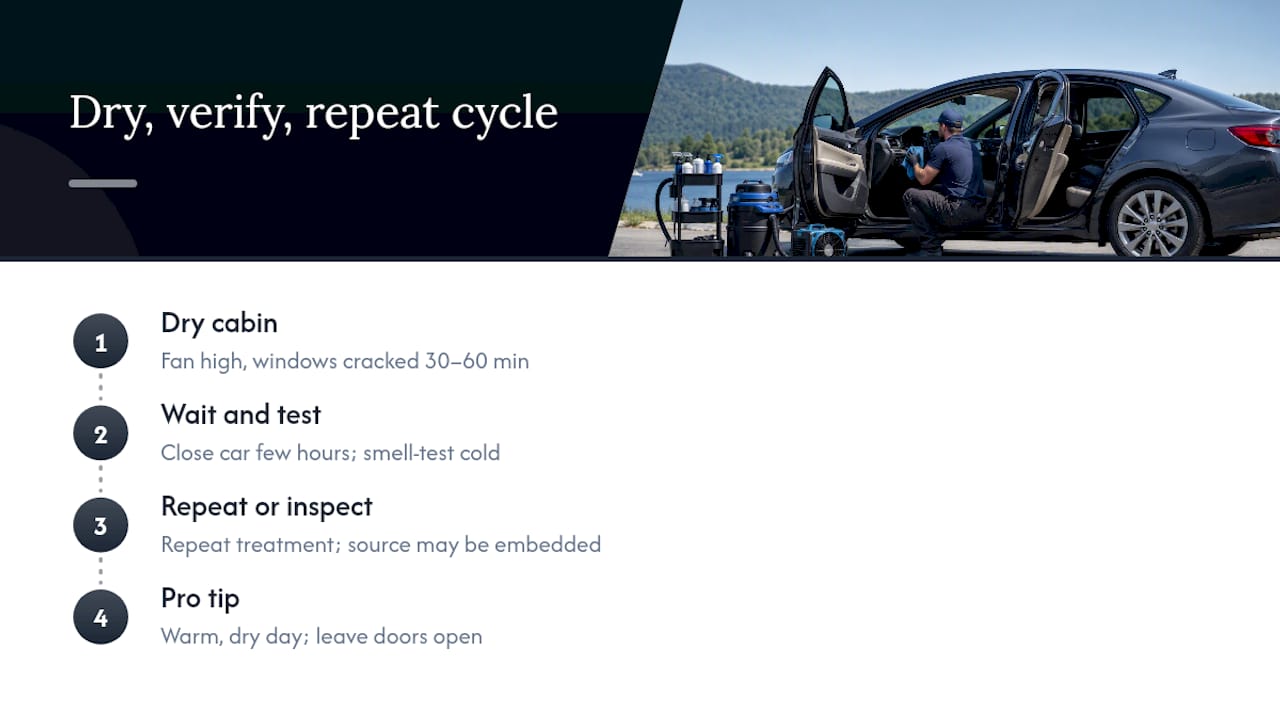
Pro Tip: Do the extraction step on a warm, dry day and park with the doors open afterward. Humidity is the single biggest reason DIY odor treatments fail. Damp carpet that can’t fully dry just grows a new smell to replace the old one.
Consumer Reports notes that baking soda and vinegar alone often fall short on deep-seated odors precisely because the contamination has migrated into foam, padding, or the ventilation system, spots those household remedies never reach.
Which Odor Removal Products Actually Work?
Picking a product starts with understanding what it’s chemically built to break down, not which brand has the flashiest label.
- Enzyme cleaners use biological enzymes to break down organic matter in urine, vomit, or food residue at the molecular level, which is why they outperform basic cleaners on pet and bio-related smells. They need dwell time and usually a second application for older stains.
- Antimicrobial (quat-based) sprays kill bacteria and mold spores on contact, which helps with musty, mildew-type odors, but they don’t remove existing organic residue the way enzymes do.
- Activated charcoal works by adsorption, pulling odor molecules out of the air passively. It’s excellent for ongoing maintenance and light odors but isn’t built to rescue an active, embedded smell; it’s a follow-up tool, not a fix.
- Oxidizers, including chlorine dioxide (ClO₂) products and ozone treatment for cars, chemically alter odor molecules rather than masking or absorbing them, making them effective on smoke and other airborne compounds that have soaked into fabric and headliner fibers.
A two-step approach works best across nearly all of these categories: eliminate the physical source through cleaning and extraction, then apply the eliminator that matches what caused the smell in the first place, rather than reaching for whatever’s cheapest at the auto parts store. Sprays reach surfaces; whole-cabin fogging or an ozone machine car smell treatment reaches fabric fibers and hard-to-access gaps that a spray bottle physically can’t touch. That reach matters most for cigarette smell removal in a car, since smoke residue clings to headliner fabric and HVAC ducts far beyond what’s visible.
Material compatibility matters too. Enzyme cleaners can struggle if urine has soaked deep into foam padding rather than just the carpet surface, and heavy smoke odor that’s penetrated a cloth headliner often needs more than one whole-cabin oxidizer pass to fully clear. Choose based on mechanism first, brand second, and product form (spray, fogger, pouch) based on how much of the cabin you actually need to treat.
When Should You Hire a Professional Detailer?
Professionals succeed where DIY plateaus mainly because of equipment reach, not secret products. A shop-grade extractor pulls far more moisture and embedded soil out of carpet and foam than a rented home unit, and pros can access HVAC components most owners never touch.
A typical professional sequence looks like this:
- Full inspection to locate every odor source, including areas under carpet padding and inside HVAC housings that aren’t visible during a quick look.
- Deep extraction using commercial equipment that reaches saturation depths a home wet/dry vac can’t match.
- HVAC service, including evaporator core cleaning when mold is the underlying cause.
- Controlled oxidizer or ozone treatment, often run through the HVAC system on a hose-through setup, using set dosing and timed sessions rather than a single unmonitored run.
When you’re evaluating a detailer for a car odor removal service, ask what their process covers: Do they inspect the HVAC evaporator? Do they use hose-through placement for oxidizer treatment? What’s the expected timeline, and do they guarantee a re-treatment if the smell returns? A detailer who can answer specifically, rather than vaguely promising “we’ll get rid of it,” is the one worth booking.
Sometimes the honest answer is that cleaning won’t fully solve it. When foam padding or a headliner has absorbed urine, vomit, or heavy flood water, replacement is often the only permanent fix. A good detailer will tell you that upfront instead of selling you repeat treatments that won’t hold.
Is Ozone Treatment Safe for Cars?
Ozone and other oxidizers are genuinely effective, but they’re not a “spray and forget” solution, and treating them casually is the most common way DIY owners damage their own interiors.
The EPA has been direct on this point: ozone generators sold as air cleaners are not generally effective at removing odor-causing chemicals at concentrations that meet public-health standards, and ozone itself can react with materials in the cabin to form harmful by-products. That’s a federal consumer-safety agency’s conclusion, not a marketing claim, and it applies directly to consumer-grade ozone machines marketed for car smell removal.
Ozone must never be used while people or pets are inside the vehicle. The generator needs to run in an empty, sealed cabin, and the car must be ventilated thoroughly before anyone gets back in.
Practical safety guidelines to follow for any oxidizer or ozone session:
- Match run time to severity. Light odors generally call for 15 to 30 minutes, moderate odors 30 to 60 minutes, and severe cases 2 to 4 hours, run in repeated shorter sessions rather than one marathon treatment.
- Ventilate for at least 15 to 30 minutes after any session, longer after heavy or extended treatments, before anyone rides in the car.
- Remove rubber floor mats and avoid repeated ozone sessions directly on leather, since ozone can accelerate material breakdown over time.
- Watch door seals and electronics, and don’t run oxidizer treatments near sensitive components without shielding them.
- Call a professional for any mold contamination in the HVAC evaporator or biological hazards like bodily fluids. Those situations carry real health risk and usually need equipment and containment a home setup doesn’t have.
Shorter, repeated oxidizer sessions paired with proper cleaning beforehand tend to be both safer for interior materials and just as effective as one long, unsupervised run.
How Do You Keep Car Odors from Coming Back?
The cheapest odor removal is the one you never have to do twice. A short maintenance routine keeps smells from re-establishing after you’ve done the work to clear them out.
- Replace the cabin air filter every 12,000 to 15,000 miles, or sooner in dusty or humid climates, and consider a charcoal-lined filter for extra odor control.
- Remove food, drinks, and wet items the same day, not the next time you happen to clean the car.
- Vacuum weekly if you drive often, and schedule a full deep extraction every 6 to 12 months for heavily used vehicles.
- Keep a small activated-charcoal bag in the cabin for passive, ongoing odor control between deeper cleanings.
- Crack the windows after any drive that produces smells (wet gear, fast food, a sweaty gym bag) and glance in the trunk and spare-tire well every few months for hidden moisture.
Get a Local Mobile Detailer for Stubborn Car Odors
Some odors just don’t budge with a weekend of DIY effort, and that’s the point where a professional’s equipment and access start to matter more than another bottle of spray.

MobileDetailing.io is a directory that lets you search by location, compare local mobile detailing professionals, and request quotes without cold-calling shops one by one. Instead of guessing which detailer in your area actually handles odor jobs well, you can browse profiles, photos, and reviews side by side before reaching out. When you request a quote, describe the smell specifically (smoke, pet, mildew, food), mention what you’ve already tried, and ask directly whether the detailer inspects the HVAC evaporator and uses a documented oxidizer protocol with proper ventilation. A detailer who answers those questions clearly is showing you they know what they’re doing. Start by requesting a local quote and describing your situation, and you’ll hear back from professionals equipped to finish what a DIY session couldn’t.
Sources
Claims in this article draw on federal consumer-safety guidance and established detailing industry resources: the U.S. EPA’s findings on ozone generators, Consumer Reports’ guide to car odor removal, and detailing trade resources including CarCareTruth and DetailerBase for professional protocol details.
- How to rid your car of odors and smells · Consumer Reports
- Ozone generators that are sold as air cleaners · U.S. EPA
- How to get rid of car odor · CarCareTruth
FAQ
How do I get rid of a horrible smell in my car?
Find and remove the source first (trash, wet items, spills), deep-clean with vacuuming and extraction, then apply a product matched to the odor type, such as an enzyme cleaner for organic stains. If the smell persists after two full cleaning cycles, it’s likely embedded in foam or the HVAC system and needs professional attention.
What absorbs bad smell in a car?
Activated charcoal is the most effective passive absorber for ongoing odor maintenance, but it works by adsorbing air-based odors rather than removing embedded contamination in fabric or foam. It’s a maintenance tool, not a fix for an active odor problem.
What is the best odor remover for a car?
There’s no single best product; the right choice depends on the odor’s cause. Enzyme cleaners work best on biological stains, antimicrobial sprays target mold and mildew, and oxidizers like chlorine dioxide or ozone handle smoke and airborne odors that have penetrated fabric.
What do car dealerships use to deodorize a car?
Dealerships commonly use professional-grade ozone generators or chlorine dioxide treatments run through the HVAC system, often combined with a deep interior detail beforehand. This mirrors the two-step approach of cleaning first, then oxidizing, that professional detailers use on customer vehicles.
MobileDetailing.io provides general educational information. Products, surfaces and vehicle finishes vary. Follow manufacturer instructions and consult a qualified detailing professional before using abrasive processes or chemical treatments.