Daily Drivers: Test Spot to See If One Step Paint Correction Works
One-step paint correction is a single polishing pass, using one pad and product combination, that removes light swirl marks and restores gloss without the time or cost of a multi-stage job. It’s the right call for most daily drivers with routine wear rather than neglect. It won’t touch deep scratches, heavy oxidation, or etched water spots.
Table of Contents
- What Is One-Step Paint Correction, and How Does It Differ From Multi-Step?
- What Does a One-Step Service Actually Involve?
- How Do You Decide Between One-Step and Multi-Step?
- What Results, Time, and Cost Should You Expect?
- How Should You Prep and Protect the Finish Afterward?
- Who Should Actually Do This Work?
- Get Matched With a Local Pro for Paint Correction
- Sources
- FAQ
What Is One-Step Paint Correction, and How Does It Differ From Multi-Step?
A single-stage polish relies on one pad, one product, and one pass to balance cutting power against finish quality. The goal is efficiency: enough abrasion to knock down light swirls and haze, but not so much that you’re spending hours chasing a mirror finish the paint doesn’t need. This approach is often the most common, cost-effective correction service shops perform, largely because it fits what a typical daily-driven car actually needs.
Multi-step correction works differently. It starts with a heavier cutting compound to physically level deeper defects, then follows with a finer polish to refine the finish the compound leaves behind. That two-part (or three-part) sequence removes more material overall, which is why it can address scratches and oxidation that a one-step simply glosses over rather than eliminates.
Paint color changes the math here. Darker colors, especially black and dark blue, show swirl marks and haze far more readily under sunlight, so the same defect that’s barely visible on a silver car can look like a spiderweb on a black one. That’s one reason detailers sometimes recommend an extra polishing stage on dark paint even when the actual defect depth is similar to a lighter vehicle.
A few practical distinctions worth knowing before you book anything:
- One-step: one pad, one product, one pass. Multi-step: compound first, polish second.
- One-step targets light swirls and haze. Multi-step targets scratches, oxidation, and heavier defects.
- One-step preserves more clear coat. Multi-step removes more material to level deeper marks.
- Darker paint often benefits from an added polishing stage even for moderate defects.
What Does a One-Step Service Actually Involve?
The process is simpler than it sounds, but the sequence matters. Skipping steps is where most DIY jobs go sideways.
- Wash and decontaminate. A thorough wash removes loose grit, then an iron remover pulls embedded brake dust and metal particles from the clear coat. A clay bar or clay-alternative mitt handles anything still bonded to the surface.
- Dry completely. Any residual water interferes with how the polish behaves and can mask defects you need to see.
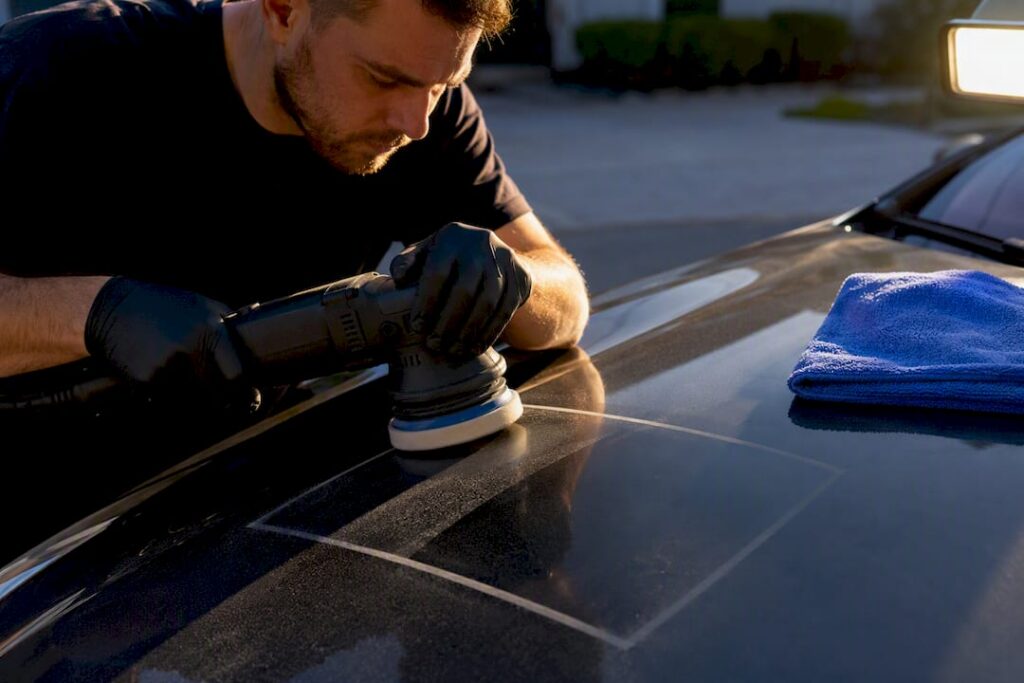
- Run a test spot. Before touching the whole car, work one small panel section to see how the paint responds. This tells you whether the combination you picked actually resolves the defects or whether you need something more aggressive.
- Work in small sections. A dual-action (DA) polisher paired with a medium-fine foam pad and a hybrid or all-in-one polish is the standard toolkit for single-stage work. Overlapping passes on a section roughly two feet square keep heat and pressure even.
- Wipe and inspect under proper light. Every section gets checked before moving to the next, since polish residue can hide what’s still there.
Pro Tip: Keep the polisher moving and avoid dwelling in one spot. A DA generates less heat than a rotary, but lingering too long on an edge or high point can still burn through clear coat, especially on factory-thin paint.
How Do You Decide Between One-Step and Multi-Step?
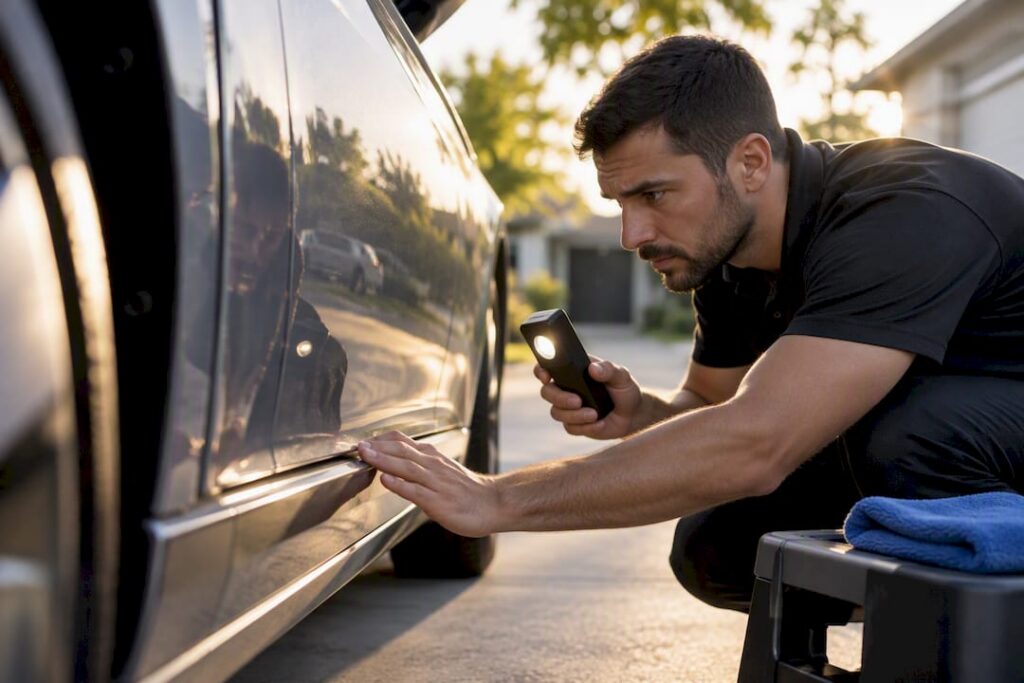
The test spot isn’t just a formality. It’s the deciding factor. Detailers start with the least aggressive combination on a small area, check the result under bright inspection lighting, and only step up to a heavier compound if the defects don’t budge. Inspection lighting matters more than most owners expect, since swirl marks and holograms often disappear under standard garage lighting but show up clearly under a raking LED light.
A short checklist covers most decisions:
- Test spot result: Did the light combination remove the defect, or is it still visible under inspection lighting?
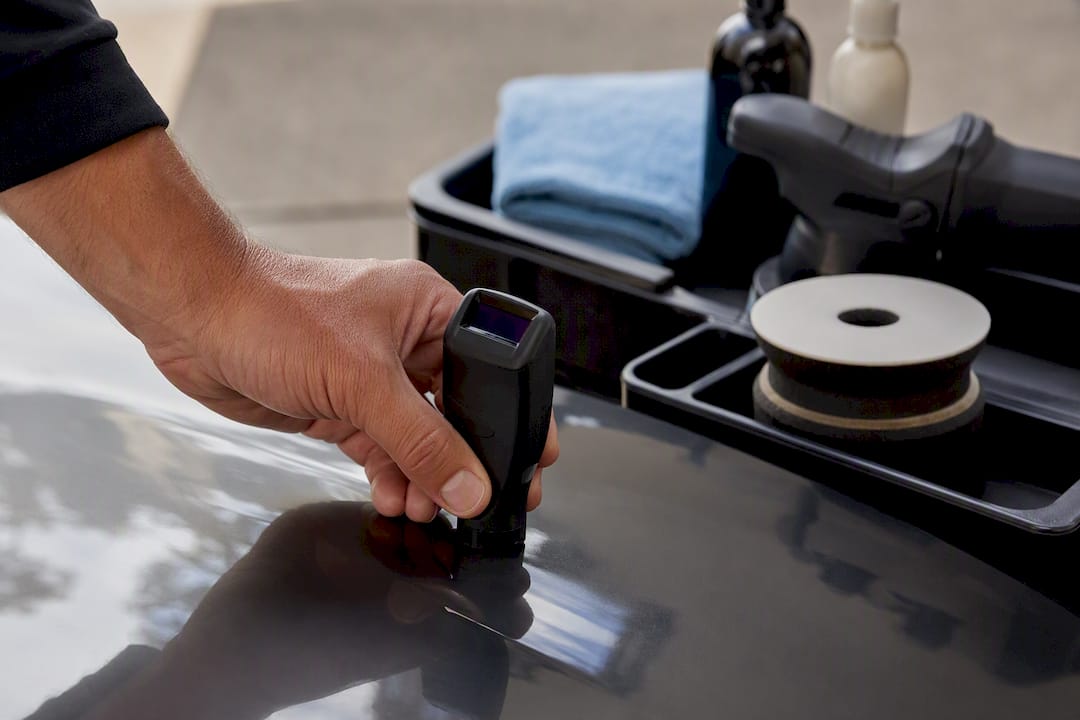
- Paint depth: If you’re worried about how much clear coat is left (common on repainted panels or older vehicles), ask the detailer to check with a paint depth gauge before committing to anything aggressive.
- Paint color: Dark, high-contrast colors may need an added pass even for moderate swirling.
- End goal: A daily driver getting a routine refresh usually stops at one-step. A show car or a vehicle headed for ceramic coating often needs the fuller multi-step prep.
- When to call a pro: Wet sanding, heavy oxidation removal, and aggressive compounding carry real risk of burning through clear coat. That work belongs with a trained professional, not a first attempt in the driveway.
What Results, Time, and Cost Should You Expect?
A one-step typically runs a few hours for a sedan-sized vehicle, though condition and body size push that estimate up or down. Larger vehicles, heavily swirled paint, or tight panel gaps all add time.
Pricing tends to sit lower than multi-step correction, since less labor and fewer product stages go into the job. Exact numbers vary by shop and region, so treat any specific dollar figure you see elsewhere as a starting point for a conversation, not a quote.
What one-step typically delivers and typically leaves behind:
- Noticeable reduction in light swirls, haze, and minor surface marring.
- Restored gloss and clarity, especially on paint that hasn’t been polished in years.
- Deep scratches, rock chips, and severe water-spot etching usually remain, since these defects require the material removal a compounding stage provides.
Results hold up better with protection layered on afterward. A one-step alone doesn’t create a barrier against new contamination; a sealant, wax, or coating applied right after does that work.
How Should You Prep and Protect the Finish Afterward?
Prep and aftercare determine how long the results actually last, and both are simpler than the polishing itself.
- Before polishing: Wash thoroughly, decontaminate with an iron remover, clay the surface if it still feels rough, and mask trim, badges, and rubber seals that shouldn’t get product on them.
- After polishing: Choose a sealant for a quick, affordable layer of protection, a wax for warmth and depth on top of the correction, or a ceramic coating if you want something that lasts longer and shrugs off contamination better.
- Ongoing care: Two-bucket washing, a pH-neutral soap, and microfiber towels keep new swirls from forming on the freshly polished surface.
- Follow-up: Revisit the paint’s condition every year or two, sooner if you notice haze returning, to decide whether another light polish or a fuller correction makes sense.
Who Should Actually Do This Work?
Mobile detailing professionals who specialize in paint correction spend years learning how different clear coats, pad and compound combinations, and application pressures interact, which is exactly the judgment a test spot is designed to sharpen. That experience is what separates a clean, even result from burned-through edges or hazing that shows up weeks later.
Wet sanding, heavy compounding on thin or previously repainted panels, and any correction work involving aggressive chemicals carries real risk. These jobs are worth leaving to a trained professional who can measure paint depth accurately and adjust technique panel by panel. If you’d rather not gamble on your own clear coat, requesting a local quote is a straightforward way to get a professional opinion before any polisher touches your car.
Get Matched With a Local Pro for Paint Correction
Unlike guessing your way through a first attempt with a rented buffer, working with a vetted professional means someone who already knows how your paint’s clear coat will respond before they start. MobileDetailing.io is a directory that connects vehicle owners with local mobile detailing professionals, so you can compare providers, see their listed services, and request quotes without cold-calling shops one by one.

Before you book, ask a few pointed questions: Will they run a test spot before committing to a full correction? Do they use inspection lighting to confirm results? Will they check paint depth if you’re concerned about a repainted panel or older clear coat? A detailer who answers these without hesitation is one who treats correction as a diagnostic process, not a one-size-fits-all service.
If your vehicle also has a carbon-fiber hood or other painted composite panels, those substrates behave differently under polish and heat than steel or aluminum, so it’s worth asking your detailer about panel-specific handling; guides like this carbon fiber hood painting walkthrough illustrate why prep varies by material. When you’re ready to compare local options, get a local quote through MobileDetailing.io and let a professional confirm whether one-step correction fits your car’s actual condition.
Sources
- Paint Correction: 1 Step or Single Step vs. Two Step or Multi Step – Ask a Pro Blog
- One-step vs. multi-step correction: Selecting the right process – DetailerBase Guides
- 1-step paint correction guide – PaintCorrectionGuide
- Single Stage vs. Two Stage Paint Correction: What’s the Difference and When to Use Each | DETAILERMADE
FAQ
What Is a One-Step Paint Correction?
It’s a single polishing pass using one pad and product combination to remove light swirl marks and restore gloss, typically the most common correction service for daily-driven vehicles.
How Much Does a One-Step Paint Correction Cost?
Pricing varies by shop, region, and vehicle size, but it generally costs less than multi-step correction since it involves fewer product stages and less labor time. Requesting quotes through a local detailer directory gives you a real comparison for your specific vehicle.
What’s the Difference Between a One-Step and a Two-Step Correction?
A one-step uses a single pad and polish combination to address light swirls and haze, while a two-step adds a compounding stage first to remove deeper scratches and oxidation before polishing. Multi-step correction removes more material and takes longer, but it’s also necessary for defects a single pass can’t level.
How Long Should a One-Step Paint Correction Take?
Most one-step services take a few hours for a sedan-sized vehicle, with larger vehicles or heavier swirling adding time. Duration also depends on how much prep, like decontamination and clay-bar work, the paint needs beforehand.
Can One-Step Correction Fix Deep Scratches or Heavy Oxidation?
No. A single polishing pass typically can’t remove defects that go deeper than the clear coat’s surface layer, so deep scratches, rock chips, and severe oxidation usually require multi-step correction instead.
MobileDetailing.io provides general educational information. Products, surfaces and vehicle finishes vary. Follow manufacturer instructions and consult a qualified detailing professional before using abrasive processes or chemical treatments.