$500–$2,500+: Paint Correction Cost U.S. Owners Pay and What to Ask
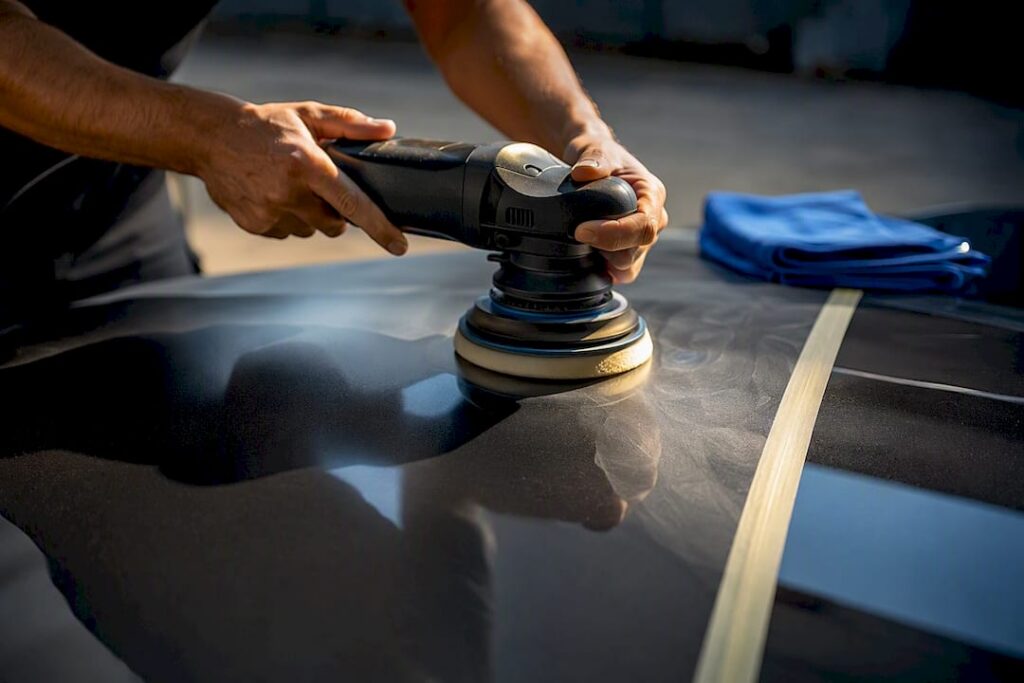
Professional paint correction in the United States typically runs from about $300 to $2,500 or more, with most everyday two-stage jobs landing around $500 to $1,200. The single biggest factor is labor: how many hours a detailer needs to remove defects depends on paint condition and the number of polishing stages required, which is why no shop can give you a firm number without inspecting the car first.
Table of Contents
- How Much Does Paint Correction Cost by Stage?
- What Determines the Price of a Paint Correction Job?
- How Do Detailers Calculate a Paint Correction Estimate?
- How Long Does Paint Correction Last?
- How Do I Get an Accurate Paint Correction Quote?
- Are There Cheaper Alternatives to Full Paint Correction?
- Get Inspected Quotes From Local Pros With MobileDetailing.io
- Sources
- FAQ
How Much Does Paint Correction Cost by Stage?
Price scales with how much clear coat has to be worked and how many passes it takes to get there. A single-stage correction, often called a one-step paint correction, commonly starts around several hundred dollars and removes light swirl marks, minor oxidation, and shallow scratches using one cutting or finishing polish.
A two-stage correction, which adds a compounding step before the finishing polish, often runs $1,000 to $2,000 or more depending on the vehicle and how neglected the paint has been. A three-stage or show-level correction sits at the top of the market and can exceed $2,500, since it involves wet sanding in some cases, multiple compounding rounds, and extensive paint-depth measurement to avoid burning through clear coat.
Vehicle size and body style shift these numbers too. A compact sedan generally starts lower than a mid-size SUV or full-size truck simply because there’s more surface area and more panels to work.
| Vehicle type | 1-stage (starting) | 2-stage (starting) | 3+ stage (starting) |
|---|---|---|---|
| Compact/sedan | $500 | $1,000 | $1,000 to $2,000 or more |
| Mid-size SUV/crossover | $500 to $800 | $1,000 to $2,000 or more | $2,500 or more |
| Full-size truck/SUV | $800 | $1,000 to $2,000 or more | $2,500+ |
These are starting prices, not quotes. Every number above assumes decent paint condition; heavier oxidation, prior bad polishing jobs, or a car that’s sat outside for a decade will push any of these figures higher once a detailer actually looks at the finish.
What Determines the Price of a Paint Correction Job?
Quotes vary as much as they do because several variables stack on top of each other, and most buyers only think about one or two of them:
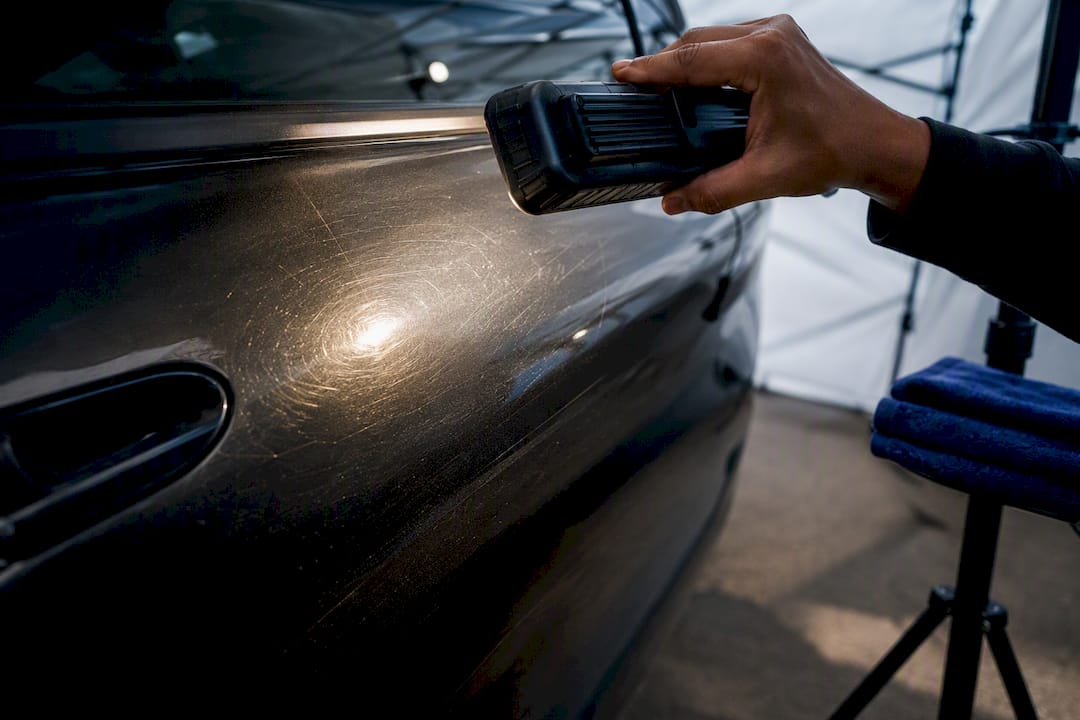
- Paint condition. Swirl marks visible in sunlight are one thing; RIDS (random isolated deep scratches), heavy oxidation, or chemical etching from bird droppings hidden under a layer of grime is another. Decontamination often reveals damage nobody could see at a glance.
- Vehicle size and panel complexity. More square footage and more body lines mean more time taping, masking, and working tight areas like mirrors and door handles.
- Paint color and clear coat hardness. Dark colors, especially black, show swirl and haze far more readily than silver or white, which means more refining passes to hide the same defects. Soft European clear coats can correct faster than some hard Asian-market clears, or the opposite, depending on the formulation.
- Number of stages and product quality. Premium compounds, finishing polishes, and pad systems cost more but often cut correction time, which can offset their higher price.
- Detailer skill, regional labor rates, and overhead. A mobile operation in a rural market prices differently than a shop in a major metro with higher rent and insurance costs.
- Inclusions versus add-ons. Base correction pricing usually covers decontamination, claying, and the polishing stages themselves. Wet sanding, paint touch-up, and post-correction protection like ceramic coatings are almost always priced separately.
According to industry pricing guides, paint condition, vehicle size, paint type, and detailer experience are consistently cited as the primary drivers behind quote variation.
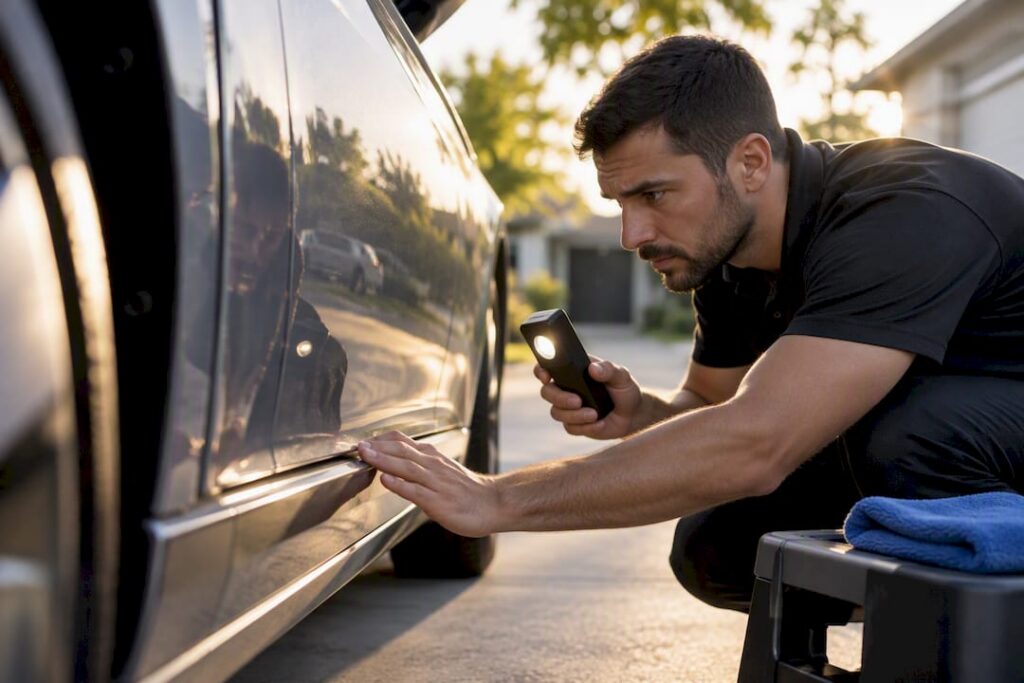
Pro Tip: Ask your detailer to point out defects under a swirl-finder light before work starts. Seeing the damage yourself makes it much easier to understand why the quote lands where it does.
How Do Detailers Calculate a Paint Correction Estimate?
A reliable quote isn’t guesswork. It follows a process:
- Decontamination wash. The car gets a thorough wash and clay bar or chemical decon treatment to strip bonded contaminants that hide underneath swirls and haze.
- Test spot. The detailer picks a representative panel and runs a compound and pad combination under bright, direct lighting to see how the paint actually responds.
- Refine and confirm. Based on that test spot, they adjust the plan, sometimes stepping up to a more aggressive compound, sometimes scaling back.
- Finalize scope and hours. Only after this does a detailer commit to a stage count and labor-hour estimate.
Labor hours vary widely by job. A single-stage correction on a compact car might take 4 to 6 hours, while a two-stage job on a mid-size SUV can run 8 to 12 hours or more when defects are severe. Show-level multi-stage work on a larger vehicle can stretch past 20 hours. Flat package pricing and hourly labor billing often produce different quotes for the same car, which is exactly why asking for a test spot and before/after photos before committing gives you a far more accurate picture than a phone estimate ever will.
How Long Does Paint Correction Last?
Results from a proper correction can hold up for years, but that depends almost entirely on what happens after the polishing wheel stops. Paint correction removes existing defects; it doesn’t stop new ones from forming, so maintenance habits determine how long the car actually looks corrected.
A quality sealant or ceramic coating applied right after correction changes the math substantially. Coatings add a sacrificial, more scratch-resistant layer on top of the paint, which means fewer swirl marks accumulate from routine washing and reduces how often full correction needs repeating.
A few habits protect the investment:
- Wash with a two-bucket method or a touchless system to limit new scratching.
- Use pH-neutral soap and microfiber towels rather than abrasive sponges.
- Park in shade or under a cover when possible to slow UV-driven oxidation.
- Avoid automatic car washes with brushes, which are a leading cause of fresh swirl marks.
Watch for signs a car has been over-polished, such as visibly thinning clear coat or “hazing” that won’t buff out. At that point, more correction isn’t the answer. A detailer should recommend paint protection instead of another aggressive pass, since removing clear coat that isn’t there anymore isn’t possible.
How Do I Get an Accurate Paint Correction Quote?
Getting a number you can trust means asking the right questions before any work begins:
- Do you perform a test spot before finalizing the price?
- What prep steps are included, such as decontamination and claying?
- How many stages do you estimate for my paint’s condition?
- How many labor hours is this quote based on?
- What products and coatings will you be using?
- Can you provide before/after photos and a written satisfaction or warranty policy?
Red flags worth walking away from: a detailer who quotes a fixed price with no inspection, vague language like “we’ll buff it out,” a price that seems far below every other estimate you’ve gotten, or reluctance to document the car’s condition before starting. Ask for a written breakdown separating labor, materials, and optional extras like wet sanding or coating application. That single request does more to prevent surprise charges than anything else on this list.
Are There Cheaper Alternatives to Full Paint Correction?
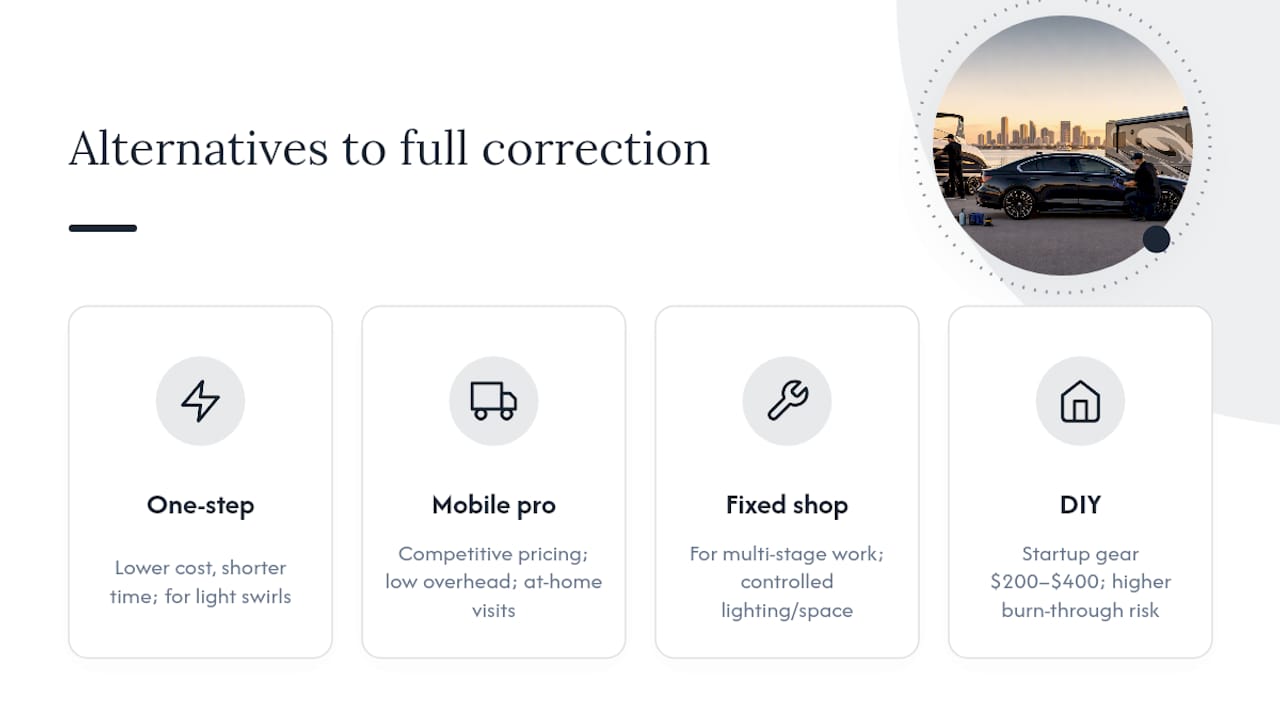
A one-step paint enhancement, essentially a single finishing polish without heavy compounding, makes sense for a car with light swirls and a decent amount of shine already. It costs less and takes less time, and it’s often the smarter call for a daily driver that isn’t headed to a show.
Mobile detailers tend to price competitively against fixed shops since they carry lower overhead, and a mobile visit works well for routine correction jobs at your home or office. Fixed shops make more sense for extensive multi-stage work needing controlled lighting and space.
DIY paint correction requires a dual-action polisher, pads, and compounds, which typically runs $200 to $400 in startup gear. The most common mistake is using too aggressive a compound or dwelling too long in one spot, which can burn through clear coat fast. High-value, rare, or show cars are not the place to practice. Pairing any correction, professional or DIY, with a sealant or coating afterward avoids paying for the same fix twice.
Get Inspected Quotes From Local Pros With MobileDetailing.io
Estimates over the phone are rarely accurate for paint correction, since so much depends on what a test spot actually reveals. MobileDetailing.io connects you with local mobile detailing professionals who can look at your car’s paint in person, walk you through photos and reviews from past customers, and give you a scope-based quote instead of a guess.

Working through a directory instead of cold-calling shops also reduces quote variance, since it encourages detailers to document condition and provide before/after photos rather than quoting blind. You can browse listings, compare local mobile detailers offering paint correction, and request a local quote to get a real, inspected price for your vehicle before committing to anything.
Sources
FAQ
How Much Should I Charge or Expect to Pay for Paint Correction?
Expect roughly $500 to $800 for a single-stage job and $1,000 to $2,000 for a two-stage correction, with multi-stage or show-level work running $2,500 or more depending on vehicle size and paint condition.
How Long Will a Paint Correction Last?
Results can last several years when paired with a quality sealant or ceramic coating and regular gentle washing, though exposure and maintenance habits ultimately determine how long the finish stays swirl-free.
Why Is Paint Correction So Expensive?
The cost reflects labor, not just product: a two-stage job can take 8 to 12 hours or more of hands-on polishing work, and time on the buffer is the main driver behind the price rather than the compounds and pads themselves.
Is Paint Correction Worth the Cost?
For a car with visible swirls, oxidation, or scratches that a wash and wax can’t fix, correction restores clarity and resale-ready shine that basic detailing can’t match, and pairing it with protection extends the value well past the initial job. Getting an Mobiledetailing helps confirm whether full correction or a lighter enhancement makes more sense for your specific paint.
MobileDetailing.io provides general educational information. Products, surfaces and vehicle finishes vary. Follow manufacturer instructions and consult a qualified detailing professional before using abrasive processes or chemical treatments.