RV Wash: Ask About Waxing and IDA RV Certification
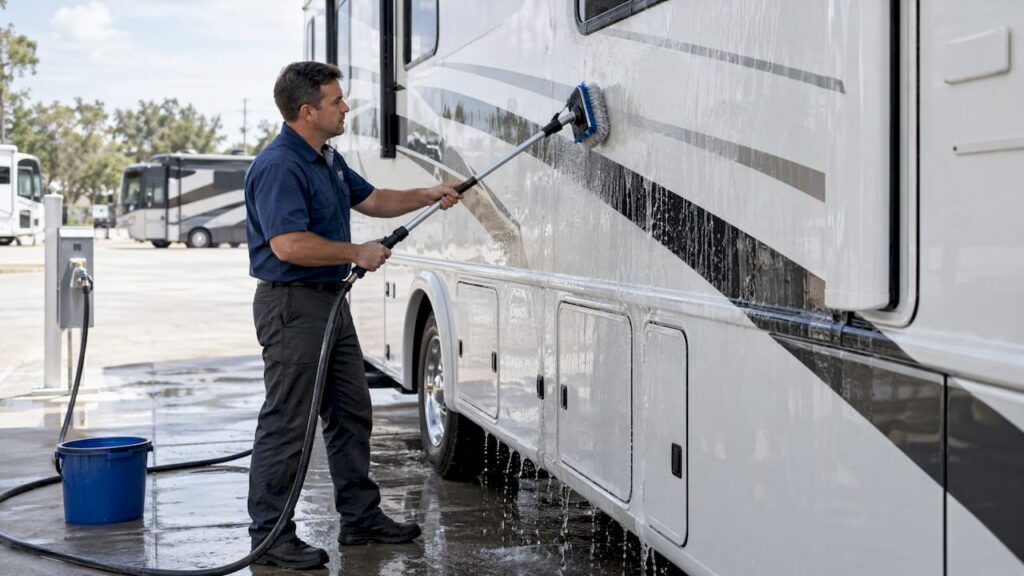
For reliable protection of an RV’s exterior, hire a trained mobile detailer for a professional wash and wax rather than handling oxidation and heavy grime alone. A proper service combines a safe wash, decontamination, and a wax or sealant layer that shields the finish between visits. Look for a technician with IDA RV certification and compare local options through Mobiledetailing.
Table of Contents
- What a professional RV wash and wax includes
- What does an RV wash and wax cost?
- How to choose and vet a mobile RV detailer
- How to prepare your RV for the mobile detailer
- Aftercare and a simple maintenance schedule
- Find a vetted mobile RV detailer through MobileDetailing.io
- FAQ
- Sources
What a professional RV wash and wax includes
A mobile RV detail starts with a thorough pre-rinse to loosen road grime, bugs, and tar before any contact cleaning begins. Technicians then wash the exterior with a low-pH soap and soft microfiber or wool-blend tools designed to avoid scratching gelcoat, fiberglass, or painted aluminum panels.
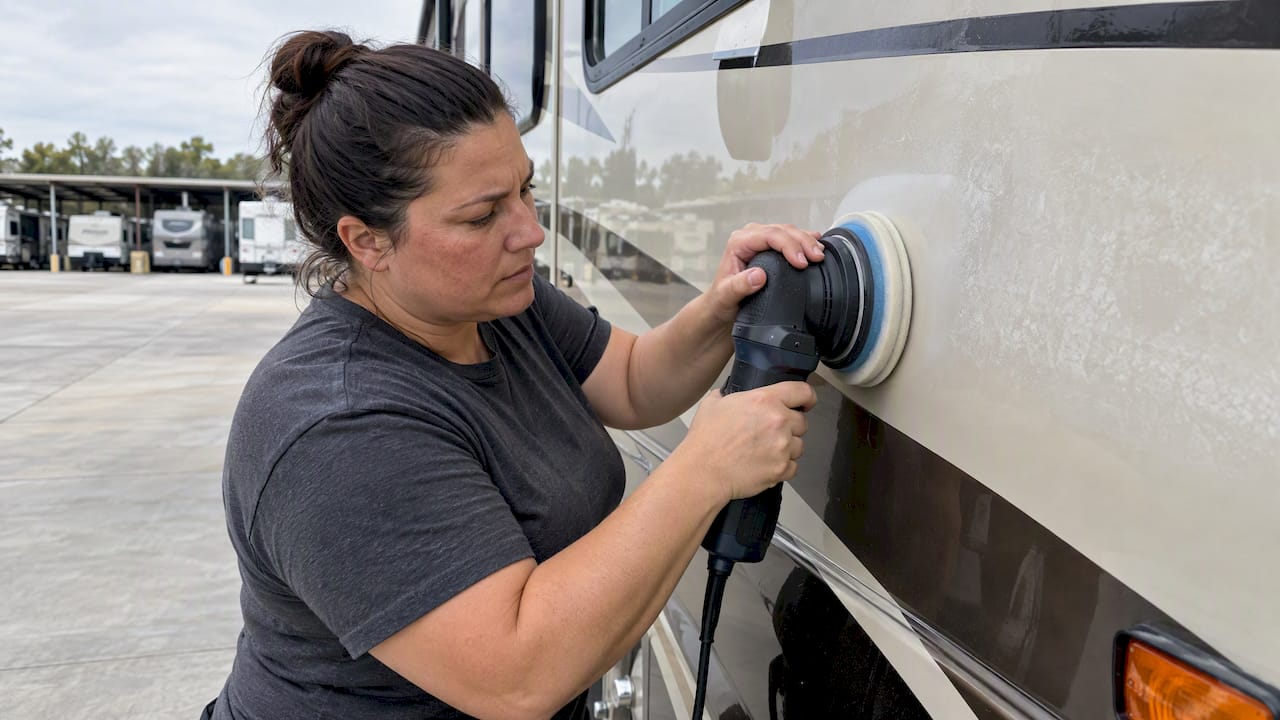
If the surface still feels rough after washing, a clay bar or chemical decontamination step removes bonded contaminants like tar and rail dust. Light polishing or compounding may follow on oxidized sections, but that work calls for a trained hand since aggressive buffing can burn through thin clear coats or gelcoat.
Once the surface is clean, the technician applies wax or a paint sealant, typically covering the roof cap, sidewalls, front and rear caps, and slide-out trim. Some providers skip rubber roof membranes since those need different products entirely.
A full wash and wax on a mid-size RV generally takes longer than a routine maintenance wash, since the wax step and any decontamination add time:
- Pre-rinse and bug or tar removal using low-pH soap
- Decontamination with clay or chemical treatment where needed
- Wax or sealant application to painted and gelcoat surfaces
- Light polishing only when a technician determines it is safe
A maintenance wash without wax moves faster and simply keeps dirt and organic buildup from setting into the finish between full details.
What does an RV wash and wax cost?
Pricing swings widely based on a handful of factors a detailer will walk through before quoting. RV class and length matter most: a shorter travel trailer may cost less to detail than a larger Class A motorhome with full-wall slide-outs.
Condition plays an equally large role. An RV with years of oxidation or heavy tree sap will need more labor, and possibly compounding, than one that gets washed every month. Other drivers include:
- RV class, length, and number of slide-outs
- Current condition, including oxidation and organic staining
- Services bundled in (wash only versus wash, decontamination, and wax)
- Travel distance and site access for the mobile unit
- Add-ons like roof cleaning or oxidation removal
Providers may use a flat fee tied to RV class or a per-foot rate, with itemized add-ons listed separately. According to manufacturer maintenance guidance, exteriors need washing at least monthly and waxing every three to six months depending on sun exposure and color, which explains why cost estimates often hinge on how long it has been since the last detail.
Ask for an itemized quote with pre-inspection photos before booking, especially if the RV has visible oxidation that might require compounding at an added cost.
How to choose and vet a mobile RV detailer
Not every mobile detailer has RV-specific training, and the skill gap matters more on large, curved fiberglass and gelcoat surfaces than it does on a sedan. A short vetting process before booking can save a finish from permanent damage.
- Ask whether the technician holds IDA RV certification (CD-SV or RVC), which verifies tested knowledge of RV surfaces, safety, and detailing processes.
- Ask how many RVs they detail regularly and request examples of similar coaches they have worked on.
- Confirm they carry liability insurance and ask for proof before the appointment.
- Ask which cleaners and waxes they use, and whether they avoid high-pH or caustic products that can dull gelcoat and reduce UV resistance.
- Request before-and-after photos and at least one reference from a past RV client.
- Get a written, itemized estimate that specifies time on-site and how slide-outs and the roof will be handled.
Pro Tip: Ask the detailer directly how they handle roof seals and slide-out seams, since improper cleaning around these areas can lead to water intrusion later.
Treat a few patterns as warning signs: refusal to share insurance documentation, no photos or references available, or a quote offered without ever seeing the RV. A detailer willing to walk the coach first and explain pricing line by line is generally the safer choice. Browsing listing profiles on sites like the Mobile Pro Auto & Marine Detailing page shows the kind of photos and service breakdowns worth looking for before you book.
How to prepare your RV for the mobile detailer
A little prep work makes the appointment faster and helps avoid surprises once the technician arrives. Clear the ground around the RV of chairs, hoses, and toys, and park on level, shaded ground if that option exists on the property.
Retract awnings and lower or remove antennas unless the plan includes cleaning them separately. Walk the exterior with the technician before work starts and point out any soft spots, delamination, or seal gaps you’ve noticed.
- Clear the surrounding area and park on level, shaded ground when possible
- Retract awnings and secure loose exterior items
- Flag any known seal issues, cracks, or prior repairs during the walkaround
- Confirm water runoff handling and any hose or power access the tech needs
Settling these details upfront keeps the appointment on schedule and gives the technician a clear picture of what to treat carefully.
Aftercare and a simple maintenance schedule
Protecting the result of a professional detail comes down to a short routine between visits. Manufacturer guidance recommends washing monthly and waxing every three to six months depending on sun exposure and exterior color, with lighter colors generally needing wax touch-ups less often than dark finishes.
- Wash monthly, or sooner after heavy pollen, sap, or bird droppings
- Spot-clean bug splatter and tree sap promptly rather than letting it bond to the surface
- Skip abrasive pads and high-pH or caustic cleaners that can strip gloss and UV protection
- Store under cover or use a breathable RV cover during long off-season stretches
Pro Tip: If water stops beading on the roof cap or sidewalls, that’s usually the first sign wax protection has worn off and it’s time to book another detail.
Visible dulling, chalky oxidation, or water that no longer beads are good signs to call a professional again. Heavy oxidation calls for compounding, a step best left to a trained detailer given how easily aggressive buffing damages gelcoat and thin clear coats; for more extensive mechanical or structural care beyond detailing, consider professional commercial RV repair and maintenance services.
Find a vetted mobile RV detailer through MobileDetailing.io
Compare local options through Mobiledetailing and request quotes to learn about available services.
When you submit a quote request, include a few basics so detailers can price accurately:
- RV class and length, including any slide-outs
- Current condition, especially visible oxidation or staining
- Services wanted (wash only, full wash and wax, or added decontamination)
- Your general location and preferred appointment window
As you compare bids, ask each detailer for proof of insurance and their IDA certification status before booking. Start your search and request a local quote to see which mobile RV detailers may match what your coach needs.
FAQ
How often should I wash and wax my RV?
Manufacturer guidance recommends washing at least monthly and waxing roughly every six weeks to three months, depending on sun exposure and exterior color. Darker finishes and RVs stored outdoors year round tend to need wax touch-ups on the shorter end of that range.
How long does a mobile RV wash and wax take?
Time on-site depends on RV length, condition, and whether decontamination or polishing is needed beyond a standard wash and wax. A detailer can give a firmer estimate after inspecting the coach or reviewing photos you send with your quote request.
Is ceramic coating better than wax for an RV?
Ceramic coating offers longer-lasting protection than traditional wax but costs more and requires professional application and surface prep. A wash and wax remains a practical, lower-cost option for routine upkeep between heavier protective treatments like coating.
Do I need IDA certification to trust a mobile detailer?
IDA RV certification is one way to verify a technician’s demonstrated knowledge of RV surfaces, safety, and detailing processes. Asking about certification is one of the fastest ways to gauge a detailer’s documented RV knowledge before booking.
Can I wash and wax my RV myself instead of hiring a pro?
Routine washing is manageable for many owners, but compounding, oxidation removal, and work around roof seals and slide-outs carry real risk of damage without training. Hiring a certified mobile detailer helps protect gelcoat and seals while saving the time a full exterior detail takes to do thoroughly.
Recommended
- Fiberglass WorX – RV Repair, RV Roof & RV Detailing
- Manufacturer Backed RV Roof Cleaning That Preserves Seals
MobileDetailing.io provides general educational information. Products, surfaces and vehicle finishes vary. Follow manufacturer instructions and consult a qualified detailing professional before using abrasive processes or chemical treatments.