Car Owners: Diagnose Water Spots First, Try a 30–60s Vinegar Fix
Most water spots are just mineral deposits sitting on top of your clearcoat, and a mild acid dissolves them in under a minute. The one rule that saves your paint: diagnose before you touch a polisher. Wash the panel, work on it while it’s cool and shaded, and try the least aggressive fix first. If it’s still there after a proper chemical treatment, rinse and neutralize the area before you decide what’s next.
Table of Contents
- How to Remove Water Spots From a Car, Step by Step
- Is It Surface Mineral, Shallow Etch, or Deep Etch?
- Which Chemical Treatments Actually Dissolve Water Spots?
- When Do You Need to Polish Instead of Just Wipe?
- How Do You Stop Water Spots From Coming Back?
- Does Hard Water Cause Different Spots Than Acid Rain?
- When Should You Just Hire a Pro?
- Getting a Professional Opinion on a Stubborn Spot
- Get a Local Quote Before You Reach for the Polisher
- Sources
- FAQ
How to Remove Water Spots From a Car, Step by Step
Skip the polisher until you’ve ruled out the easy fixes. Most water spots respond to chemistry alone, and jumping straight to abrasion costs you clearcoat you can’t get back.
- Wash the panel with pH-neutral soap, rinse, and dry it completely so you can actually see what you’re dealing with.
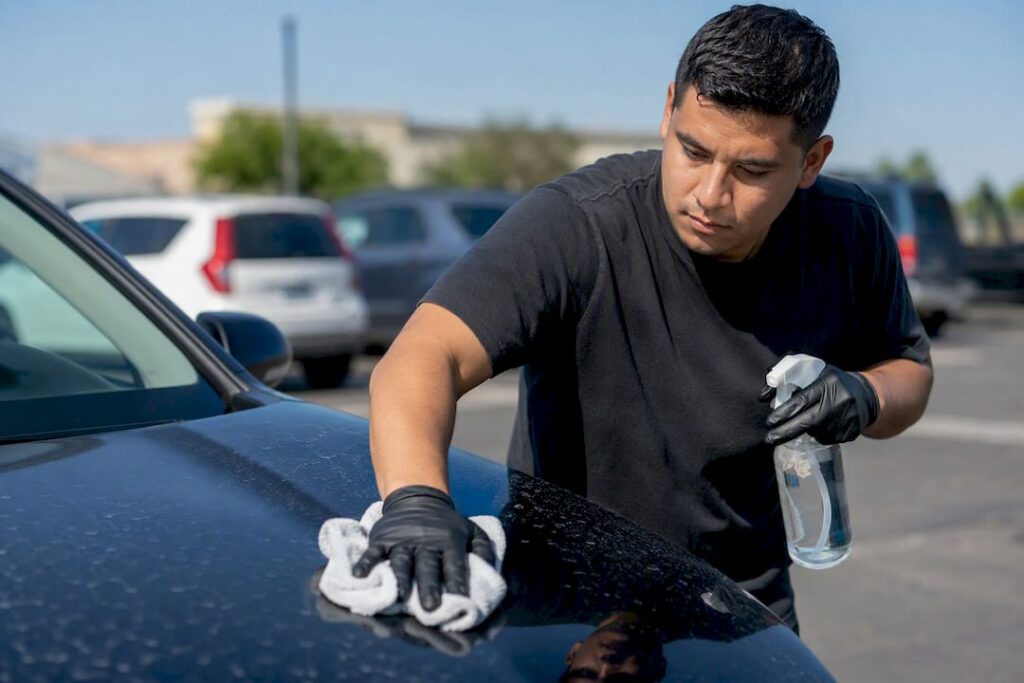
- Spray a quick detailer on the spot and work it with a plush microfiber towel. Lubrication alone lifts a lot of fresh mineral buildup.
- Still there? Mix distilled white vinegar and distilled water 50:50, apply it to a cool panel, let it sit 30 to 60 seconds, then rinse thoroughly and dry.
- If chemistry doesn’t fully clear it, try a clay bar next, and only move to a light polish in a small 2 foot by 2 foot test patch if the spot survives that too.
Pro Tip: Always test in a shaded 2×2 patch first. What works on your hood might haze your black-painted mirror caps differently, and you won’t know until you check.
Is It Surface Mineral, Shallow Etch, or Deep Etch?
Not every water spot is the same problem, and treating a deep etch like a surface deposit just wastes product and time. Detailers generally sort spots into three tiers, and each one calls for a different response.
- Type 1, surface mineral deposit: Lifts with a microfiber wipe or a mild acid in roughly 30 to 60 seconds of dwell time. This is the vast majority of what you’ll encounter after a rain shower or a sprinkler mishap.
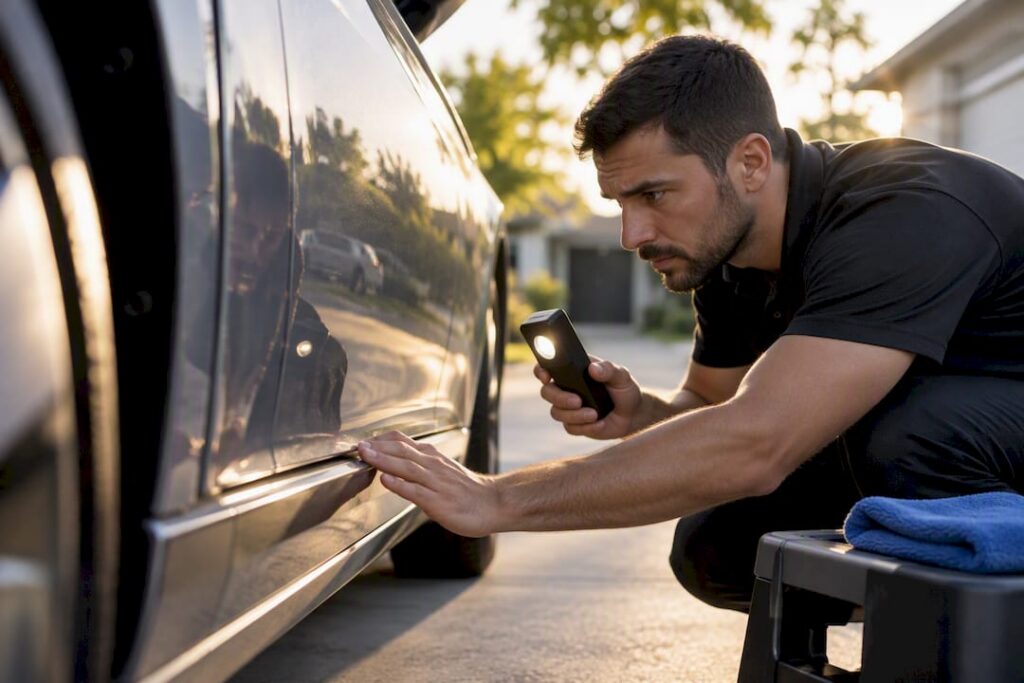
- Type 2, shallow etch: Survives the acid wipe. Run a fingernail across it. If it doesn’t glide freely and you can see a faint ring under angled light, the mineral has started etching into the clearcoat. This tier is polishable.
- Type 3, deep etch: Your fingernail actually catches on the rim of the spot. Polishing this out risks cutting through to the basecoat, which means you’re looking at professional repair, not a weekend project.
That tiered breakdown is well established in detailing chemistry, and it lines up with a simple field test ladder: wet-microfiber wipe first, then an acid wipe, then the fingernail check, then a small test polish if needed. Each step tells you whether to stop or escalate. A fingernail test paired with inspection under angled LED light catches most Type 2 versus Type 3 confusion before you commit to a polisher.
Which Chemical Treatments Actually Dissolve Water Spots?
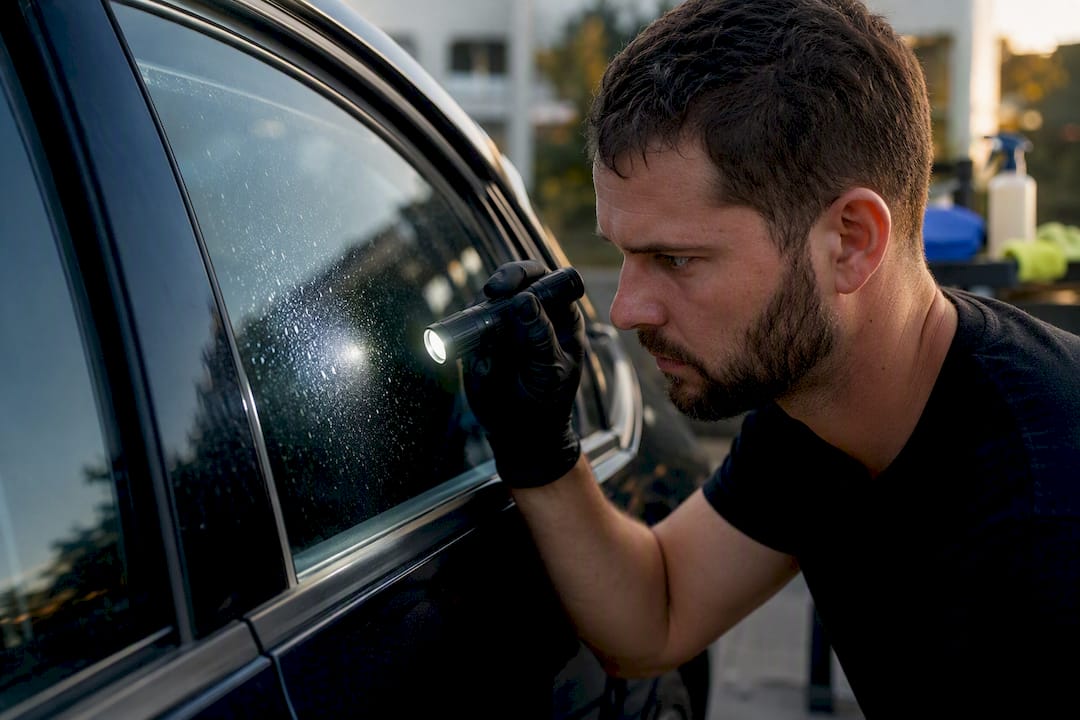
Hard water spots are mostly calcium carbonate, and mild acids convert that mineral into a soluble salt that rinses clean away. That’s the entire mechanism behind vinegar working on a windshield spot. It also explains why the coffee-ring effect matters here: minerals concentrate at the edge of an evaporating water droplet, and once the sun bakes that ring in, it bonds more aggressively to the clearcoat. Wiping a wet spot today is a lot easier than wiping a baked one next week.
DIY vinegar method:
- Mix distilled white vinegar and distilled water in equal parts.
- Soak a microfiber towel or spray it directly onto a cool, shaded panel.
- Let it dwell 30 to 60 seconds, no longer.
- Rinse fully with clean water and dry immediately.
- Test a small area first. Vinegar strips wax and sealant, so plan to reapply protection afterward.
Citric acid works faster than vinegar at a similar pH because it grabs onto calcium ions and pulls them into solution more efficiently than acetic acid does. That’s why a lot of commercial “mild acid” spot removers lean on citric blends rather than straight vinegar. For stubborn or sun-baked deposits, oxalic-acid formulas tackle both calcium and iron contamination at once, but they demand gloves, eye protection, and a thorough rinse since concentrated oxalic acid irritates skin and eyes.
Pro Tip: If you’re treating glass and paint in the same session, test the glass spot remover on an inconspicuous corner first. Some formulas that are perfectly safe on clearcoat can haze glass if you leave them on too long.
The Diamond Brite guide to water spot removal walks through this same cool panel, short dwell, full rinse sequence if you want a second reference while you’re working.
When Do You Need to Polish Instead of Just Wipe?
Polishing is a mechanical fix for a chemical problem you couldn’t solve with chemistry, and it should always feel like the fallback, never the first move. If a Type 2 etch survived the vinegar and clay steps, here’s the workflow that limits clearcoat loss:
- Start with the least aggressive product you own, typically a consumer-grade light polish, on a dual-action polisher.
- Work a small 2×2 test patch and inspect it under angled light before moving to the next panel.
- Only step up to a medium polish, or a heavier compound as a last resort, if the light pass didn’t level the etch.
- Stop and reassess if the fingernail test still catches, if a faint halo remains around the spot, or if you notice any color change in the paint.
Each polishing pass removes a few microns of clearcoat, and clearcoat doesn’t grow back. Detailers who inspect between passes under angled light and stop at the minimum cutting action that restores gloss tend to preserve far more finish over the life of the vehicle than those who keep compounding “just to be sure.” If a spot needs more correction than a light polish can safely deliver, wet-sanding or a professional respray is the honest fix, not another pass with a heavier pad.
Pro Tip: Keep a small flashlight in your detailing kit specifically for angled inspection between polish passes. Overhead garage lighting hides etching that a raking light exposes instantly.
How Do You Stop Water Spots From Coming Back?
Prevention costs a fraction of what correction does, and most of it comes down to habits rather than products.
- Dry the car immediately after washing with a plush microfiber drying towel, and use a forced-air blower to clear water pooling in seams, mirrors, and badges.
- If your tap water is hard, a portable deionizing cartridge on your final rinse strips out dissolved minerals so the water sheets off spot-free instead of evaporating into deposits. It’s generally worth the investment once local hardness climbs above roughly 180 mg/L; below about 60 mg/L, most owners don’t need it.
- A coat of wax, synthetic sealant, or ceramic coating gives minerals a sacrificial layer to sit on instead of your clearcoat. Wax and sealant tend toward hydrophobic beading, while some ceramic coatings favor hydrophilic sheeting, which drains water off the panel faster and leaves fewer spots to begin with.
- Skip parking under sprinklers, and dry the car promptly after rain instead of letting it air-dry in the sun.
Does Hard Water Cause Different Spots Than Acid Rain?
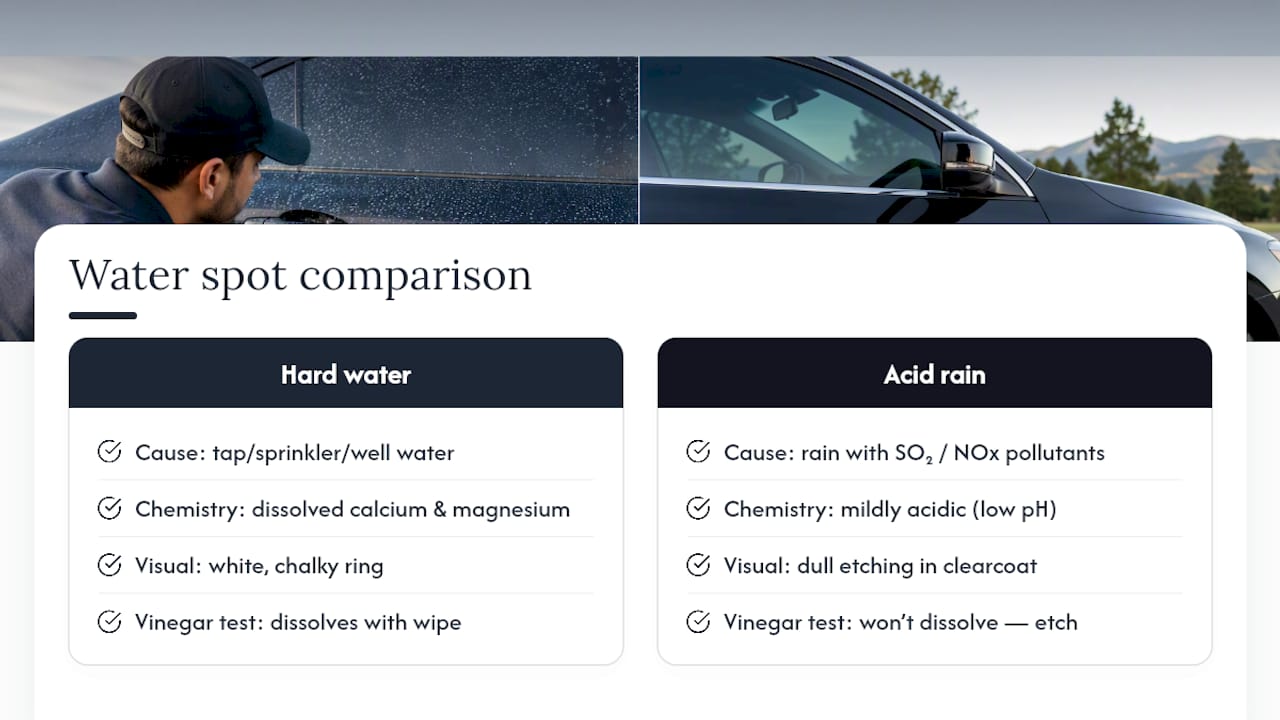
Not all water spots come from the same source, and knowing which one you’re dealing with changes how you prevent the next round. Hard water spots are the common culprit: tap water, sprinkler runoff, and well water carry dissolved calcium and magnesium carbonate, and when that water evaporates off a hot hood, the minerals stay behind as the white, chalky ring most owners recognize instantly.
Acid rain is a different animal chemically. Rainwater picks up sulfur dioxide and nitrogen oxides from the atmosphere, which lowers its pH and makes it mildly acidic rather than mineral-heavy. Instead of leaving a mineral deposit that a vinegar wipe dissolves, acid rain can etch directly into the clearcoat if it’s left to dry and bake in the sun, especially near industrial areas or after regional weather events that concentrate pollutants. That’s part of why some spots that look identical at a glance respond completely differently to the same vinegar treatment. One rinses off in a wipe, the other needs a fingernail test because it already started as an etch, not a deposit.
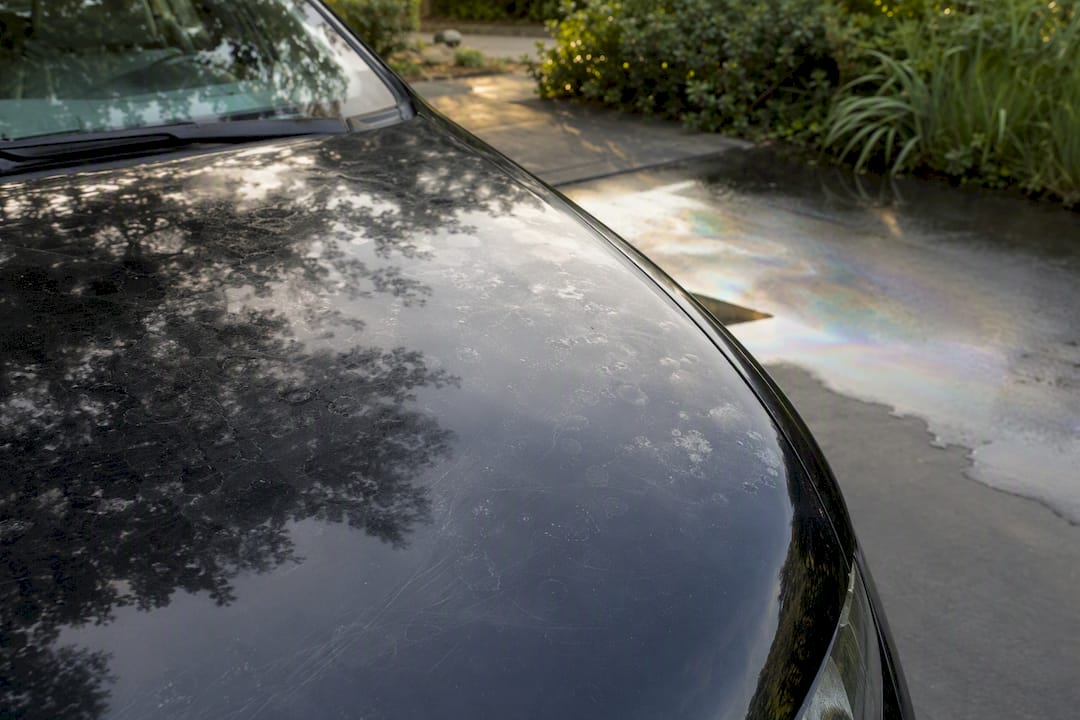
Geography matters more than most owners realize. If you live somewhere with hard well water or municipal water with high mineral content, spot-free rinses and frequent drying do most of the preventive work. If you’re in a region with more acidic rainfall, prompt washing after storms and a durable sealant or ceramic coating matter more than any spot-free rinse setup, since the damage mechanism starts as chemical etching rather than mineral crystallization.
When Should You Just Hire a Pro?
Some water spot problems aren’t worth solving in your driveway. If etching covers multiple panels, if you’ve already tried the vinegar and clay steps without success, or if you need a resale-ready finish, it’s time to call in a detailer with the right equipment.
- Widespread or repeated failures point to either heavier contamination than a DIY kit can handle or an etch depth that needs machine correction beyond a light hand polish.
- Cost varies by geography and severity, but a standard paint correction or spot treatment from a local detailer is generally far less than a wet-sand and clearcoat respray on a single panel, which is the fix for genuinely deep etching.
- Pros bring controlled machine correction, color-matched spot resprays, and warrantied coatings you can’t replicate at home. Take clear, well-lit photos of the affected panels before requesting quotes so detailers can size up the job accurately.
Getting a Professional Opinion on a Stubborn Spot
If chemistry and light polishing haven’t cleared a spot, Mobiledetailing connects you with local mobile detailers who handle everything from acid treatments to full paint correction and spot resprays. When requesting quotes, include photos of the affected panel, note what you’ve already tried, and describe the outcome you want. That context gets you a faster, more accurate estimate.
— John
Get a Local Quote Before You Reach for the Polisher
Chasing a stubborn etch yourself can turn a $50 problem into a $500 clearcoat repair if you push a compound too far. Mobiledetailing is the faster route to a second opinion: instead of calling around town, you search your location once and compare local mobile detailers who already handle water spot removal, paint correction, and coatings.

Send in a couple of clear photos of the spot, mention what you’ve already tried, and you’ll typically get quotes back without ever having to drive the car anywhere. If your fingernail test says Type 2 or Type 3, skip the guesswork and request a local quote to see what a pro near you would charge to fix it right.
Sources
For deeper detail on spot chemistry and removal steps, see CarCareTruth’s breakdown of water spot causes and Adam’s Polishes’ removal guide.
- What Causes Water Spots (and What Dissolves Them) · CarCareTruth
- How to Remove Water Spots from Your Car Paint – CarXplorer
- How to Remove Water Spots and Water Etching on Paint and Glass – Adam’s Polishes
FAQ
Can Water Spots Be Removed From a Car?
Yes, most water spots are surface mineral deposits that come off with a mild acid like diluted vinegar within 30 to 60 seconds of dwell time. Deeper etching may need polishing or, in severe cases, professional repair.
How Much Does It Cost to Remove Water Spots From a Car?
Cost depends heavily on severity and your location, ranging from nearly free for a DIY vinegar treatment to a paid detailing service for machine polishing, up to a full respray for deep etching. Requesting quotes with photos through a platform like Mobiledetailing gets you an accurate local price fast.
Does WD-40 Remove Water Spots on a Car?
WD-40 isn’t formulated for this and can leave an oily residue that attracts dust and interferes with wax or sealant. Stick to a purpose-built quick detailer or a diluted vinegar solution instead.
Can Water Spots on a Car Be Permanent?
Yes, if mineral deposits bake in the sun long enough, they etch into the clearcoat and become a Type 3 deep etch that a wipe or light polish can’t fix. At that point, the crater is permanent until it’s polished out or the panel is repainted.
MobileDetailing.io provides general educational information. Products, surfaces and vehicle finishes vary. Follow manufacturer instructions and consult a qualified detailing professional before using abrasive processes or chemical treatments.