Texas Window Tint Laws: Legal Limits, Exemptions and Penalties
In Texas, the film on your front side windows must let in at least 25% of visible light, and the windshield may only carry tint above the AS-1 line. Rear side windows and the rear window are far less restricted. Two conditions apply to the rear window: you need outside mirrors on both sides that give a clear view of 200 feet behind you. The film must also not be red, blue or amber on the windshield, and it must stay within the reflectivity limit on front windows. This guide walks through each window, the rules that trip people up, the medical exemption, and what happens if your tint does not comply.
The numbers below come from the Texas Department of Public Safety (DPS) and the Texas Transportation Code. Laws can change, so check the linked official pages before you buy film.
Table of Contents
- Texas tint limits at a glance
- What “25% VLT” means
- Windshield tint rules
- Front side windows
- Rear side windows and the rear window
- Factory tint and replacement glass
- Reflectivity and prohibited colors
- The compliance label
- Medical exemptions
- Commercial vehicles
- Penalties for illegal tint in Texas
- How Texas compares with other states
- Can you tint windows yourself?
- Caring for new window tint
- How to stay compliant: a short checklist
- Finding a tint installer
- FAQ
- Sources
Texas tint limits at a glance
The table summarizes the rules for a standard passenger vehicle. The reasoning behind each row follows in the sections after it.
| Window | What Texas requires | Reflectance limit |
|---|---|---|
| Windshield | Tint only above the AS-1 line, or within the top five inches if there is no AS-1 line. Non-reflective, and not red, blue or amber | 25% or less |
| Front side windows (left and right of the driver) | At least 25% light transmission, measured with the original glass | 25% or less |
| Rear side windows (behind the driver) | Exempt from the tint limit | Not regulated |
| Rear window | Exempt if outside mirrors on both sides give at least 200 feet of rear view | Not regulated |
These figures match the DPS window tinting standards and the text of Transportation Code §547.613, which are the controlling sources for Texas.
What “25% VLT” means
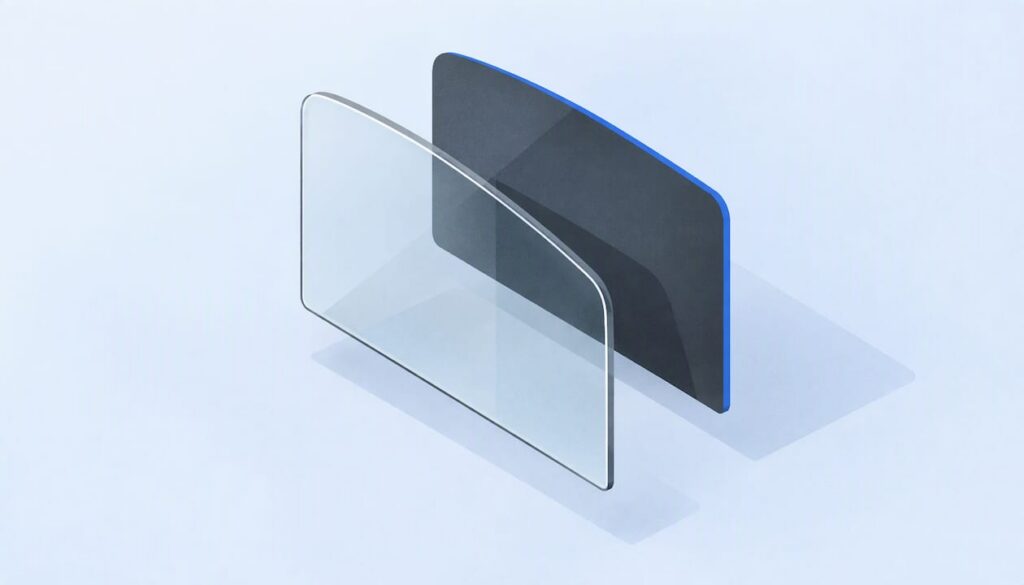
VLT stands for visible light transmission: the share of visible light that passes through the glass and film together. A 25% VLT means a quarter of the light gets through, and a lower number means darker glass. People often say “25 tint” or “20 tint” for the film’s rating, and that shorthand causes most of the confusion.
The key point is that Texas measures the film in combination with the original glass, according to DPS. Most factory glass already blocks some light, so a film sold as 25% can measure darker than 25% once it sits on the window. If you want to stay legal on the front side windows, the finished window has to read 25% or higher, not just the box the film came in.
Is 20% tint legal in Texas?
On the front side windows, no. A 20% reading is darker than the 25% minimum, so it fails. On the rear side windows and the rear window (with the dual-mirror condition met), 20% or even darker film is allowed, because those windows are exempt from the transmission limit. Many drivers choose a lighter film up front and a darker one behind for exactly this reason.
If you want to see how different percentages look in real life before you commit, the MobileDetailing.io guide to window tint percentages from 5% to 70% shows the visual difference between each level.
Windshield tint rules
The windshield is the most restricted window. DPS limits tinting to the area above the AS-1 line. The AS-1 line is a small marking etched into the corner of the glass by the manufacturer. If your windshield has no AS-1 line, the limit is five inches below the top of the windshield.
Three details matter here:
- Reflectivity: sunscreening devices on the windshield must have luminous reflectance of 25% or less, according to DPS.
- Color: red, blue and amber are not allowed on the windshield.
- Placement: a full-windshield film is not what the rule describes. The permitted area is the strip at the top, so a sun strip or visor band is the typical legal setup.
Some drivers see ads for nearly clear windshield films and assume they are legal. The DPS standard is about where the material sits and how reflective it is, so ask the installer to show you how the product fits those two rules before anything goes on the glass. A clear film that covers the whole windshield is a different question from a sun strip at the top, and the installer should be able to explain which one they are proposing.
Front side windows
The windows immediately to the left and right of the driver follow the strictest numbers outside of the windshield. Sunscreening has to allow at least 25% light transmission and reflect 25% or less, measured together with the original glass. The state’s own statute describes the same limits for the driver’s left- and right-side windows.
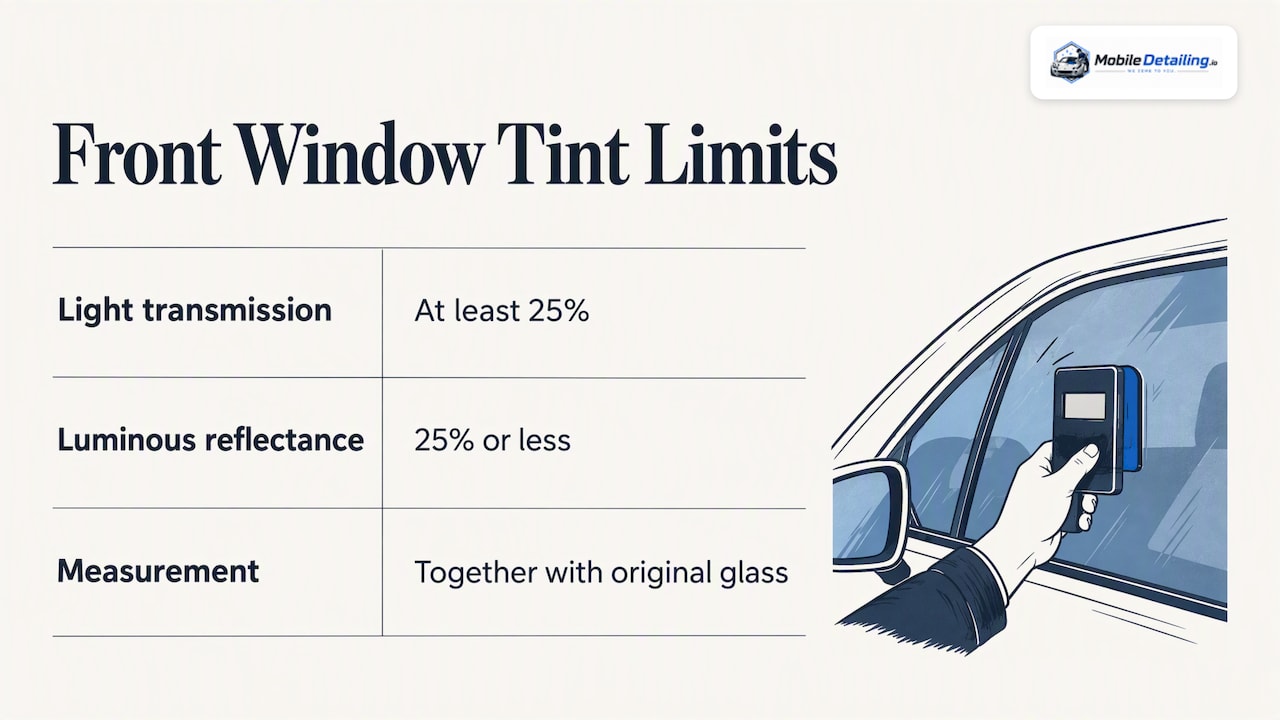
Because factory glass is part of the measurement, the safest approach is to have the installer test the finished window with a tint meter. A reputable shop will do that on request and can tell you the reading before you pay. If you are comparing quotes, the MobileDetailing.io breakdown of window tint costs lists the questions worth asking, and a meter reading belongs on that list.
Rear side windows and the rear window
The windows behind the driver are exempt from the transmission limit under Texas law. The rear window has the same exemption, with a condition: the vehicle must have outside mirrors on both sides that provide at least 200 feet of rear visibility.
In practice, this means:
- Any darkness is generally permitted on the rear side windows of a passenger vehicle.
- A dark rear window is fine if both side mirrors work and give the required view. Missing, broken or obstructed mirrors can undo that.
- The exemption is about darkness. It does not remove the rest of the statute, including the rule against material that obstructs the driver’s clear view.
SUVs and trucks with factory privacy glass are usually already dark in the back. That factory glass is not a problem, as explained below.
Factory tint and replacement glass
Texas does not treat manufacturer-installed tint as illegal tint. The statute exempts factory-tinted or pre-tinted glass installed by the manufacturer, and replacement glass that meets the manufacturer’s specifications, as long as the window meets federal window-material standards. Replacing a cracked window with the right glass for your model does not put you in violation.
The issue arises when film is added on top of already-dark glass. Stacking a film on privacy glass can change the reading on windows that are regulated, so the front windows are where to be careful.
Reflectivity and prohibited colors
Texas restricts how mirror-like the tint can be, not just how dark. Front-side and windshield sunscreening must have luminous reflectance of 25% or less, according to DPS. A very shiny metallic film can fail even if its darkness is within range.
On color, windshield devices cannot be red, blue or amber. Those colors are associated with emergency vehicle lighting, so the restriction keeps ordinary vehicles from looking like something they are not. Choose a neutral charcoal, gray or black film and the color issue goes away.
The compliance label
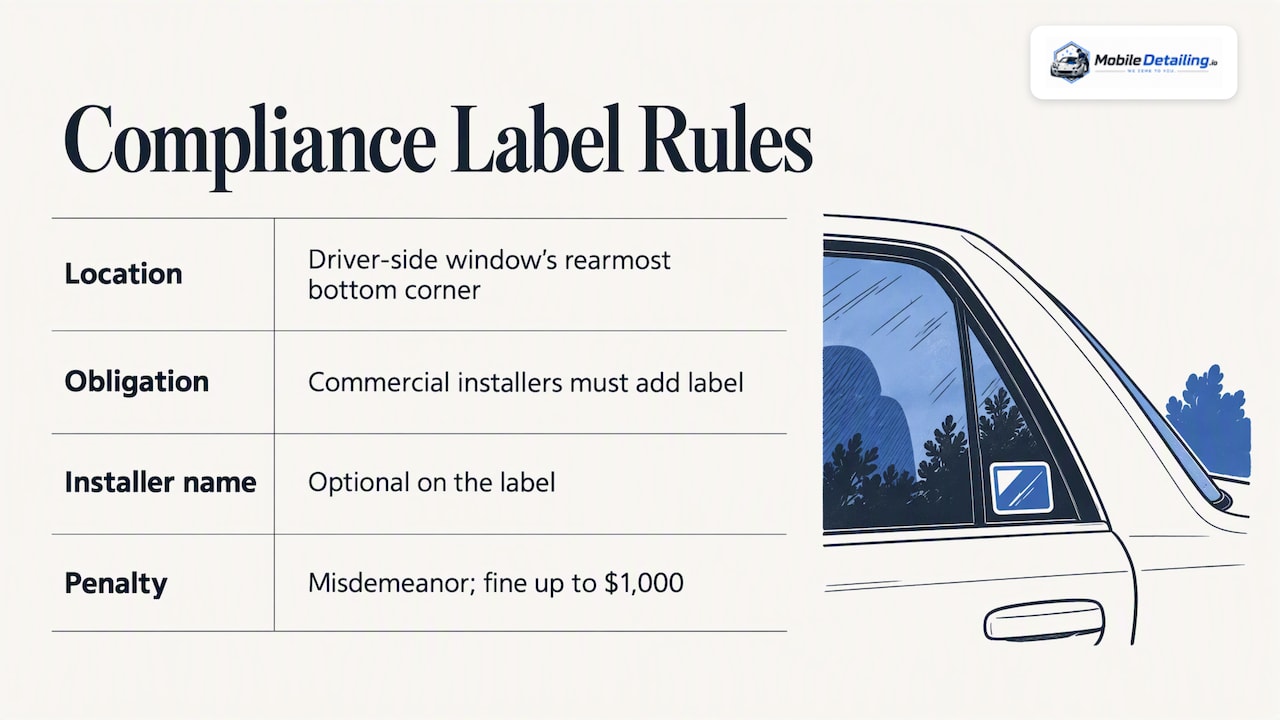
DPS requires one label at the rearmost bottom corner of the driver’s-side window. Listing the installer’s name on it is optional. The statute puts the label obligation on commercial installers: a person in the business of applying window film who does not install the required label commits a misdemeanor punishable by a fine of up to $1,000, according to Texas Transportation Code §547.613 on Justia.
That fine is aimed at the installer, not the vehicle owner, which is one more reason to hire a professional shop. When you pick up the vehicle, look for the label before you leave. If your car needs a state inspection station for other reasons, the shop can also tell you what it checks, and this Texas state inspection information from a Plano station is one place to see how an inspection stop is typically set up.
Medical exemptions
Texas has a medical exemption for darker front side window tint. According to DPS, a driver with a qualifying medical condition can get one by obtaining a signed statement from a licensed physician or optometrist. The document must stay in the vehicle at all times and be shown to law enforcement or at an annual safety inspection.
The statute frames this as a defense: it applies when the driver or a passenger must be shielded from direct sunlight for a medical reason. So the paperwork matters. If you have a condition that makes sunlight a problem, talk to your physician or optometrist about whether a statement is appropriate for you, and keep the signed copy in the glove box. A verbal explanation to an officer is not a substitute for it.
Commercial vehicles
Different glazing rules apply to commercial vehicles. DPS’s commercial vehicle enforcement section says the windshield and the windows immediately right and left of the driver may be tinted where the glazing is marked for at least 70% parallel luminous transmittance, and the tinted glazing must keep at least 70%. If you run a work truck, van or fleet vehicle, read the DPS glazing and window construction page before ordering film. The passenger vehicle numbers above do not automatically carry over.
Penalties for illegal tint in Texas
The statute makes it a misdemeanor to operate a vehicle with material on the windshield, side windows or rear window that obstructs the driver’s clear view. Placing transparent material that changes the color or reduces light transmission, outside the standards, is also covered. The current text of §547.613 is the authority, and the exact fine for a citation can depend on the court and the circumstances, so the statute and the citation itself are the places to confirm it.
Two practical points are worth knowing:
- Selling a non-compliant vehicle is not an offense. The Justia copy of the 2025 code states that it is not an offense to sell or offer for sale a vehicle that does not comply with the tinting equipment standards. The driving rules still apply to whoever drives it.
- A citation is not the only cost. Removing film and reapplying a compliant one costs money on top of the original job, which is why getting it right the first time is the cheaper route.
How Texas compares with other states
Tint rules are set state by state, and the same film can be legal in one and illegal in the next. Kelley Blue Book advises drivers to check their state DMV for current regulations and the permitted VLT before choosing a tint. The same guide explains that states treat tint mainly as a safety matter: enough light transmission helps drivers see other vehicles, and it helps officers see into approaching vehicles.
The differences go beyond percentages. Illinois, for example, allows nonreflective tinted film only along the uppermost part of the windshield, extending no more than six inches from the top. Maine requires owners of vehicles with certain tinted windows to obtain and display a light-transmittance certificate. If you move to or drive through another state, look up that state’s statute rather than assuming Texas numbers apply.
Can you tint windows yourself?
Yes, it is possible. Car and Driver notes that DIY tinting is doable but needs a clean, dust-free space, the right tools and patience, and that you must choose the VLT yourself. It also says a professional may do a better job and help make sure the tint is legal.
For Texas, there is a legal reason to lean toward a professional on top of the quality one. The front side windows must read 25% or higher with the glass included, the label has to go on the driver’s window, and the installer is the party the statute holds responsible for the label. A shop with a tint meter can confirm the number before you drive away.
Caring for new window tint
Aftercare is where the installer’s instructions matter more than any general advice, because film types and adhesives differ. A few habits are common across most jobs:
- Let the film cure. Curing time depends on the film, the weather and the glass. Ask the installer how long to wait before rolling the windows down, and follow that answer.
- Expect some haze at first. Small cloudy patches or water pockets right after installation are often part of the drying process. If they do not clear in the period your installer gave you, go back to the shop rather than picking at the film.
- Clean gently. Use a soft microfiber cloth and a cleaner your installer approves. Many shops recommend ammonia-free glass cleaners, because harsh chemicals can damage some films. Avoid abrasive pads and scrapers on the inside of the glass.
- Watch the edges. Seat belts, window cranks and rings can catch an edge and lift it. Keep an eye on the corners near the door seals.
If you want the cleaning done together with the tint, a mobile detailer can combine interior cleaning with film care. Cleaning around the film is a reasonable job for a pro, but do not ask a detailer to remove or replace film unless they offer window tinting.
How to stay compliant: a short checklist
- Decide which windows you are tinting and apply the right rule to each one: 25% or more on the front sides, the top strip only on the windshield, and no red, blue or amber on the windshield.
- Ask the installer for a film that will still read at least 25% on the front windows after it is combined with your original glass.
- Confirm the reflectance is 25% or less on the windshield and front side windows.
- If you want a darker rear window, check that both outside mirrors work and give the required 200-foot view.
- Check for the label at the rearmost bottom corner of the driver’s-side window before you leave.
- If you have a medical need, get the signed statement from your physician or optometrist and keep it in the vehicle.
- Keep the receipt and film specification sheet, so you can show what was installed.
Finding a tint installer
A good installer will state the VLT of the film, test the finished windows and put the label on. MobileDetailing.io is a free directory where you can search by location and send a request to local professionals. Texas drivers can look at listings such as Kingdom Window Tint in Fort Worth or browse window tinting in Laredo. Searching is free for vehicle owners, and you can request a local quote to compare options. For other services, such as interior, exterior or ceramic coating work, the MobileDetailing.io homepage lists all the categories.
Whatever shop you choose, tell them up front that you want Texas-compliant tint, and ask what they will measure and what label they apply. A shop that answers confidently is a good sign.
FAQ
How dark can I tint my front side windows in Texas?
The front side windows must allow at least 25% visible light transmission, measured together with the original glass, and reflect 25% or less. A darker reading than 25% fails. A shop with a tint meter can confirm the finished number.
Can I tint my windshield in Texas?
Only the top area. DPS limits windshield tint to the area above the AS-1 line, or five inches below the top if there is no AS-1 line. The film must be non-reflective and cannot be red, blue or amber.
Can I get a medical exemption for darker tint?
Possibly. DPS says a driver can get an exemption for darker front side window tint with a signed statement from a licensed physician or optometrist. Keep the document in the vehicle and show it to law enforcement or at an inspection.
Are rear windows regulated in Texas?
Rear side windows are exempt from the transmission limit. The rear window is exempt too, as long as outside mirrors on both sides give at least 200 feet of rear visibility.
Sources
- Window Tinting Standards, Texas Department of Public Safety
- Texas Transportation Code §547.613, Texas Statutes
- Texas Transportation Code Section 547.613 (2025), Justia
- Glazing and Window Construction, Texas DPS Commercial Vehicle Enforcement
- Car Window Tinting: 7 Things You Need to Know, Kelley Blue Book
- 625 ILCS 5/12-503, Illinois General Assembly
- Title 29-A, §1916: Reflective and tinted glass, Maine Legislature
- Car Window Tinting: Benefits, How-Tos, and the Law, Car and Driver
Recommended
- 6 Window Tint Percentages, What 5–70% Looks Like for U.S. Drivers
- $150–$800 U.S. Window Tint Costs 2026: 6 Questions to Compare Quotes
MobileDetailing.io provides general educational information. Products, surfaces and vehicle finishes vary. Follow manufacturer instructions and consult a qualified detailing professional before using abrasive processes or chemical treatments.