Ceramic Coating Thickness: How Thin Is It, Really?
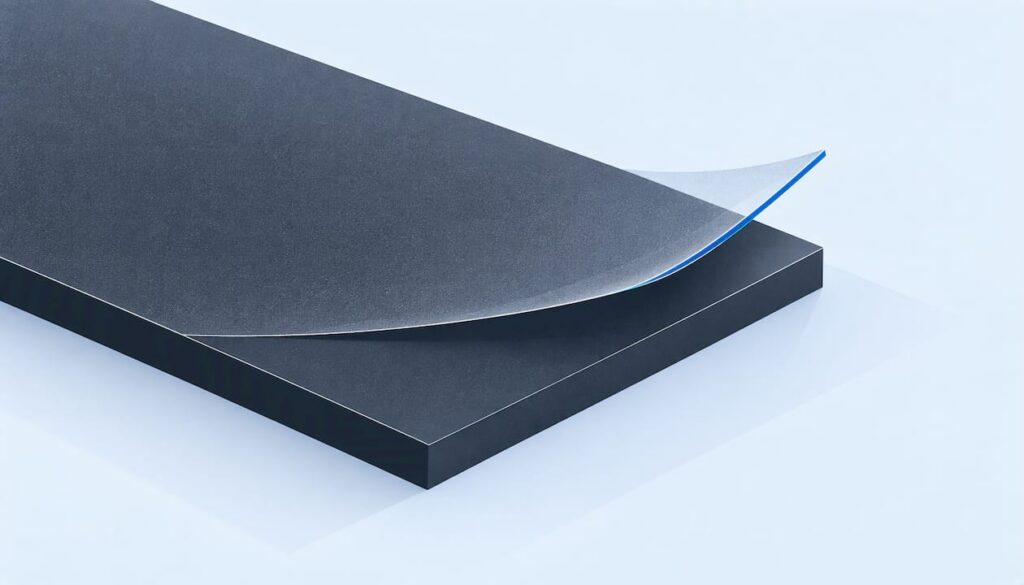
A ceramic coating is extremely thin. One manufacturer’s technical data sheet lists 1 micron (0.04 mils) for a single layer. Other products are sold in a range of roughly 1 to 5 microns per layer. Your factory clear coat is many times thicker. The coating does not work by building a visible shell. It works by bonding to the surface and changing how that surface behaves: how water beads, how dirt sticks and how easily it washes off.
This guide explains the numbers, the unit confusion behind many online claims, why you can’t verify coating thickness with a paint gauge, and what to ask a mobile detailer instead of asking for a thickness figure.
Table of Contents
- The short answer in microns and mils
- How ceramic coating compares with factory clear coat
- Can a paint thickness gauge measure a ceramic coating?
- Does a thicker or multi-layer coating protect better?
- Manufacturer claims versus independent evidence
- What to ask a detailer instead of “how thick is it?”
- Thickness and removal, recoating and upkeep
- Find a mobile coating professional
- FAQ
- Sources
The short answer in microns and mils
A micron (µm) is one millionth of a meter. A mil is one thousandth of an inch, which equals 25.4 microns. So one micron is about 0.04 mils, which matches the data sheet figure above.
Here is how common numbers convert:
| Micron value | Approximate mils | What it usually describes |
|---|---|---|
| 1 µm | 0.04 mil | A single cured layer of a typical consumer or professional coating |
| 2 µm | 0.08 mil | A common upper figure quoted for one to two layers |
| 5 µm | 0.2 mil | The high end for a stacked, multi-layer system |
| 25.4 µm | 1 mil | Roughly the thickness of a thin sheet of plastic wrap’s stack of many coatings |
| 40 µm | 1.6 mils | Low end of a typical factory clear coat |
| 100 µm | 3.9 mils | High end of some clear coat estimates |
Treat the table as a conversion guide, not a promise about any product. There is no single industry-standard thickness. The final cured film depends on the formula, how it is applied, how it levels, the surface underneath and how it cures.
Why you see such different numbers online
Search results for this topic quote anything from under 1 micron to about 1.5 mils. That is a 38-micron gap at the top, which is the size of an entire clear coat. Three things cause most of the confusion:
- Unit mix-ups. A figure written in mils gets read as microns, or the reverse. A coating cannot be 1.5 mils and also 1.5 microns.
- Wet film versus cured film. Liquid coating applied to the panel is thicker than what remains after the solvents flash off and the coating cures. The number that matters for the finished car is the cured film.
- One layer versus a whole system. Some brands sell a single layer. Others sell a base coat plus a topcoat, or several stacked applications. A “thickness” quoted for the system is not comparable to one quoted for a single layer.
If a number is not labeled with its unit and what it measures, it tells you very little.
How ceramic coating compares with factory clear coat
Factory clear coat is the transparent top layer of your paint system. Estimates vary by source and by vehicle. The Drive puts a typical clear coat at 40 to 120 microns, a wide range that reflects differences between manufacturers, models and even panels on the same car.
Using a conservative 40 microns of clear coat and a 1 to 2 micron coating, the coating adds roughly 2.5% to 5% to the clear coat alone. Against a clear coat of 100 microns it is about 1% to 2%. In practical terms, the coating is a thin skin on top of a much thicker layer.
That has a few consequences for how you think about it:
- It will not hide defects. A film this thin cannot fill swirl marks, scratches or etching. Whatever is in the paint when the coating goes on gets sealed in. This is why paint correction before coating matters, and why that step belongs with a professional.
- It will not make paint scratch-proof. A coating can add some surface hardness and slickness, but it is not armor. Scratches deeper than the coating still reach clear coat.
- It is not a substitute for paint protection film. Film is a much thicker physical barrier. A coating is a chemical layer. They do different jobs.
If you are deciding between a coating and other finishes, the same thinking applies. On unusual finishes, for example, the right product can differ, as covered in our guide to ceramic coating on matte paint.
Can a paint thickness gauge measure a ceramic coating?
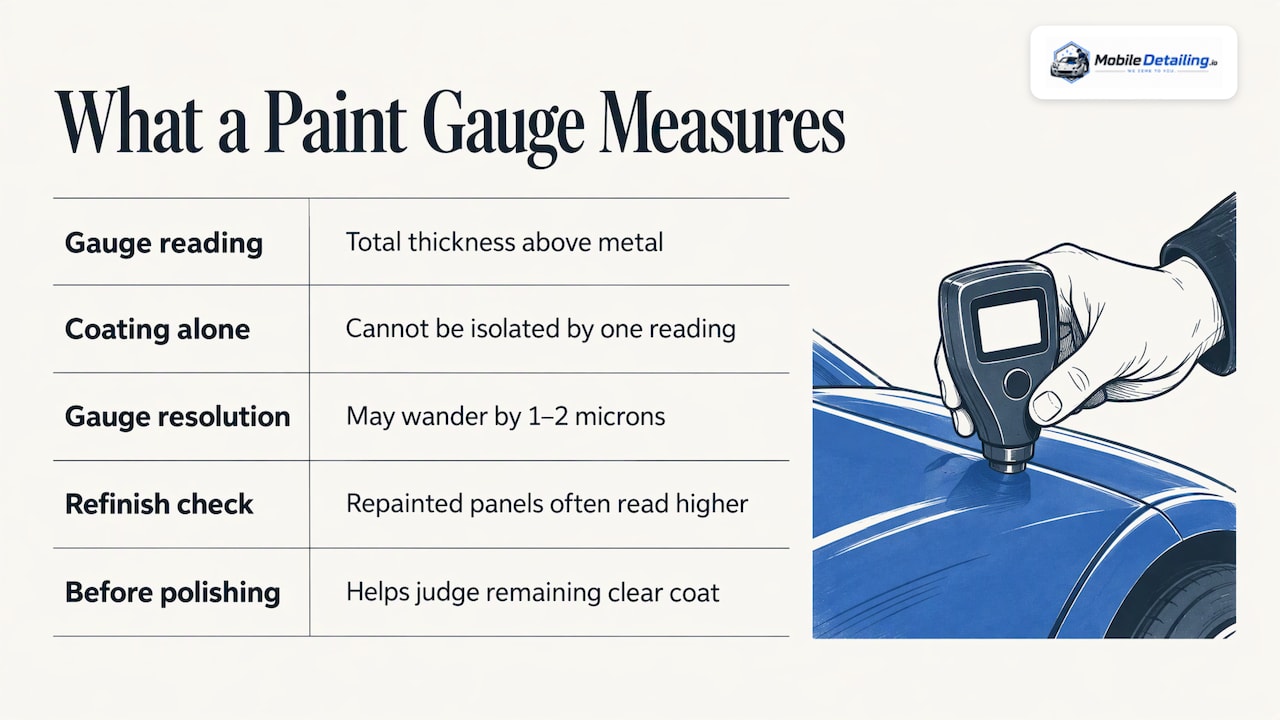
Not by itself. Most paint gauges used in the detailing trade are magnetic or eddy-current tools. They read the total thickness of everything above the metal panel: primer, base coat, clear coat, any prior refinish and any coating. As Dr. Beasley’s explains in its paint gauge guide, most gauges report total paint thickness, so a single reading cannot tell you how thick the top coating alone is.
Two practical points follow.
Gauge resolution is coarse next to a coating. If a coating is 1 to 2 microns and a gauge’s reading can wander by about that much, the coating disappears into the noise. Subtracting a “before” reading from an “after” reading and calling the result the coating thickness is not reliable. Panels vary from spot to spot, and even placing the probe slightly differently changes the number.
A gauge is still useful for something else. Readings can show whether paint has been refinished, since repainted panels often read noticeably higher than factory ones. They also help a detailer judge how much clear coat remains before any polishing. That is the real reason a careful professional measures paint before correction work: to decide how much material can safely be removed, not to prove coating thickness afterward.
If an installer offers a before-and-after gauge number as proof of coating thickness, understand what it can and cannot show. A better indicator of a quality job is the process: surface prep, panel wipe, controlled application, cure time and a clear explanation of the products used.
Does a thicker or multi-layer coating protect better?
It is natural to assume thicker means tougher. For ceramic coatings the evidence does not support a simple more-is-better rule.
One research example: a study summarized by AZoM on ceramic coatings for cars tested ceramic-based coatings with a ball-cratering method. The sample with one layer showed the best wear performance, while the four-layer sample had the highest wear rate, attributed to poor adhesion, increased friction and accelerated wear. That is one study of particular materials, not a rule about every consumer coating, but it shows that stacking more layers can backfire.
There are also practical reasons extra material can work against you:
- Coatings are designed to be applied thin and leveled. Excess product can leave high spots, streaks or a hazy finish that has to be corrected.
- Layers need to bond to each other. A fresh layer put over one that has already fully cured may not adhere as well as the first did.
- Layer count is not standardized. One brand’s flagship may be sold as a single layer with a high concentration of active ingredients. Another may sell a multi-step system where each coat has a different role, such as a base layer and a topcoat.
The takeaway: the number of layers is a description of the workflow, not a measure of durability. If an installer says “two layers,” it is reasonable to ask what that means in plain terms. Is it two coats of the same product, a base coat followed by a different topcoat, or a coating followed by a maintenance spray? A professional who knows the product will answer easily.
Cure time matters more than layer count
The same manufacturer data sheet that lists the 1 micron figure also says full cure hardness is reached in 3 days. That is one product’s specification, and others differ. Still, it points to what actually shapes results: the conditions at application and the aftercare during the cure window. Follow your installer’s instructions about keeping the car dry and unwashed after the job, because they are tied to the specific product.
Manufacturer claims versus independent evidence
Most thickness, hardness and longevity numbers you see come from manufacturers or from installers repeating manufacturer material. A technical data sheet is a primary document for that product, and it is the best place to read what the maker says about thickness, cure and application. It is still the maker’s own specification, not an independent test of how the coating performs on your car over several years.
Independent evidence is thinner on the ground. Academic wear testing, like the study above, exists, but it tests specific materials under lab conditions. Hardness ratings such as “9H” are marketing shorthand borrowed from the pencil hardness scale. Treat them as a manufacturer’s description rather than a guarantee about scratch resistance on real paint.
When you compare quotes, the claims worth weighing are the ones you can check:
- The product name and the manufacturer’s data sheet for it.
- Whether the installer is certified or trained by that manufacturer, if the installer says so.
- The written warranty terms, including what voids it and what maintenance it requires.
- What preparation is included, especially paint correction.
For realistic expectations on how long coatings last, see our breakdown of ceramic coating lifespan claims.
What to ask a detailer instead of “how thick is it?”
Thickness is a poor buying criterion because you can’t check it and it doesn’t predict results. These questions tell you far more.
- Which product will you use, and can I see its data sheet? This replaces vague thickness talk with a document.
- How many layers, and what does each one do? You are looking for a clear description of the sequence.
- What prep is included? Washing, decontamination, clay or iron removal, and any paint correction. Correction is skilled work; wet sanding and heavy polishing are jobs for a trained professional because removing too much clear coat can’t be undone.
- How do you measure paint before correcting it? A gauge reading before polishing shows how much clear coat you can afford to lose.
- What is the cure and aftercare plan? Expect specific instructions on washing and keeping the car dry.
- What does the warranty require? Some require periodic inspections or maintenance products.
- Where will the work be done? Mobile detailers can coat at your home or office when there is shade or cover, power access and a clean, low-dust space. Ask how they handle weather.
These questions also help you compare quotes fairly. A very low price may mean skipped prep or a lighter product, while a higher one may include correction and a longer warranty. Our guide to ceramic coating costs across the U.S. shows how price tiers break down.
Thickness and removal, recoating and upkeep
Because a coating is so thin, the question “can I add more later?” comes up often. Recoating is usually done after the existing coating has degraded or been prepped, following the product maker’s guidance. Before you recoat, it helps to check whether the coating is still working: does water still bead and sheet, and does the surface still release dirt easily? Our walkthrough on ceramic coating maintenance and testing before a recoat covers that.
Removal is a separate matter. A coating that is 1 to 2 microns thick sounds easy to remove, but it is chemically bonded and often needs polishing to strip. Doing this badly can thin the clear coat. If you need a coating taken off, read about removing ceramic coating while preserving clear coat and let a professional handle abrasive work. Chemical strippers and heavy machine polishing are not good first-time DIY projects.
Find a mobile coating professional
MobileDetailing.io is a free directory for vehicle owners. You can search by location, compare local mobile detailers who list ceramic coating, paint correction and other services, and send a quote request without paying the platform. Listings include services, photos and reviews, so you can see who does coating work near you before you ask any of the questions above.
Some examples of ceramic coating listings on the directory include Martin Ceramic Coating in Smyrna, TN, Precision Install Ceramic Coating in Lakewood, CO and Ceramic Coating Pros in Beaumont, TX. When you are ready, request a local quote and share your vehicle, paint condition and the finish you want.
FAQ
How thick is ceramic coating on a car?
A single cured layer is typically around 1 to 2 microns, or about 0.04 to 0.08 mils. One manufacturer’s data sheet lists 1 micron for its single-layer coating. Multi-step systems can be somewhat thicker, but there is no universal figure.
Is ceramic coating thicker than clear coat?
No. Factory clear coat is commonly estimated at 40 to 120 microns, per The Drive. A coating adds only a small percentage on top. It protects through chemistry and surface behavior, not bulk.
Can I measure my ceramic coating with a paint gauge?
Not accurately. A standard gauge reports the total of all layers over the metal, so a single reading cannot isolate the top coating. Use a gauge to check overall paint condition and remaining clear coat instead.
Do more layers of ceramic coating last longer?
Not necessarily. Layer count describes how a product is applied, not how long it lasts, and one study found a four-layer sample wore faster than a one-layer sample. Follow the manufacturer’s application instructions and ask your installer to explain the system.
Sources
- Manufacturer technical data sheet for a 9H ceramic coating (April 2019)
- The Drive: What Is Ceramic Coating?
- Dr. Beasley’s: How to Use a Paint Thickness Gauge
- AZoM: What Are the Benefits of Ceramic Coatings on Cars?
Recommended
- Ceramic Coating Lifespan for Car Owners, 1–7+ Years
- U.S. Ceramic Coating Cost: $50 to $3,500, Tiers and How to Get Quotes
- Matte Paint Ceramic Coating: What Works and What to Avoid
- Wheel Ceramic Coating: What It Does, Lasts and Costs
MobileDetailing.io provides general educational information. Products, surfaces and vehicle finishes vary. Follow manufacturer instructions and consult a qualified detailing professional before using abrasive processes or chemical treatments.