Wheel Ceramic Coating: What It Does, Lasts and Costs
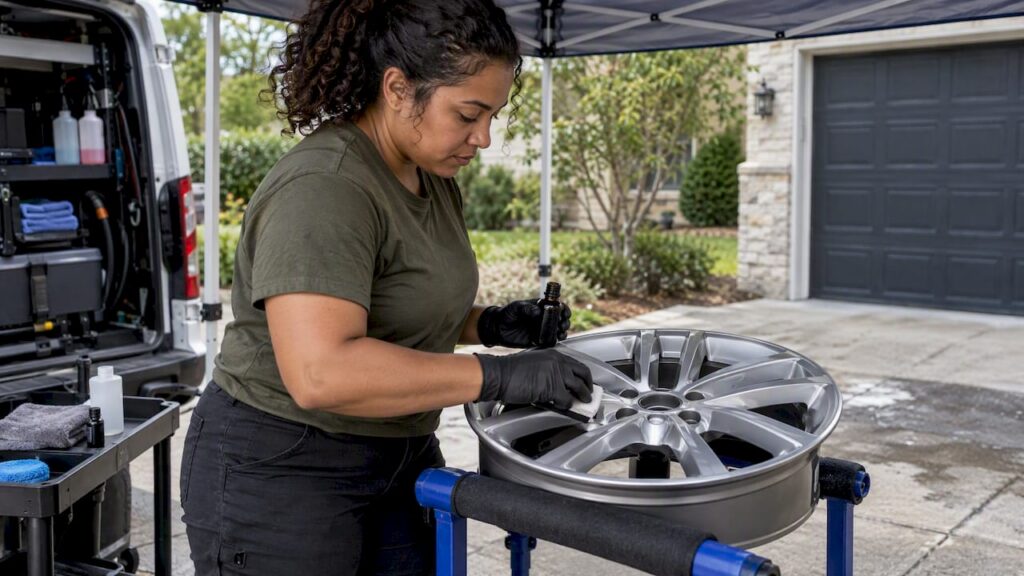
A ceramic coating on your wheels is worth it if your main frustration is scrubbing brake dust. It gives the wheel a slick, heat-tolerant layer that lets dust rinse off instead of baking on. It does not stop dust from landing, it does not make wheels scratch-proof, and a daily driver should expect roughly 8 to 14 months of real-world performance, even when a label promises two years.
This guide covers what the coating changes, what it can’t, how prep decides the result, whether to do it yourself, and how to find a mobile detailer who can coat your wheels at home or work. It also answers the windshield questions that often come up in the same search.
Table of Contents
- What a wheel coating actually does
- Is ceramic coating worth it for wheels?
- How long a wheel coating lasts
- Prep decides whether the coating works
- Rims, calipers and finishes: what to ask first
- DIY kit or professional application
- Care after coating
- What about windshield ceramic coating?
- What mobile detailing adds
- Cost: what to expect and what to question
- How to choose the best wheel coating
- FAQ
- Sources
What a wheel coating actually does
Wheels take more abuse than any painted panel. They sit next to the brake rotors, so they see heat, brake dust, road salt, tar and whatever wheel cleaner you use on them.
The dust matters most. Car and Driver relays a figure from a brake maker that 92 percent of brake dust is ferrous material, coming mostly from the iron rotors, with only a small share from the pads. Hot iron particles that stay on a wheel can bond to the finish. Left long enough, they leave pitting and corrosion.
A ceramic coating adds a thin, hard, slick layer over the wheel finish. Brake dust still lands on it. The difference is that the dust sticks less, so a rinse and a gentle wash lift most of it. Think of it as a change in how you clean, more than a change in how the wheel looks. A coated wheel usually looks a bit glossier and deeper, but the real payoff is saved time.
What it does not do
- It does not stop brake dust. The coating keeps dust from bonding to the finish, but dust that sits for a long time can still etch the surface, especially with hard, hot braking.
- It does not replace washing. You still wash the wheels, just with less effort.
- It does not fix damage. Curb rash, pitting and etching already in the wheel get sealed in, not removed.
- It does not last forever. Durability depends on pad chemistry, wash habits and the products you use.
Is ceramic coating worth it for wheels?
It depends on how you drive, what you drive and how you feel about washing wheels.
It tends to be worth it when:
- You have light or intricate wheels (multi-spoke, gloss black, polished) where brake dust shows fast and scrubbing is a chore.
- Your car came with pads that throw off a lot of dust, and you wash it often.
- You want the wheels easier to keep clean between professional details.
- You are already paying for a paint coating and can add the wheels while the car is prepped.
It may not be worth it when:
- You rarely wash the car and don’t mind how the wheels look.
- The wheels are already corroded or pitted. You would pay to seal in damage.
- You plan to sell the car soon and the wheels are in average shape.
- You use aggressive wheel cleaners and have no plan to change.
Consumer Reports looked at car-wash extras and made a similar point: a product that helps with brake dust is useful if you care about that, and less so if you are not especially finicky about how the wheels look. Wheel coating is the same trade: convenience, not necessity.
How long a wheel coating lasts
Two numbers show up. Manufacturers often claim one to two years. Independent detailing guidance for daily drivers lands closer to 8 to 14 months. Treat the label as a best case and the shorter window as your planning number. Keep in mind that the longer figure comes from the people who sell the product, and the shorter one comes from practitioner experience, not a controlled lab test.
What shortens the life of a coating:
- High-metallic or performance brake pads. They run hotter and shed more dust.
- Harsh wheel cleaners. Strongly acidic or high-alkaline products strip the coating early.
- Poor prep. If the wheel wasn’t properly decontaminated, the coating never bonds well.
- Heavy braking or track use. Heat and dust load both climb.
- Long gaps between washes. Dust that sits has more time to bond.
The clearest sign a coating is wearing out is simple. Dust no longer releases with a rinse, and scrubbing is back. When you see that, the coating is done, not your wheels. If you want a broader picture of coating lifespan on paint, this breakdown of ceramic coating lifespan claims separates lab language from what owners report.
Prep decides whether the coating works
Most failed wheel coatings are prep failures. Detailers say the same thing over and over: the coating needs a truly clean surface to bond. Car and Driver’s coating roundup makes the point that skipping decontamination makes people think the product is ineffective when the real problem is the surface.
A typical professional sequence looks like this:
- Wash and degrease. Remove loose dust, road film and grime with a wheel-safe cleaner.
- Iron removal. A dedicated iron remover dissolves embedded brake dust particles that a normal wash leaves behind.
- Tar and adhesive removal. Clear spots of tar and old wheel-weight glue.
- Clay or mechanical decontamination where the finish allows it.
- Inspect and correct. Check for curb rash, oxidation or hazing. Fix problems before sealing, not after.
- Panel wipe. A solvent wipe removes oils and residue so the coating can bond.
- Apply in thin, even coats in a clean, dry space, then respect the cure time.
Detailers also warn that polishing oils and iron particles left in place are the most common cause of early failure, and that an ordinary car wash is not enough. That is why a rushed job on a driveway often disappoints.
Off the car or on the car?
Wheels come off the car for the best result. You can reach the barrels, the backs of the spokes and the lip, and you avoid getting product on rotors, calipers and tires. Coating wheels while mounted is possible, and many guides show it, but you will miss areas and need to mask carefully. If your wheels are already off for new tires or a brake job, that is a convenient time to coat them.
Rims, calipers and finishes: what to ask first
Not every wheel is the same, and the finish drives the product choice.
| Wheel finish | What to know |
|---|---|
| Clear-coated alloy | The most common factory finish and the easiest to coat. Prep is the same as paint. |
| Painted or powder-coated | Coats well when the finish is sound. Chips and peeling need repair first. |
| Gloss black | Shows brake dust fastest, so it often benefits most from a coating. |
| Polished or bare aluminum | Can oxidize and may need specific products. Ask the detailer about their approach before booking. |
| Chrome | Check the product’s stated compatibility. Don’t assume. |
| Calipers | Heat is higher. Use only a product rated for it. |
One product detail is worth knowing: Car and Driver’s reporting notes that some professional wheel coatings are heat-resistant up to roughly 250°C (482°F). That is a manufacturer-style rating, not a guarantee for every wheel and brake setup, so ask a pro what their specific product is rated for if you drive hard or tow.
DIY kit or professional application
A consumer wheel coating kit is a reasonable first project for a careful owner. A professional is the better call when prep is complicated, the wheels are expensive or you want the work done right once.
DIY can make sense if:
- You have a garage or shaded, dry space and several free hours.
- The wheels are off the car or you can mask well.
- You are comfortable with iron removers and solvent wipes and will use gloves, eye protection and ventilation as the labels direct.
- The wheels are in good shape.
Hire a professional if:
- The wheels need any polishing, correction or repair first. Paint correction and wet sanding are skilled work, and a mistake on a wheel finish is costly.
- You have forged, custom or high-value wheels.
- You want a longer-lasting professional-grade product and an installer who stands behind the job. Ask what that means in writing.
- You don’t have a clean, dry place to cure the coating.
- You would rather not handle hazardous chemicals. Iron removers and solvent wipes are not products to improvise with.
Professional-grade chemistry is also often not sold to the public. A detailer who works with it every week will know cure times, humidity limits and how to fix a high spot before it hardens.
Care after coating
A coating makes care simpler, not optional. A few habits protect it.
- Use a pH-neutral wheel soap. Acidic or strongly alkaline wheel cleaners, often found in harsh retail products, strip the coating early. Read the label.
- Rinse first, then wash. Because dust releases easily, a high-pressure rinse takes off most of it. Use a soft brush or mitt only for what remains.
- Use separate tools for wheels. Consumer Reports advises a separate sponge for wheels and tires, since they carry sand and brake dust that can scratch paint.
- Wash on a schedule. Every one to two weeks is typical for a daily driver, more in winter or in areas that salt roads.
- Watch the water behavior and the dust. When dust stops rinsing off, plan a refresh.
For a full routine, this guide to ceramic coating maintenance walks through testing a coating before you decide to recoat. If you ever need to start over, here is how professionals remove a ceramic coating without hurting the clear coat.
Reduce the dust at the source
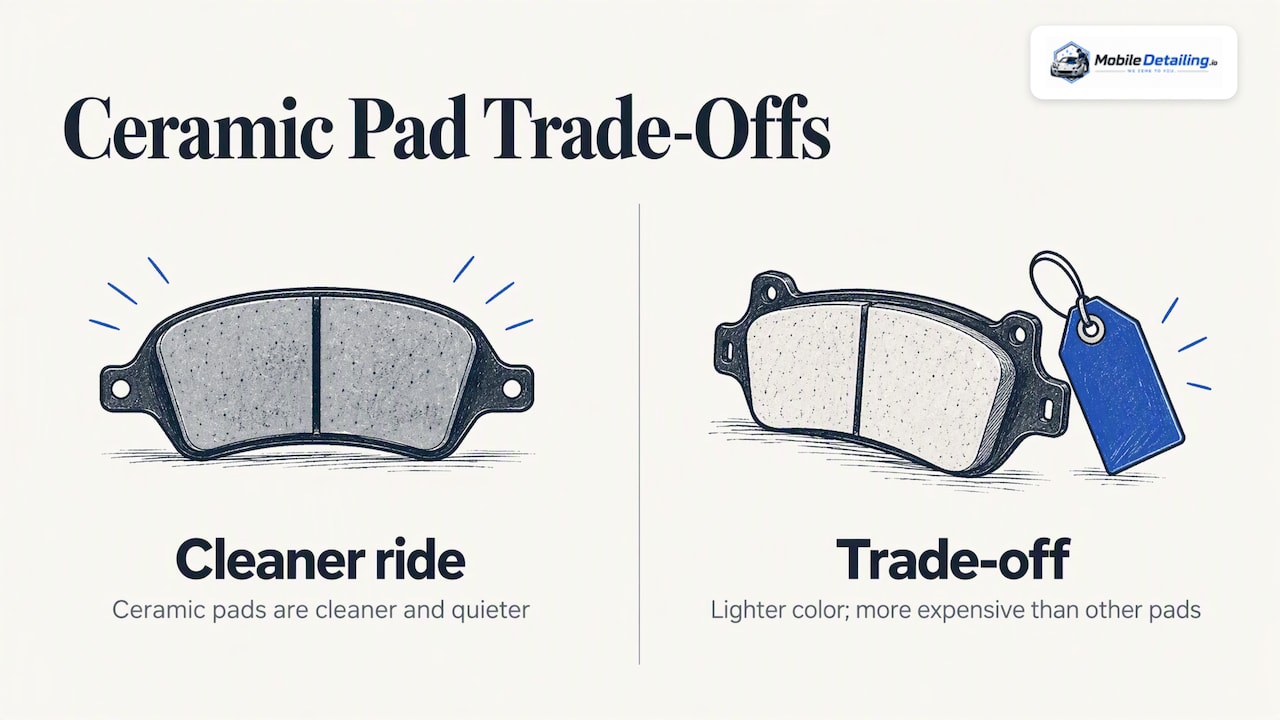
A coating can be paired with a change at the brakes. Consumer Reports describes ceramic brake pads as cleaner and quieter, though lighter in color and more expensive than other pad types. If your wheels are always filthy, ask your brake shop whether a lower-dust pad suits your car and how you drive. Brake parts are a safety item, so let a qualified technician pick them.
What about windshield ceramic coating?
People searching for wheel coatings often also ask about glass. The two products share the word ceramic, but they are different formulas for different surfaces. A glass coating (sold as a windshield hydrophobic coating) is meant to make water bead and sheet off the glass. It is not a wheel coating, and a wheel coating is not meant for glass.
Some practical points:
- Prep is just as important. Glass needs thorough cleaning and decontamination so the coating bonds. Any embedded film or water spots show up under the coating.
- Match the product to the glass. Use a product made for automotive glass and follow its instructions.
- Ask about wipers. Some owners find wipers chatter or smear on coated glass, and results depend on the product and the wiper blades. Ask a detailer how they handle this and what they recommend before you coat a windshield you rely on every day.
- Safety first. Your windshield is a visibility item. If a coating causes glare, streaking or smearing, stop and have a professional correct it.
A detailer who coats paint and wheels can usually quote glass at the same visit. Ask for each surface to be listed separately so you know what you are paying for.
What mobile detailing adds
Wheel coating is a good fit for a mobile service because the job is local to the car: wash, decon, coat, cure. A mobile pro can do it in your driveway or the parking lot at work, as long as there is a clean, shaded spot, water and power access as needed. Check these with the detailer beforehand. Not every business offers wheel-off service or cures coatings on site, so ask.
Here is a quick list to bring to a quote:
- Do you remove the wheels, or coat them on the car?
- What is the prep process, including iron removal?
- What product do you use, and how long do you expect it to last on my car and pad type?
- What is covered if the coating fails early, in writing?
- Which wash products should I use afterward?
- Can you coat paint, glass and wheels in one visit, with separate line items?
If you want to compare local pros and request a quote, MobileDetailing.io is a free directory for vehicle owners. Search by location, look at profiles, photos and reviews of detailers who offer ceramic coating, and send a request through the local quote page. Prices are set by each detailer, not by the directory, so quotes will differ. A few examples of ceramic coating listings include Ceramic Coat Texas in Austin, Ceramic Coatings by Gsharp Detailing in Alexandria, VA and Ceramic Coating Specialists in Merced, CA. If you are in the Boston area, there is also a Cambridge, MA ceramic coating page.
Cost: what to expect and what to question
Wheel coating prices vary by wheel size, count, condition and whether the wheels come off. Because the directory does not set prices, this guide doesn’t quote a figure. Use quotes to compare scope, not just the number. Consumer Reports has cautioned about add-on protection products at dealerships, where the same type of service can carry a high markup, so compare a dealer quote with an independent detailer’s before agreeing.
A quote is worth more when it lists:
- Number of wheels, and whether faces only or barrels too.
- Prep steps, including iron removal and any polishing.
- The product name and its stated durability.
- Cure time, and when you can wash or drive in rain.
- What happens if you are not satisfied.
Be wary of a price that is far below the others with no prep listed. As the research above shows, prep is where the work (and the cost) goes. For paint coatings, these U.S. ceramic coating prices and Tesla owner reports give a sense of how wide the range can be.
How to choose the best wheel coating
Owners often ask for the best product. There is no single winner, because it depends on the wheel finish, your brakes and who applies it. Judge by these points instead:
- Manufacturer claims versus evidence. A durability claim on a label is marketing. Look for independent testing, such as Car and Driver’s tested ceramic coatings, though that roundup covers paint coatings more than wheel-specific ones.
- Heat rating. Ask for it, especially for calipers.
- Compatibility. Check that it suits your finish.
- Cure and care instructions. A good product comes with clear ones.
- The installer. A skilled prep job with an average product often beats a premium product on a poorly prepared wheel.
If you are comparing a wheel coating against paint wax or sealants, a coating generally lasts longer, as covered in this piece on ceramic coating versus wax.
FAQ
Can I use ceramic coating on rims?
Yes, in most cases. Clear-coated, painted and powder-coated alloy rims are the usual candidates. Polished aluminum and chrome need a compatible product, so check the label or ask a detailer. Prep matters more than the finish type.
What are the negatives of ceramic coating on wheels?
It costs money, it needs careful prep, and it wears out, typically within 8 to 14 months on a daily driver. It also won’t stop brake dust from landing or fix existing damage. Harsh cleaners will shorten its life.
How long does a wheel ceramic coating last?
Expect about 8 to 14 months on a daily driver, even if the manufacturer claims up to two years. Pad type, wash habits and cleaner choice all change the result. When dust stops rinsing off, the coating is spent.
Is it better to hire a pro for a wheel or windshield coating?
A pro is the safer choice when prep, polishing or repair is involved, or when the glass is your daily view of the road. Detailers handle decontamination, cure conditions and chemicals that most owners rarely work with. For a simple, clean set of wheels, a careful DIY kit can be reasonable.
Sources
- Ceramic Coating for Wheels: Does It Actually Work? (Detailing Gear HQ)
- Explained: Car and Driver Will Now Take Your Questions (Car and Driver)
- Are Car-Wash Extras Worth It? (Consumer Reports)
- Best Ceramic Coatings for 2026, Tested (Car and Driver)
- How to Wash Your Car Like a Pro (Consumer Reports)
- Brake Pads | Brake Service (Consumer Reports)
- Just Say No to These Car Dealership Extras (Consumer Reports)
Recommended
- Stop Rewaxing: Ceramic Coating Lasts a Year or More, and Find a Pro
- Lab Claims: Ceramic Coating Lifespan for Car Owners, 1–7+ Years
- U.S. Ceramic Coating Cost: $50 to $3,500, Tiers and How to Get Quotes
- Test Before You Recoat: 4 Step Ceramic Coating Maintenance
MobileDetailing.io provides general educational information. Products, surfaces and vehicle finishes vary. Follow manufacturer instructions and consult a qualified detailing professional before using abrasive processes or chemical treatments.