Tesla Owners: Forum Reports and U.S. Ceramic Coating Prices ($40–$3,500)
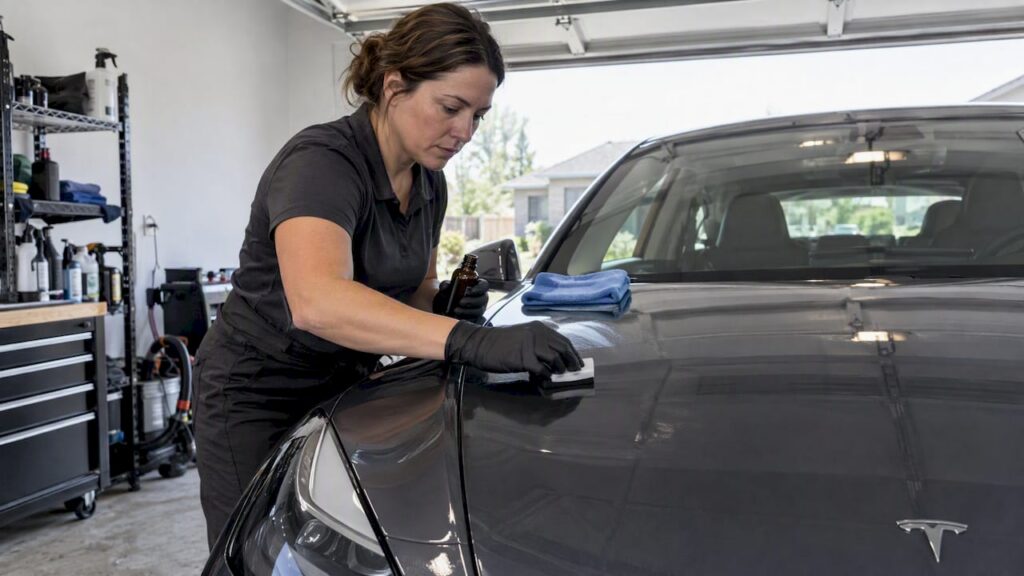
Ceramic coating is worth it for most Tesla owners who want easier washing, stronger gloss, and better resistance to everyday grime, but it will not stop rock chips or deep scratches. Tesla’s clear coat is known for being relatively soft, which makes a durable protective layer appealing. If you need specific numbers, the cost and maintenance sections below cover what to budget and how to keep a coating performing.
Table of Contents
- What ceramic coating is and how it protects Tesla paint
- Pros and cons for Tesla owners
- How long coatings actually last and what affects longevity
- Cost ranges and the DIY vs professional decision
- How to maintain a ceramic-coated Tesla to reach advertised durability
- How ceramic coating compares to paint protection film and when to use each
- What to expect during prep and the typical professional application process
- Best ceramic coating products recommended specifically for Tesla vehicles
- Common mistakes to avoid during application on Tesla paint
- Impact of Tesla’s unique paint types or finishes on ceramic coating effectiveness
- Reviews or testimonials from Tesla owners who have used ceramic coatings
- Environmental factors affecting ceramic coating performance on Tesla cars
- How to get a local quote or book a pro through MobileDetailing.io
- FAQ
- Sources
What ceramic coating is and how it protects Tesla paint
Ceramic coating is a liquid polymer, typically silicon dioxide (SiO2) based, that bonds to your car’s clear coat and cures into a thin, glass-like layer. Once cured, that layer is microns thick and provides hydrophobicity, UV resistance, and chemical etch resistance, along with a noticeably glossier finish.
Those effects matter for day-to-day ownership: water beads and rolls off instead of sitting and drying into spots, bird droppings and road grime wipe away more easily, and the paint resists fading and chemical staining from things like bug splatter or tree sap.
What it does not do is add meaningful physical protection. Because the coating is so thin, it will not stop a rock chip, a parking lot door ding, or a deep scratch from a car wash brush. For that kind of protection, you need a physical barrier like paint protection film.
Pros and cons for Tesla owners
A ceramic coating suits different Tesla owners in different ways, depending on how and where the car is driven.
- Pro: Deeper gloss and a slicker, more reflective finish than bare clear coat.
- Pro: Water beads off instead of spotting, and dirt, pollen, and bug residue rinse away faster.
- Pro: Added UV and chemical resistance helps guard against fading and etching over time.
- Con: No protection against rock chips, swirl marks from poor washing, or deep scratches.
- Con: Results depend heavily on proper prep and paint correction before application, so a rushed job can trap defects under the coating.
- Con: Quality and price vary widely between products and installers, so a cheap quote can mean a diluted or short-lived coating.
Owners who garage their car, drive mostly in cities, and wash it themselves tend to get the most value from a coating alone. Highway commuters and owners who rack up miles on gravel or construction-heavy roads should weigh paint protection film more heavily, since that is the layer doing the real work against impacts.
How long coatings actually last and what affects longevity
Lifespan varies by product tier. DIY 9H spray kits tend to hold up for a shorter stretch than professional-grade coatings, while mid-tier and premium multi-layer professional applications are built to last several years when properly maintained, as detailed in Mobiledetailing.
Longevity depends less on the product label and more on how it was applied and cared for. Proper paint prep, the number of layers, regular maintenance washes, and exposure to UV, road salt, and harsh climates all push the actual lifespan up or down from the advertised range.
The first 12 to 24 hours after application matter most. Many professional coatings need the car kept dry during that window, and the coating keeps hardening chemically for two to three weeks afterward. Rain or contact during that period can cause spotting or an uneven cure.
Cost ranges and the DIY vs professional decision
Ceramic coating pricing spans a wide range depending on whether you do it yourself or hire a professional, and how much paint correction the job requires. Mobiledetailing breaks down what different tiers typically include.
- DIY kits: Roughly $40 to $300, with some Tesla-specific 9H kits priced around $199; best suited to a newer car in good condition.
- Entry professional packages: Generally $500 to $900, often with a single-stage polish and one coating layer.
- Mid-tier professional coatings: Typically $1,000 to $1,800, usually including more thorough correction and a longer-rated coating.
- Premium multi-layer packages: Often $2,000 to $3,500, including multi-stage correction, multiple coating layers, and extended warranty terms.
Paint correction is usually the most valuable part of a professional quote, since a coating locks in whatever condition the paint is in underneath it. Skipping correction to save money means any swirls or light scratches get sealed in rather than fixed.
DIY kits make sense for a well-kept, newer Tesla without visible defects. If your paint already shows swirl marks, oxidation, or scratches, a professional job that includes correction will deliver a better long-term result, and that kind of surface prep and coating work is best left to a trained detailer.
How to maintain a ceramic-coated Tesla to reach advertised durability
A coating only lasts as long as the care behind it. Professional detailers emphasize that coatings are not “set and forget”: they need ongoing maintenance to hit their rated lifespan.
- Wash using the two-bucket method with a pH-neutral shampoo to avoid stripping the coating or introducing swirl marks.
- Dry with a clean microfiber towel or a dedicated drying aid instead of letting water air-dry and spot.
- Book a professional maintenance wash roughly every 30 to 60 days when possible, or follow the same cadence at home.
- Remove bird droppings, sap, and bug splatter as soon as you notice them rather than letting them sit.
- Skip automatic car washes with abrasive brushes and avoid harsh degreasers or clay bars not rated safe for coated paint.
Pro Tip: Run a quick water-beading check every few weeks; if water starts sheeting flat instead of beading up, that is usually the first sign the coating needs a top-up. Mobiledetailing walks through a few simple tests for deciding when it is time for a refresh.
How ceramic coating compares to paint protection film and when to use each
Ceramic coating and paint protection film (PPF) solve different problems. Coating handles chemical and UV threats and makes the surface easier to clean. PPF is a physical barrier that absorbs rock chips, scuffs, and light scratches that no coating can stop.
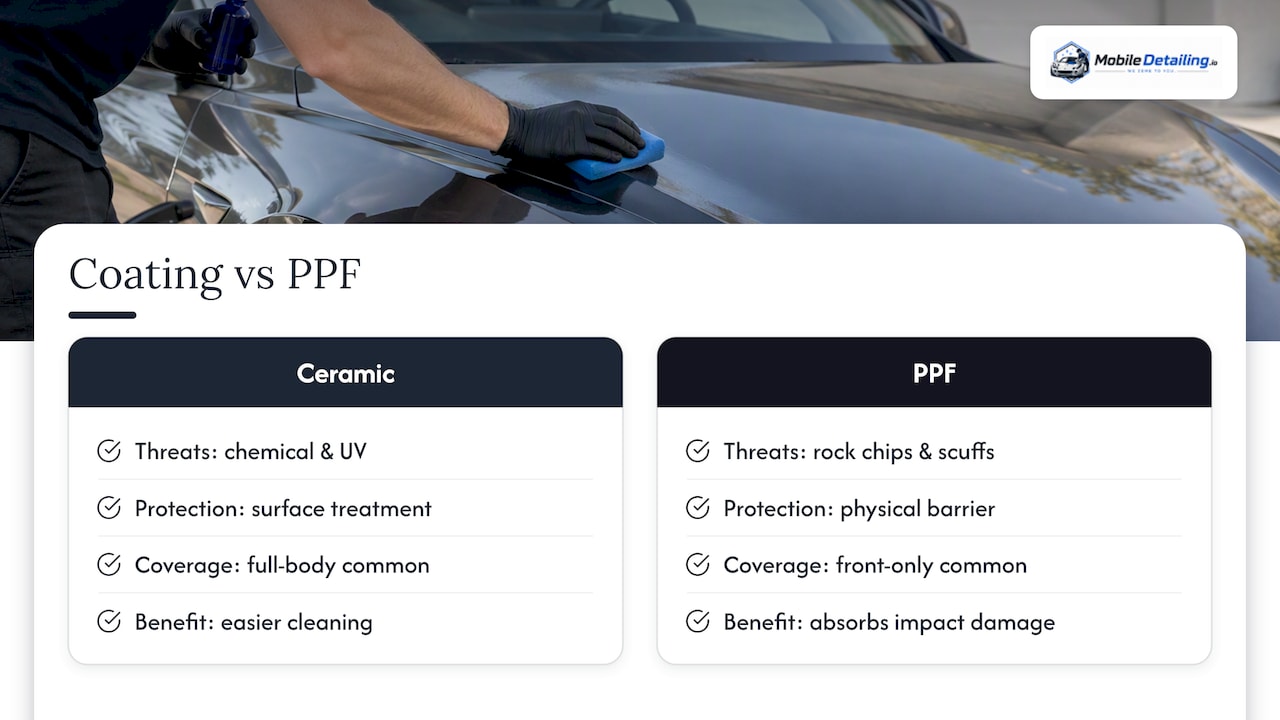
Many owners apply front-only PPF, covering the hood, fenders, mirrors, and bumper, since that is where impact damage concentrates, then add ceramic coating over the film and across the rest of the body. The coating improves the film’s cleanability and helps it shed grime and UV exposure over its service life.
For a city-driven, garaged Tesla, ceramic coating alone often covers the real-world risk. For a highway commuter or anyone driving gravel roads regularly, front-end PPF paired with full-body ceramic coating is the more complete combination, since it addresses both the chemical and physical sides of paint wear.
What to expect during prep and the typical professional application process
A quality professional job follows a consistent sequence, and skipping steps is the clearest sign of a rushed or low-quality install.
- A full wash to remove loose dirt and surface contamination.
- Chemical decontamination and claying to strip bonded grime and old wax or sealant.
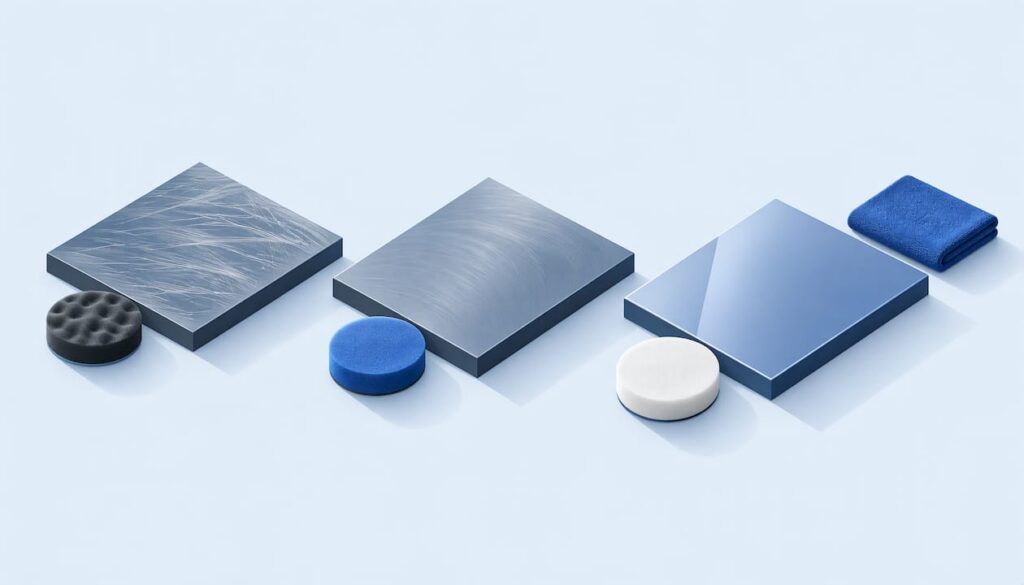
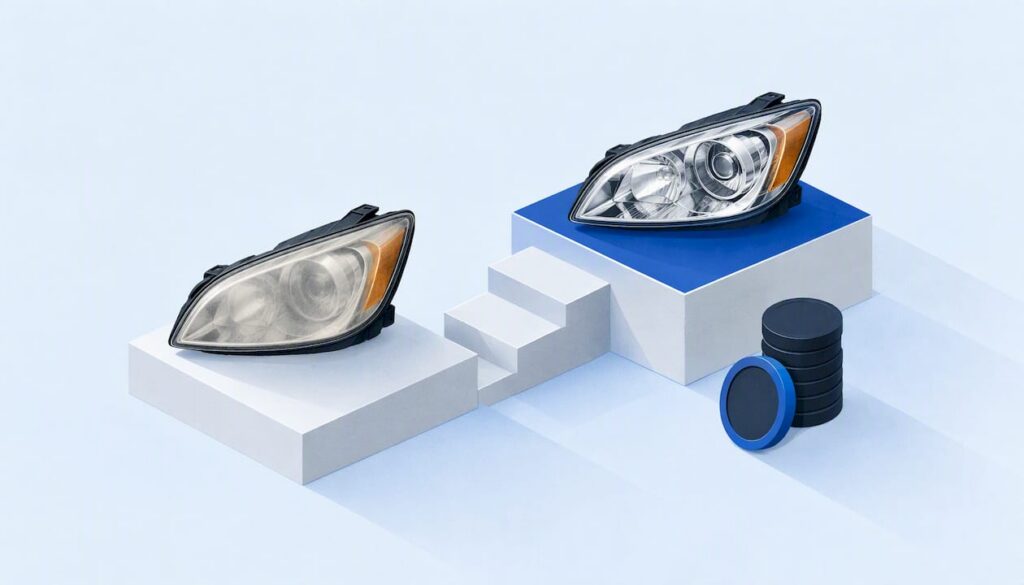
- Paint correction, polishing out swirls, oxidation, and light scratches before anything gets sealed in.
- A final wipe-down with isopropyl alcohol to remove polishing oils so the coating bonds properly.
- Application and curing, with the vehicle kept dry for the first 12 to 24 hours and full hardness developing over the following weeks.
When vetting a shop, ask what correction stage is included, what specific product they use, and whether they can show past work on similar vehicles. A quote that skips correction entirely, uses vague language like “ceramic sealant” without a product name, or offers no portfolio or warranty detail is worth a second look.
Best ceramic coating products recommended specifically for Tesla vehicles
Tesla owners generally choose between consumer-grade 9H spray or liquid kits and professional-grade coatings applied by a trained detailer. Consumer 9H kits can deliver a large share of a professional coating’s gloss and water-beading behavior on a newer, well-kept Tesla, at a fraction of the cost, but they are not a substitute for correction work on paint that already has visible defects.
Professional-grade coatings, applied after proper decontamination and correction, tend to offer longer-rated durability and more consistent results because the installer controls surface prep, layer thickness, and cure conditions. These products are typically tiered by warranty length and number of layers, with multi-layer packages aimed at owners who want the longest interval between reapplications.
Rather than naming a specific product as universally best, the more useful approach is matching the tier to your paint’s condition and your driving habits. A spotless, low-mileage Tesla kept in a garage is a reasonable candidate for a quality DIY kit. A Tesla with a few years of daily driving and some visible swirl marks will get more lasting value from a professional-grade coating applied after correction, since the prep work accounts for much of what separates a coating that lasts from one that fails early.
Whichever route you choose, the product matters less than the surface it goes on. A premium coating applied over unaddressed swirls and oxidation will lock in those flaws, while a mid-tier coating applied over properly corrected paint can outperform it. This is also why professional application is worth considering for paint correction specifically, since leveling defects safely on a Tesla’s relatively soft clear coat takes experience and the right abrasives.
Common mistakes to avoid during application on Tesla paint
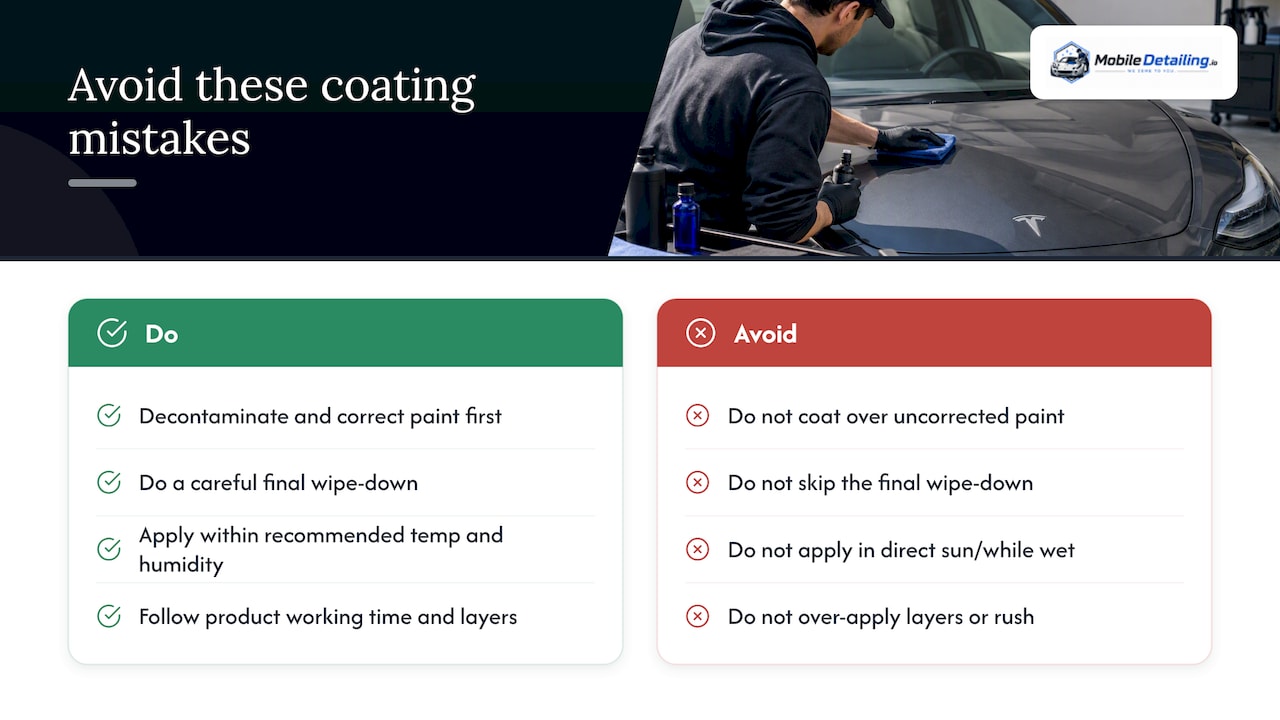
The most common mistake is applying any coating, DIY or professional, over paint that has not been properly decontaminated and corrected. Locking in dust, old wax residue, or swirl marks means the coating preserves those flaws rather than hiding them, and removing a cured coating later to fix the paint underneath is far more work than correcting it first.
A second frequent error is skipping or rushing the final wipe-down before application. Leftover polishing oils or residue prevent the coating from bonding evenly, leading to patchy coverage or early failure in spots.
Timing mistakes are also common. Applying a coating in direct sun, high humidity, or temperatures outside the product’s recommended range can cause it to cure unevenly or flash too fast to level properly. Exposing the car to rain or heavy moisture during the initial 12 to 24 hour dry window is one of the clearest ways to ruin an otherwise good application, since it can create water spotting baked into the cure.
Overestimating what a coating does is another mistake, less about application technique and more about expectations. Treating a ceramic coating as a substitute for paint protection film against rock chips, or skipping maintenance washes because the car is “coated now,” leads to disappointment and a shorter effective lifespan than the product is capable of.
Finally, DIY applicators sometimes apply too much product or too many layers too quickly, leading to high spots, streaking, or a hazy finish that requires buffing out. Following the product’s specific working time and layering instructions, rather than assuming more is better, avoids this. For any of these risk points, especially correction and multi-layer professional coatings, working with an experienced mobile detailer reduces the chance of a costly redo.
Impact of Tesla’s unique paint types or finishes on ceramic coating effectiveness
Tesla’s clear coat has a reputation among detailers and owners for being softer than what is typical on many other mass-market vehicles, which is part of why ceramic coating and paint protection film both see strong interest in the Tesla ownership community. A softer clear coat marks and swirls more easily during washing and correction, so the prep stage before coating carries extra weight.
This also affects how aggressively a detailer can safely correct the paint. Heavier multi-stage correction that might be routine on a harder factory finish can remove more clear coat thickness on a Tesla in the same number of passes, so experienced detailers typically use lighter polishing compounds and more passes rather than fewer aggressive ones.
Tesla’s various finishes, solid colors, metallics, and the multi-coat pearl white used on some models, can also affect how a coating looks once cured. Gloss enhancement is more visually obvious on darker solid colors, while metallic and pearl finishes tend to show depth changes more subtly. None of this changes how the coating itself bonds or cures chemically, but it does affect the finished look an owner should expect.
One Tesla-specific caution applies to glass rather than paint. Tesla’s owner’s manual advises against applying hydrophobic or aftermarket coatings to the front windshield, since coatings can interfere with the visibility relied on by the car’s cameras. Any detailer coating a Tesla should treat the windshield as off-limits for hydrophobic products unless compatibility with the camera system is confirmed. The same manual also warns against abrasive polishes generally, which reinforces why correction technique matters more on this paint than on many other vehicles.
Reviews or testimonials from Tesla owners who have used ceramic coatings
Tesla owner communities, including forums and owner-focused publications, frequently discuss ceramic coating as one of the more popular protective options alongside PPF. The recurring theme in that discussion is less about any single product and more about expectations: owners who went in expecting easier washing and better gloss tend to report satisfaction, while those expecting rock-chip protection from coating alone tend to come away disappointed.
A common pattern in owner discussion is combining front-end PPF with full-body ceramic coating, treating the two as complementary rather than competing choices. Owners who follow this approach often note that the car stays visibly cleaner between washes and that bug splatter and sap wipe off more easily than on an unsealed factory finish.
Feedback on DIY kits tends to split by starting condition. Owners applying a 9H kit to a newer, well-kept car generally report results close to what a professional application delivers in terms of gloss and water beading. Owners who skipped correction on a car with existing swirl marks report less satisfaction, since the kit sealed in defects they later wished they had addressed first.
Maintenance habits show up repeatedly in owner discussion as the deciding factor in long-term satisfaction. Owners who stuck to regular gentle washing and avoided automatic car washes report coatings performing well past a year, while those who went back to routine automated washes often reported the hydrophobic effect fading faster than expected.
Environmental factors affecting ceramic coating performance on Tesla cars
Climate and parking conditions play a significant role in how long a coating performs as advertised. Prolonged UV exposure from parking outdoors in sunny climates gradually breaks down the coating’s protective layer faster than for a garaged vehicle, even though the coating itself is formulated to resist UV better than bare clear coat.
Road salt and winter chemical treatments are another factor, particularly for owners in colder states. Salt residue left on the paint for extended periods can accelerate wear on the coating’s hydrophobic properties, which is part of why more frequent maintenance washing is recommended during winter months.
Humidity and temperature at the time of application also affect the initial cure, as covered earlier, but ongoing exposure to high humidity after curing is less of a concern once the coating has fully hardened over several weeks. Coastal environments with salt air present a similar long-term challenge to inland winter road salt, gradually working against the coating’s chemical resistance if washing is infrequent.
Tree sap, pollen, and bird droppings are seasonal rather than climate-based, but they test a coating’s chemical resistance directly. A well-maintained coating should allow these contaminants to be wiped away without staining, while a degraded or poorly maintained coating may show etching if contaminants sit too long. Garaging the car, even part-time, remains one of the simplest ways to extend a coating’s effective lifespan regardless of climate, since it reduces both UV exposure and the accumulation of airborne contaminants between washes.
How to get a local quote or book a pro through MobileDetailing.io
Once you know roughly what tier of coating and correction your Tesla needs, the next step is comparing real quotes from detailers near you. We built Mobiledetailing as a nationwide directory where you can search by location, see what local professionals offer, and request quotes without calling around to multiple shops individually.
- Share your Tesla’s model and mileage so detailers can estimate correction time accurately.
- Include a few photos of your paint condition, including close-ups of any swirls or scratches.
- Note the protection level you want, coating only, front-end PPF plus coating, or full-body combination, so quotes are comparable.
When you compare listings, look for shops that show portfolio photos of correction work and specify the coating products they use, similar to the detail you would find on individual business profiles across our directory. You can also find specialty care guidance for non-painted components, like cleaning and protecting carbon fiber trim, if your Tesla has aftermarket carbon parts alongside its painted surfaces.
Ready to compare pros in your area? Get a local quote and start lining up estimates before committing to a coating package.
FAQ
Is ceramic coating worth it on a Tesla specifically?
For most owners, yes, since Tesla’s clear coat is relatively soft and benefits from the added chemical and UV resistance a coating provides. It will not protect against rock chips or deep scratches, so pairing it with front-end paint protection film is worth considering for highway drivers.
How long does ceramic coating last on a car?
Lifespan varies by tier: DIY 9H kits tend to last less time than professional-grade coatings, and multi-layer professional applications are built to last several years with proper maintenance. Regular maintenance washes and avoiding harsh car washes are the biggest factors in reaching the upper end of that range.
Should I get ceramic coating or paint protection film for my Tesla?
They solve different problems: ceramic coating handles chemical resistance, UV protection, and easier cleaning, while PPF is a physical barrier against rock chips and scuffs. Many owners combine front-end PPF with full-body ceramic coating for complete coverage.
How much does professional ceramic coating cost?
Professional ceramic coating in the United States typically runs from about $500 for entry-level packages to around $3,500 for premium multi-layer jobs, with the price driven largely by how much paint correction is needed. DIY kits run roughly $40 to $300 but are best suited to newer, well-kept paint.
Can I apply ceramic coating to my Tesla’s windshield?
No. Tesla’s owner’s manual advises against applying hydrophobic or aftermarket coatings to the front windshield because it can interfere with the camera system’s visibility. Coatings are intended for the painted body panels, not the windshield glass.
Sources
Industry pricing data and detailer guidance consistently point to the same pattern: cost scales with correction, not just the coating itself, and lifespan depends more on maintenance than on the product tier alone. A $3,000 package with no follow-up care will underperform a $900 package maintained on schedule.
The curing guidance from professional detailers lines up with what Tesla’s own documentation suggests about careful handling of coated surfaces near sensors and cameras. Treating the first weeks after application as a sensitive window, rather than driving and washing normally right away, protects the investment.
If you are comparing options, Mobiledetailing and cost breakdown are useful starting points before requesting quotes, since they outline what a fair quote should include and what questions to ask local shops.
- Ceramic Coating vs PPF for Tesla: Which Do You Need in 2026? – ForMyTesla
- Complete guide: ceramic coating care and maintenance – Glassparency
- Cleaning – Tesla Model 3 Owner’s Manual
Recommended
- U.S. Ceramic Coating Cost: $50 to $3,500, Tiers and How to Get Quotes
- Lab Claims: Ceramic Coating Lifespan for Car Owners, 1–7+ Years
- Stop Rewaxing: Ceramic Coating Lasts a Year or More, and Find a Pro
- Test Before You Recoat: 4 Step Ceramic Coating Maintenance
MobileDetailing.io provides general educational information. Products, surfaces and vehicle finishes vary. Follow manufacturer instructions and consult a qualified detailing professional before using abrasive processes or chemical treatments.