Hand Wash vs. Automatic Car Wash: Which Is Better?
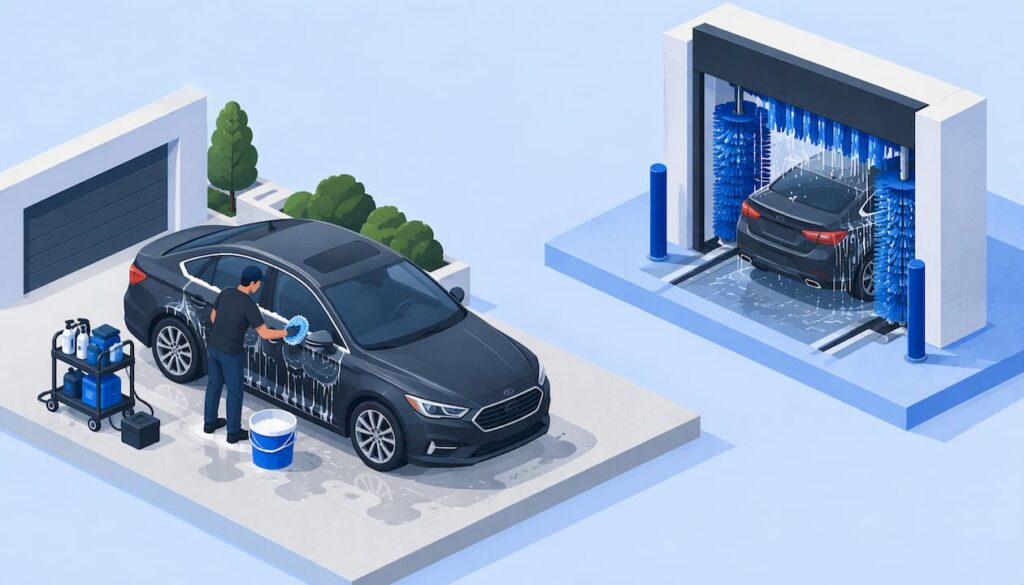
For paint you want to keep looking good, a careful hand wash is the safest method. An automatic wash is the better choice when speed, price and convenience matter more than a flawless finish. The gap is smaller than the internet argument suggests, though. A sloppy hand wash can scratch paint, and a well-run machine can be gentle. What matters is which type of wash you pick, how it is maintained, and what your car’s finish is worth to you.
This guide compares hand washing, brush-style automatic washes and touchless automatic washes on paint safety, cleaning quality, cost, time and water use. It then helps you match a method to your car and your routine.
Table of Contents
- The quick comparison
- Why automatic washes can affect paint
- Touchless washes: less friction, other trade-offs
- What a proper hand wash gets right
- What the research says, and where it gets complicated
- Why washing at all matters
- Cost, time and water
- Which method fits your situation
- Where a mobile detailer fits
- Common mistakes with both methods
- Frequently asked questions
- Sources
The quick comparison
Here is how the three common methods stack up for a typical U.S. driver. Prices are ballpark figures from published sources, and they vary by region.
| Hand wash (done correctly) | Brush or soft-cloth automatic | Touchless automatic | |
|---|---|---|---|
| Scratch and swirl risk | Lowest | Highest | Low |
| Cleaning of door jambs, wheels, seams | Best | Often misses spots | Misses stuck-on grime |
| Typical time | 30 to 60 minutes | Under 10 minutes | Under 10 minutes |
| Chemical strength | You choose | Moderate | Often strongest |
| Best for | New, coated, dark, classic, luxury cars | Daily drivers where perfect paint is not the goal | Quick rinses, winter salt removal |
The rest of this article explains the reasoning behind each row.
Why automatic washes can affect paint
The core issue with brush and cloth tunnels is friction plus shared grit. USA Today notes that automatic washes add a risk of scratches and swirls on paint and plastic because abrasive dirt builds up on the brushes over time. Every car that goes through leaves a little behind, and the next car gets it dragged across its panels.
Consumer Reports adds that motorized brushes can grind in grime from other vehicles and can catch on loose parts such as rear wipers or trim pieces. That second point is easy to overlook. Damage is not always fine swirls. A loose piece of trim or a worn wiper arm is a real risk in a tunnel.
If you have ever looked at a dark car in direct sun and seen a web of circular hairline marks, that is swirling. It is cosmetic, since it sits in the clear coat, but it dulls gloss and is the main reason enthusiasts avoid tunnel washes.
Machines are not all alike
A modern, well-maintained soft-cloth wash is a different animal from an old hard-bristle system. One local news report from El Paso Inc. notes that some recent studies show a well-maintained automatic tunnel using the right mix of chemicals can give a better wash and less damage than an inexperienced hand washer. That is a fair reminder that the operator and the equipment matter, not just the category.
A few signs you are looking at a better-run wash:
- The cloth or foam strips look clean and are not visibly gritty or frayed.
- The bay or tunnel is tidy, and the staff pre-rinse heavily soiled vehicles.
- The site is busy but not overrun, so equipment is not constantly loaded with fresh mud.
- Nothing on your car is loose, because the wash will find it.
Touchless washes: less friction, other trade-offs
A touchless wash uses high-pressure water and chemicals instead of brushes. That removes the biggest source of scratches. The Car Connection explains that touchless washes will not scratch your vehicle and will take off large chunks of dirt and debris, but a thin film of road grime tends to remain on the paint.
Consumer Reports recommends touchless washes when you want to protect the car, while acknowledging they may not get the finish as clean as you would like. That matches what many owners see: the car looks fine from ten feet, then you notice a hazy film on the lower doors.
Because there is no contact, touchless systems lean on stronger detergents to loosen dirt. If your paint wears a wax, sealant or coating, harsh chemistry is worth thinking about. That is a reason coated-car owners often prefer hand washing with a pH-balanced soap, and a reason to get care instructions from whoever applied the coating.
Touchless is most useful in winter. It is a quick way to rinse road salt off the undercarriage and lower panels between proper washes, even if the car will not come out spotless.
What a proper hand wash gets right
Hand washing wins on control and on reach. Consumer Reports notes that washing by hand lets you monitor your car’s condition, and that hand-wash services can get into door seams and other hard-to-reach spots a machine misses. A person can also give a bug-covered front bumper extra time or scrub wheels and tire faces, while a machine runs the same program every time. A professional detailer quoted by Consumer Reports makes the same point about mildew and caked-on mud: a tunnel will not lift what has bonded to the surface.
Technique decides everything
Hand washing is only gentler if it is done correctly. Washing with one dirty bucket and a gritty sponge can scratch paint as surely as a tired tunnel. A safe routine generally looks like this:
- Rinse first. Knock off loose sand and dirt with plain water before anything touches the paint.
- Use two buckets. One holds soapy water, the other clean rinse water for your wash mitt, so grit does not go back onto the car.
- Use a quality microfiber mitt and automotive soap, not dish soap or a household sponge.
- Work top to bottom. The lower panels are the dirtiest, so they go last.
- Dry with clean microfiber towels or a dedicated blower so water spots do not bake in.
Wheels and tires should get their own tools so brake dust does not get transferred to your paint.
The shade-and-heat rule
Wash in the shade when you can, and avoid panels that are hot to the touch. Soap and water dry fast on a hot surface and leave spots that can be hard to remove.
What the research says, and where it gets complicated
The tidy rule that hand washing always beats machines is not what every study finds. The Star reported on a University of Texas at Arlington experiment in which two cars were each washed 25 times, roughly a year of washing, one by hand and one by machine. Under a microscope, the hand-washed paint showed deep scoring from trapped sand particles, while the machine-washed surface was remarkably smooth.
What should you take from that? Not that machines are better in general, but that technique and cleanliness of the wash media decide outcomes. Dirt trapped in a sponge or a dropped mitt can do real harm. The takeaway is that a careful hand wash with clean tools is excellent, a careless one is not, and a clean, well-kept machine can be better than a careless person.
For owners who want to preserve original paint, though, the mainstream guidance still leans toward hand washing. USA Today reports that hand washing is the best option for protecting paint and finish, but it is the better choice mainly if you plan to preserve the original finish. If you do not plan to sell or trade in the car and can live with mild scratches, an automatic wash still gets the job done.
Why washing at all matters
Before you debate method, remember that frequent washing beats infrequent washing of any kind. Consumer Reports’ chief mechanic says in this guide to car-wash extras that road grit and residue from rain and birds can damage paint and cause corrosion. A former BASF automotive coatings technical manager in the same article explains that bird droppings can degrade the finish as they dry, and that bugs release amino acids that slowly etch into the clear coat.
So a quick touchless rinse after a long highway trip, or after bird droppings, is far better than leaving contamination on the paint until the next perfect hand wash.
Cost, time and water
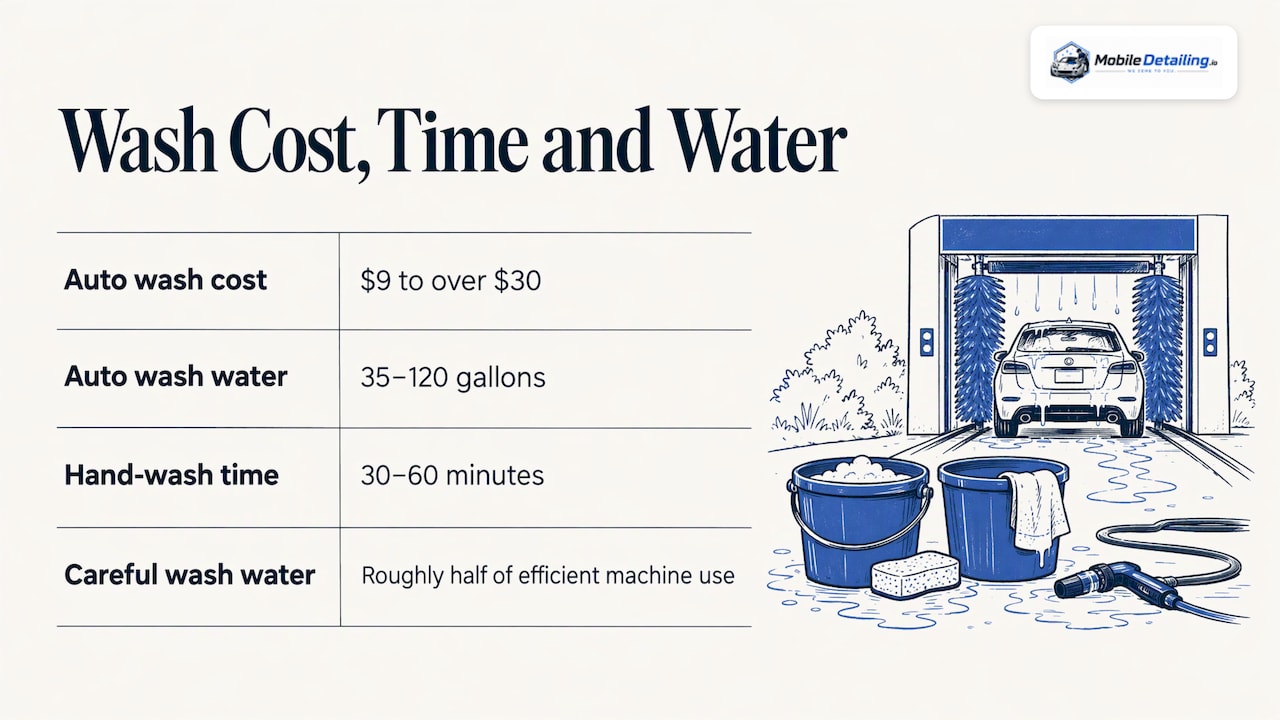
Cost is where automatic washes have their edge. According to AutoZone, an automatic wash starts around $9 in many parts of the U.S., basic exterior washes can top $20, and add-ons such as a touchless option, wax or undercarriage wash can add $10 or more, pushing premium packages past $30.
Hand washing at home costs mostly time and supplies. Once you own buckets, a mitt, soap and drying towels, each wash costs very little, but plan on 30 to 60 minutes. Hiring someone to do it brings the price up because you are paying for labor and care. Rates vary a lot by city, vehicle size and condition, so request quotes instead of relying on a national average.
Water use is a point in hand washing’s favor if you are careful. AutoZone reports that automatic washes can use 35 to 120 gallons per vehicle, and that a two-bucket wash with a pressure washer running at 2 to 4 gallons per minute can cut even an efficient machine’s water use roughly in half. A hose left running will not.
Which method fits your situation
A new car or a car with ceramic coating. Hand washing, or a touchless wash in a pinch, is the safer path. A dealership service guide from Houston Toyota Center recommends touchless or careful hand washing for new cars and rates touchless as a good fit for coated paint. Coating owners should also follow the installer’s maintenance guidance.
A luxury, sports, classic or custom-finish car. Professional hand washing is the usual recommendation. Matte finishes are especially picky, since polishing or waxing them is not an option and aggressive brushes can leave shiny or scuffed spots. Our guide to matte paint detailing covers how to wash and protect them.
A daily driver in winter. Automatic or touchless washes that include undercarriage cleaning are the practical pick for rinsing off salt and slush, according to the same Houston Toyota Center guide. Do a proper hand wash when temperatures allow.
A busy schedule. Touchless automatic washes are the convenient option that is gentler than brushes. Use them regularly and schedule a deeper clean now and then.
A truck, SUV or work vehicle that gets muddy. Mud and heavy contamination should be pre-rinsed before anything touches the paint. Tunnels often leave the lower panels dirty, so a hand wash or a detailer visit makes sense every so often.
A rideshare or delivery vehicle. Interiors take the beating here. An automatic wash can handle the exterior between detailing visits, but plan on a recurring interior clean.
Where a mobile detailer fits
A mobile detailer sits between the two options. You get the hand-wash approach, with fresh water, clean microfiber and attention to door jambs, wheels and seams, without carving out an hour of your weekend. They come to your home or office, so there is no drive or line.
On MobileDetailing.io you can search by location, browse local professionals who offer interior, exterior and full-service detailing, and request a quote through our local quote form. The service is free for vehicle owners. Pricing is set by each detailer, so ask for a quote that spells out what is included.
A detailer is also the right call for jobs that should not be DIY. Wet sanding, paint correction, ceramic coating application and work involving hazardous chemicals call for professional skill and equipment. If you are considering a coating, you can browse local specialists such as a ceramic coating pro in Beaumont, TX and compare their quotes.
Common mistakes with both methods
- Skipping the pre-rinse at home. Sand and grit on dry paint is the main cause of home-wash scratches.
- Using one bucket or a household sponge. Both trap and re-apply dirt.
- Using a tunnel with visibly dirty brushes. If the strips look gritty, drive on.
- Leaving loose trim or accessories. Fold in mirrors if the wash asks, and have loose parts fixed first.
- Washing hot paint in direct sun. It causes spotting and streaks.
- Waiting too long after bird droppings or bugs. Remove them promptly with plenty of water and a gentle touch.
Frequently asked questions
Are hand car washes better than automatic?
For paint protection, a correct hand wash is usually the better method. It uses fresh water and clean mitts, and it reaches areas machines miss. Automatic washes win on speed and price, and for many daily drivers that is a fair trade.
Can an automatic car wash damage paint?
It can. Brush-style tunnels can drag grit from earlier cars across your paint, causing swirls and fine scratches, and loose trim can get caught. Touchless washes remove the brush risk but may leave a film of grime and rely on stronger chemicals.
Is a touchless car wash safe for ceramic coating?
It is generally gentler than brushes because nothing touches the paint. Still, harsh detergents can be a concern for any protective layer, so follow your installer’s care instructions. A pH-balanced hand wash is the safest routine for coated cars.
How often should I wash my car?
There is no single schedule, but do not let dirt sit. Rinse off salt, bird droppings and bugs quickly, and do a full wash whenever the car is visibly dirty. Your climate and driving conditions decide the rest.
Sources
- Are automatic car washes harming your car’s exterior? (USA Today)
- How to Wash Your Car Like a Pro (Consumer Reports)
- Are Car-Wash Extras Worth It? (Consumer Reports)
- El Paso car detailers and automated express washes (El Paso Inc.)
- Hand versus machine: Which is better at the car wash? (The Star)
- Wash me now: What’s the best type of car wash? (The Car Connection)
- Benefits of Handwashing Your Car vs Automatic Car Wash (AutoZone)
- Choosing the Right Car Wash (Houston Toyota Center)
Recommended
MobileDetailing.io provides general educational information. Products, surfaces and vehicle finishes vary. Follow manufacturer instructions and consult a qualified detailing professional before using abrasive processes or chemical treatments.