Matte Paint Detailing: How to Wash, Protect and Hire a Pro
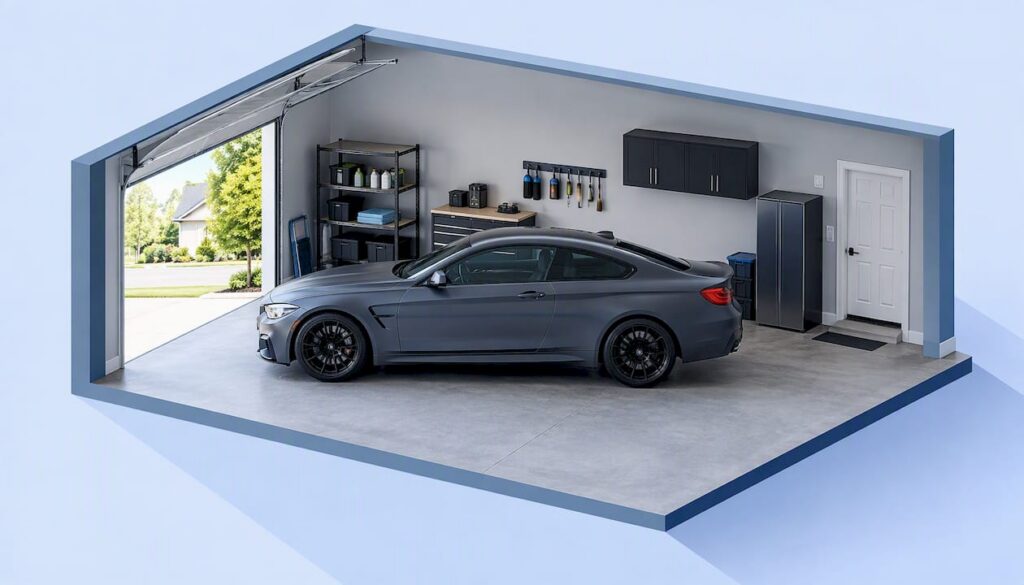
Matte paint is detailed differently from gloss paint because you can’t polish, wax or buff it. Doing so ruins the finish. The safe routine is simple: wash by hand with a matte-specific soap, use light pressure, dry with a clean microfiber towel, and take bird droppings, sap and tar off quickly with a solvent instead of elbow grease. Anything that involves abrasion, coatings or a shiny spot belongs with a professional who works on matte finishes regularly.
This guide pulls together what automakers and paint manufacturers say about matte care, turns it into a routine you can follow, and explains how to pick a mobile detailer who will not treat your car like a gloss finish.
Table of Contents
- Why matte paint needs its own detailing approach
- How to hand wash matte paint, step by step
- Products and tools: what is safe and what is not
- Removing bird droppings, sap, tar and bugs
- Protecting matte paint over time
- Can a matte car go through an automatic car wash?
- What a mobile detailer can and cannot fix
- How to choose a mobile detailer for matte paint
- A simple matte care routine
- FAQ
- Sources
Why matte paint needs its own detailing approach
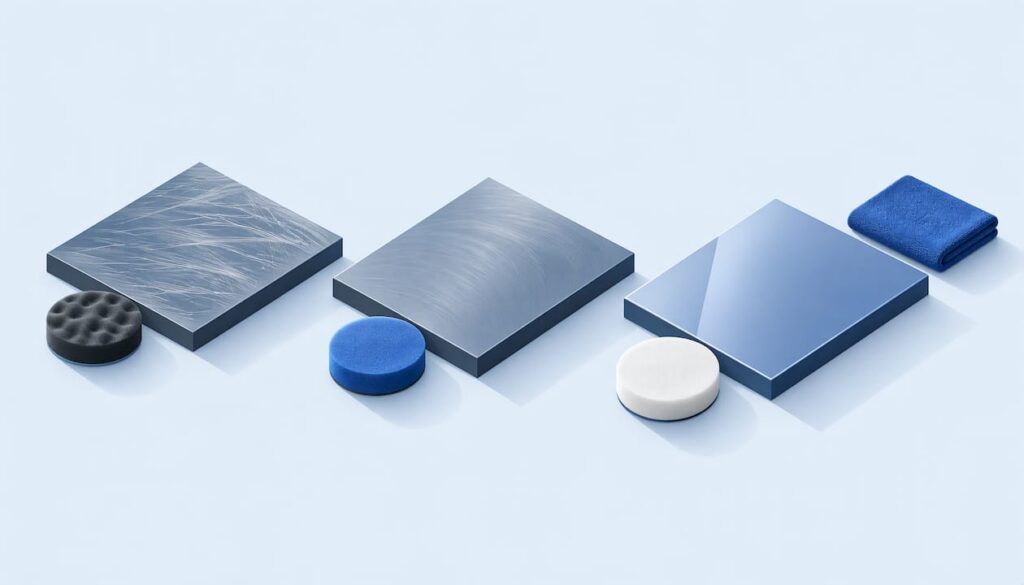
A gloss clear coat is smooth, so it reflects light in a mirror-like way. A matte finish is built to scatter light. Kia’s service guidance describes the low-gloss look as the result of diffused light reflection, and notes that damage or wear reduces that appearance.
That difference changes what “fixing” means. On gloss paint, a detailer can level light scratches with a polish and bring the shine back. On matte paint, the same step changes the surface texture. Cadillac’s bulletin for its low-gloss finish says damage that would normally be corrected by polishing must not be polished on matte paint, because polishing changes the low-gloss appearance.
The other risk is friction. PPG’s matte finish guide warns that vigorous rubbing can burnish the finish and leave a permanent shiny spot. Kia’s matte paint care guide says the same thing: a burnished spot is permanent.
So the whole philosophy of matte detailing comes down to three habits:
- Clean gently, and let the product do the work.
- Never add gloss, whether through wax, shine sprays or polish.
- Treat contamination fast, because you cannot easily repair damage later.
A note on scope: most of the written guidance below comes from automakers and paint suppliers, and it applies to factory matte and satin finishes and refinish matte clear coats. If your car wears a matte wrap or film instead of paint, follow the wrap installer’s care sheet, which can differ.
How to hand wash matte paint, step by step
Hand washing is the baseline recommendation across manufacturers. The steps below combine GM’s 2024 service bulletin, Kia’s 2023 guidance and PPG’s guide.
- Pick the right spot. GM’s bulletin says to park in a cool, shaded area. Axalta’s wash procedure likewise advises against washing in direct sunlight or when the paint surface is hot. Soap that dries on the panel leaves marks you then have to rub off.
- Pre-rinse. Kia’s guidance calls for rinsing first so loose grit comes off before anything touches the paint.
- Set up two buckets. One holds a soap made for matte or low-gloss finishes. The other holds clean water for rinsing the mitt. GM suggests dirt separators in the buckets, and says to rinse the mitt in clean water before it goes back into the wash solution.
- Use a soft, clean mitt or pad and light pressure. Let the suds lift the dirt. Work panel by panel, and rinse each one before the soap dries.
- Use a soap with no added wax. GM specifically says to use a dedicated car-wash product made without added wax. Ordinary “wash and wax” formulas can leave a sheen.
- Rinse thoroughly. Leftover soap can streak a matte surface and is more visible than on gloss.
- Dry right away. GM says not to let the finish air-dry, and to re-dampen any area that starts to dry. Use a clean damp chamois or microfiber towel. Kia says to pull a damp chamois lightly across the paint instead of wiping in circles, and not to rub with a dry towel.
PPG adds one more motion rule: wipe lightly forward and backward, since circular motions may leave swirls. On gloss paint, swirls show up in sunlight. On matte paint, rubbing marks show up as shiny or blotchy areas.
Pressure washer limits
A pressure washer can speed up the pre-rinse, but both GM and PPG put limits on it. Kia also says to minimize high-pressure washing, because excessive pressure can create visible blemishes in the finish.
| Source | Maximum pressure | Tip | Minimum distance |
|---|---|---|---|
| GM service bulletin, 2024 | Below 1,200 psi | Wide fan tip | 10 inches |
| PPG matte finish guide | 1,200 psi or less | 45° fan tip | 12 inches |
If you are unsure what your machine delivers, stay on the conservative side: the wider tip, the longer distance and never aim a narrow jet at edges, chips or panel seams where water can lift paint.
Products and tools: what is safe and what is not
The label matters more on matte paint than on any other finish. PPG says to use only products developed for low-gloss or matte paint. Kia and PPG lists overlap closely, which makes the guidance easy to summarize.
| Use | Avoid |
|---|---|
| Matte-specific car wash soap | Wax of any kind |
| Soft, clean microfiber towels or a damp chamois | Polish, rubbing compound and glaze |
| Alcohol-based window cleaner for spot cleaning (per PPG) | Ordinary detail spray |
| Dedicated tar remover for stubborn tar or sap | Terry cloth, regular cloth and paper towels |
| Matte-specific protectants | Mechanical polishers and vigorous rubbing |
| Touch-up paint pens for small chips (GM) | Commercial car-wash “shine” products |
The left column draws on PPG and GM. The right column draws on PPG and Kia.
Two details trip people up:
Quick detailers. Many are sold as safe for every finish, but they usually contain gloss enhancers. PPG and Kia both list ordinary detail spray among the products to avoid. Only use a spray that is labeled for matte or satin paint.
Towels. Terry cloth and paper towels feel soft, but both guides list them as materials to avoid. Keep a stack of clean microfiber towels just for the car, and wash them without fabric softener.
Removing bird droppings, sap, tar and bugs
Contamination is the biggest day-to-day threat to matte paint. Polestar’s owner manual says bird droppings contain chemicals that can affect and discolor paintwork quickly, so they should come off as soon as possible. It also says sap, resin, grease or oil should be removed immediately with a cleaner designed for matte paint.
The method from PPG is gentle and slow:
- Spray the debris with water to loosen it.
- Soak the spot with an alcohol-based window cleaner, or a specific tar remover for tar.
- Wait. Let the solvent soften the contamination.
- Wipe lightly with a clean microfiber cloth, forward and back.
Genesis’ matte paint guide makes the same point for stubborn tar and tree sap: soak first with a dedicated remover, then wipe gently, so the solvent does the work and you avoid rubbing. If a spot does not release, soak it again rather than pressing harder.
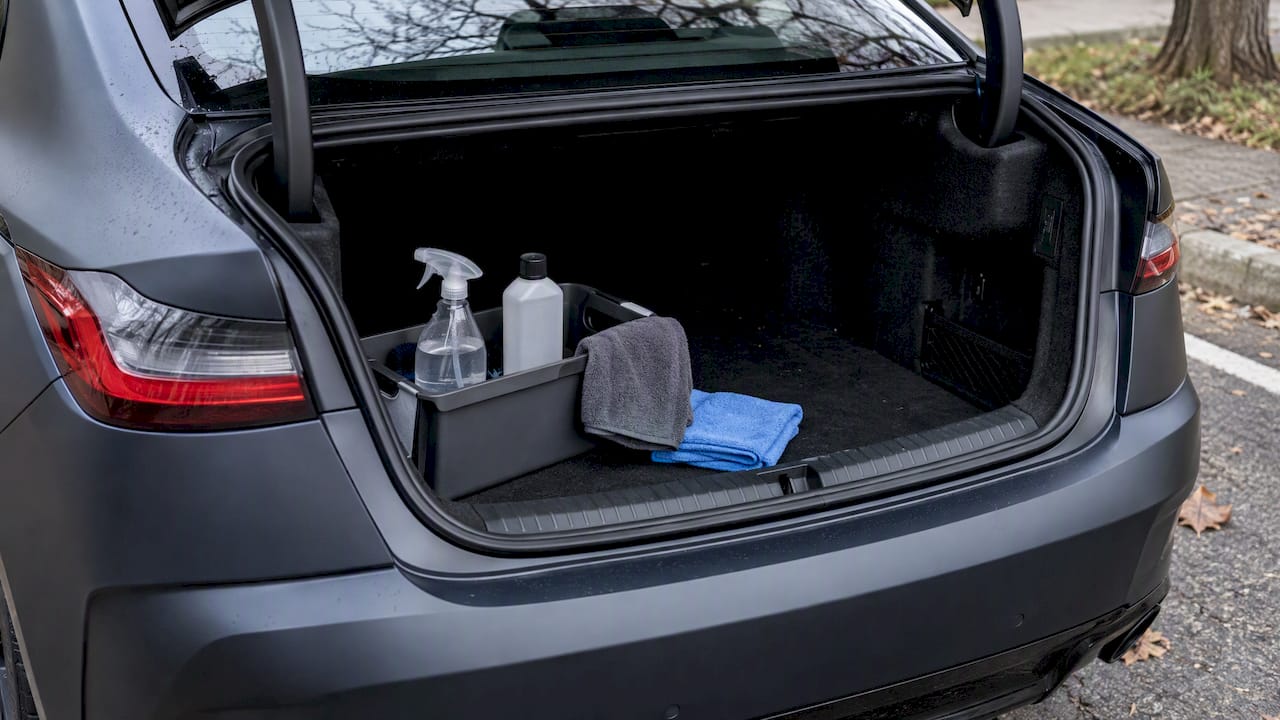
In practice, keep a small kit in the trunk: a spray bottle of water, a matte-safe cleaner or the solvent recommended by your manufacturer, and two clean microfiber cloths. Taking care of a dropping on day one is far easier than dealing with an etched mark on day five.
Polestar’s matte care page is written for its own vehicle, but the principle of fast removal applies broadly.
Protecting matte paint over time
Protection on gloss paint usually means wax, sealant or a coating that adds depth and shine. For matte paint, protection has to leave the surface looking the way it did.
That is why the manufacturer advice is mostly about prevention:
- Wash regularly so contamination never sits on the paint.
- Remove insects, tar, sap and road debris promptly by soaking and then lightly cleaning, as Kia advises.
- Park in shade or a garage when you can. Heat makes contamination bond harder.
- Avoid wax, detail spray, abrasive polishes, compounds and mechanical polishers, which Kia lists as products and tools to skip.
For longer-term protection, a spray sealant or coating formulated for matte paint is the usual route. Product makers say these can protect against UV light and contaminants without adding gloss. Treat those statements as manufacturer claims. They are not independent test results, and the finish still needs the same gentle care afterward. Ask any shop to name the exact product and confirm it is made for matte or satin paint.
Coatings are not a casual weekend job. They require clean, correctly prepared paint, and a mistake can be permanent on a finish that cannot be polished off. This is a case where hiring an experienced professional is the safer choice.
Can a matte car go through an automatic car wash?
If the car is matte, brush washes are the problem. GM’s 2024 bulletin says brush-type automatic washes can cause light scratches that cannot be buffed out, and recommends a touchless automatic wash or hand washing only.
Cadillac’s bulletin for its low-gloss finish goes a step further. It says touch-free automatic washes are the only safe automatic option for that finish, and that brush-equipped commercial washes and liquid-wax wash systems are not recommended. So even a touchless wash should not add a wax or “shine” cycle.
The practical rule: skip brushes, skip the wax and shine options, and hand wash when you can. If you rely on touchless washes between hand washes, dry the car afterward with a clean microfiber so water spots do not dry on the panels.
What a mobile detailer can and cannot fix
Matte paint has real limits, and it helps to know them before you book anyone.
What detailing can do: safe washing and decontamination, interior cleaning, glass, wheels, trim, and application of matte-safe protection.
What detailing cannot do: reverse a burnished shiny spot. Kia’s 2023 guidance says the matte appearance is not covered by its warranty, and that rub or blemish marks and shiny spots are likely to require repainting at a matte paint certified body shop. That is Kia’s guidance for its vehicles, but the underlying physics is the same for any matte finish: you cannot polish matte paint, so deep marks usually need refinishing.
Small chips are different. GM says minor chips can be repaired with matte touch-up paint pens through its parts department, and not with aerosol cans. Check with your dealer or manufacturer for the right pen for your color.
This is also why the owner of a matte car should be cautious with the usual detailing menu:
- Paint correction and wet sanding are built around abrasion. They are not suited to matte paint, and where any refinishing is involved, it belongs to a body shop with matte experience.
- Ceramic coatings should only be done by a professional using a matte-specific product.
- Chemical-heavy work, such as strong tar, glue or adhesive removers, should be left to a pro who knows how those chemicals interact with your finish.
How to choose a mobile detailer for matte paint
A detailer who comes to your home or office is convenient, but the right one for matte paint needs to prove they know the difference. Questions worth asking before you book:
- Have you worked on matte or satin paint, and on what kinds of vehicles? Ask for photos of previous matte jobs.
- What soap, towels and protectant will you use? The answer should name matte-safe products and microfiber, with no wax, polish or all-purpose detail spray.
- Do you use a machine polisher on matte paint? The answer should be no.
- How do you wash and dry? You want to hear two buckets, a soft mitt, light pressure, and prompt drying.
- What is the water and power setup? Mobile detailers often bring their own water. Ask if they do, so the work does not depend on your hose, and confirm any pressure washer is kept within the limits above.
- How will you handle a spot you cannot remove? A good detailer tells you and stops. They don’t rub harder.
- Is the business insured? Ask directly, and get the answer in writing if you can.
If you are comparing several shops, MobileDetailing.io lets you search mobile detailers by location, look at the services they list, photos and reviews, and send a request. Searching is free for vehicle owners. When you describe your car, say plainly that the paint is matte so the quotes you get are based on the right process. You can start from the local quote request page and note the finish, the vehicle and the services you want.
For protection work on matte paint, look for shops that list coatings, such as the ceramic coating specialists in Austin, TX or Alexandria, VA, then confirm in the quote conversation that they have a matte-safe product. A listing does not guarantee matte experience, so ask the questions above every time.
A simple matte care routine
To keep it practical, here is a routine that follows the sources above.
| When | What to do |
|---|---|
| As soon as you notice it | Remove bird droppings, sap, bugs and tar by soaking, then lightly wiping |
| Every one to two weeks, or when dirty | Pre-rinse, two-bucket hand wash with matte-safe soap, dry immediately with a clean damp chamois or microfiber |
| Between washes | Use a touchless wash if needed, never a brush wash |
| Periodically | Have a matte-experienced pro apply a matte-safe sealant or coating |
| Whenever you see a rub mark or shiny spot | Stop rubbing, and ask a matte-certified body shop or your manufacturer about repair |
The washing frequency here is a practical suggestion rather than a figure from the manufacturers. Adjust it for how much the car is driven, where it is parked and the season.
FAQ
Can I wax matte paint?
No. Both Kia and PPG list wax among the products to avoid, and GM says to choose a wash product with no added wax. Wax fills the texture that creates the matte look and leaves an uneven sheen. Use a sealant made for matte paint if you want protection.
Can you polish out a scratch on matte paint?
Generally no. Cadillac’s guidance says damage normally corrected by polishing on gloss paint must not be polished on matte paint, because it changes the low-gloss look. Small chips can be touched up with a matte paint pen, as GM describes. Deeper scratches or shiny spots usually mean a trip to a body shop with matte experience.
Is matte paint harder to maintain than gloss?
It is less forgiving. Contamination such as bird droppings and sap needs to come off quickly, and mistakes like rubbing or polishing cannot be undone. The routine itself is not complicated, though: gentle hand washing, the right products and fast spot cleaning cover most of it.
Should I hire a mobile detailer or wash it myself?
Washing it yourself is fine if you follow the two-bucket method and use matte-safe products. Hire a professional for coatings, anything involving abrasion or heavy chemicals, and a deep clean when you are not sure what to use. Ask any detailer about their matte experience before booking.
Sources
- PPG Refinish: Matte Finish Guide
- Kia service guidance on matte paint, 2023 (NHTSA)
- Kia Canada: Matte Paint Care Guide, March 2022
- GM service bulletin on matte paint care, revised August 2024 (NHTSA)
- Cadillac low-gloss matte paint finish bulletin, 2015 (NHTSA)
- Axalta: Vehicle wash process
- Polestar: Care and treatment of matte paintwork
- Genesis: Matte paint care guide
Recommended
- Matte Paint Ceramic Coating: What Works and What to Avoid
- Classic Car Detailing: What It Involves and How to Hire a Pro
- Save Your Clearcoat: Pro Motorcycle Paint Correction Workflow
MobileDetailing.io provides general educational information. Products, surfaces and vehicle finishes vary. Follow manufacturer instructions and consult a qualified detailing professional before using abrasive processes or chemical treatments.