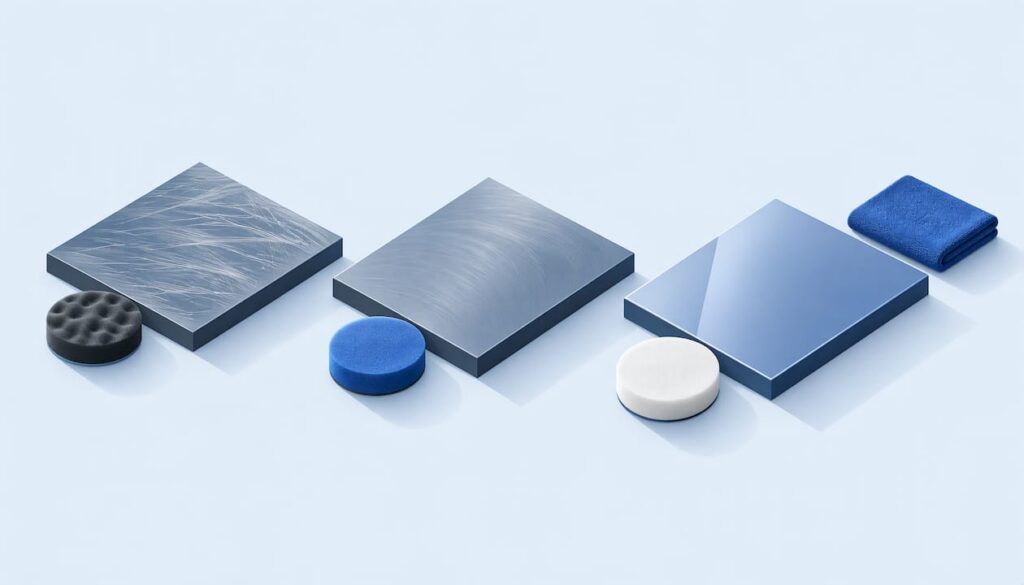
Classic Car Detailing: What It Involves and How to Hire a Pro
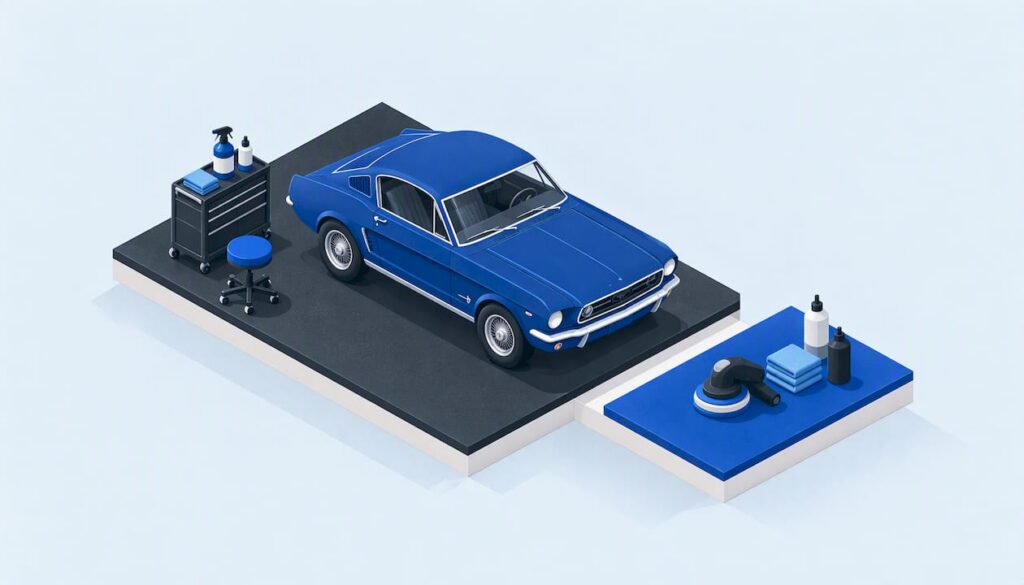
Classic car detailing is a gentler, slower version of regular detailing. Older paint, chrome, rubber, leather and vinyl react badly to harsh chemicals, aggressive machine polishing and automatic car washes, so the work leans on hand washing, mild products and careful inspection. Most classics driven regularly need a deep clean every few months. Professional work on a true collector car can run well into four figures, and wet sanding, paint correction and coatings are jobs for an experienced pro, not a weekend experiment.
This guide covers what the work includes, how often to do it, what to avoid, how to prepare for a show, what it costs, and how to find a mobile detailer who comes to your garage.
Table of Contents
- What makes a classic different from a modern car
- What a classic car detail includes
- How often should a classic car be detailed?
- What not to do to a classic car
- Detailing a classic for a car show
- How much does it cost to detail an old car?
- Is it worth detailing an old car?
- DIY or hire a mobile detailer?
- Find a classic car detailer near you
- FAQ
- Sources
What makes a classic different from a modern car
A 2024 crossover has a thick, hard clear coat designed to shrug off car washes. A 1960s sedan may have single-stage paint, thin lacquer, original or aged chrome, cloth or vinyl that has been baking for decades, and rubber seals that have lost their flexibility. Chemicals and techniques that are fine on the newer car can cause permanent damage on the older one.
That is why Hagerty’s guide to classic car detailing stresses products made for older vehicles, plus the right care for vintage leather, vinyl and fabrics. The mindset also differs. With a modern car, detailing is mostly about appearance. With a classic, it doubles as inspection. While you are washing and wiping down every surface, you notice paint bubbling, cracked door seals or early rust, and you catch them before they become structural repairs.
What a classic car detail includes
A complete job usually covers five areas. You can hire all of them together or pick the ones your car needs.
Washing and decontamination
The wash is by hand, with microfiber or a sheepskin mitt and the two-bucket method: one bucket for soap, one for rinsing the mitt so grit does not go back onto the paint. After washing, many detailers use detailing clay to lift embedded contaminants. Hemmings notes that clay removes things like iron dust and acid rain deposits without the aggressive paint removal associated with compounds. Our own guide to a clay bar treatment and safe test spot steps walks through the basics, though on irreplaceable original paint, many owners prefer to let a professional make that call.
Paint polish and protection
Polishing removes light oxidation and haze. On older paint, the fewer passes the better, because there is only so much paint to work with. This is where professional judgment matters most. A detailer who knows how to measure paint, test a small area and stop early protects the finish. A heavy-handed one can burn through it.
After polishing comes protection. Traditional carnauba wax is the classic choice, and according to the Classic Car Hub guide, applying it two or three times a year gives most owners excellent protection and the best visual result. Synthetic sealants and ceramic coatings last longer. If you are weighing those options, see how ceramic coating compares with wax. A ceramic coating on a classic is a specialist job, since the paint must be correctly prepared first, and a coating locks in whatever condition the surface is in.
Chrome, trim, glass and tires
Brightwork gets metal polish and then a sealant to slow tarnishing. Rubber seals need a protectant made for rubber so they stay pliable. Whitewall tires need a dedicated rubber cleaner, and solvent-based dressings are best avoided because they can leave permanent yellowing.
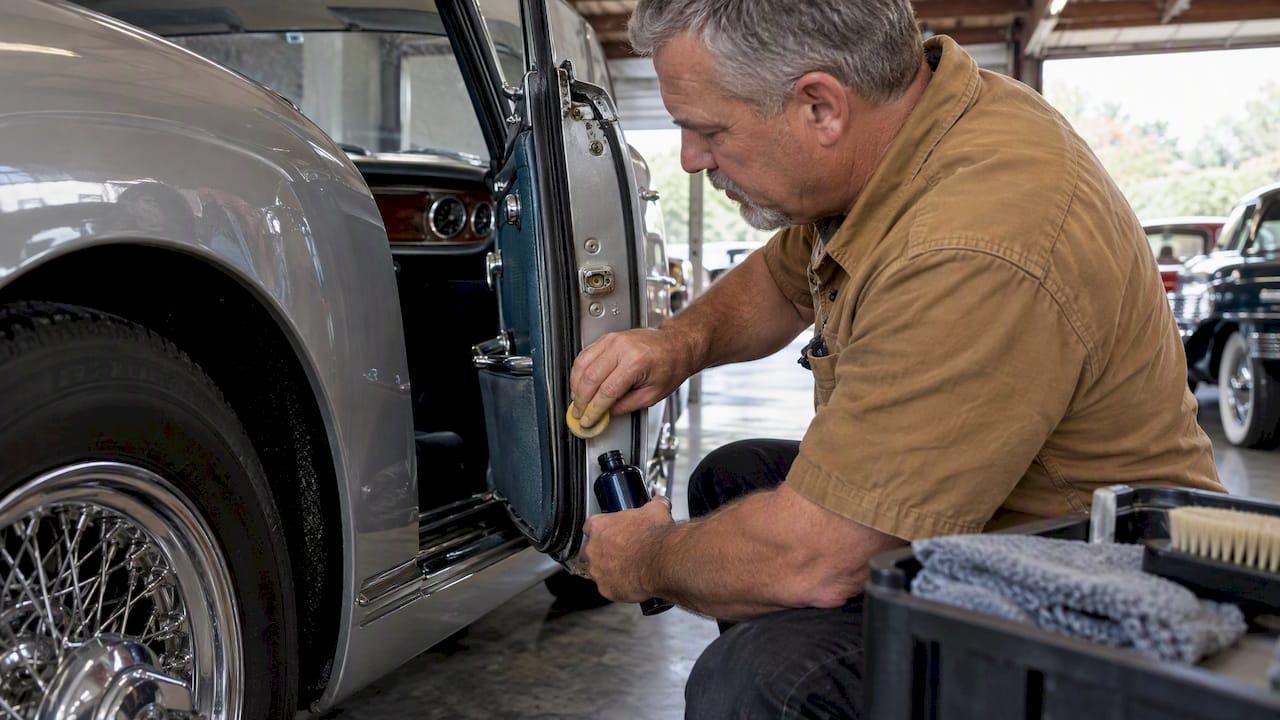
If you handle some of this yourself, careful masking helps. Some owners use vinyl and wrap application tools such as squeegees and magnets to hold edges and tape lines clear while they work around trim and seals.
Interior
The interior job depends on the materials. Dust first, then clean hard surfaces, seats, carpets, door panels and glass, using products suited to the material. Old vinyl and rubber can dry and crack when exposed to strong degreasers, so mild cleaners and gentle agitation are the rule. For leather specifically, our four-step leather seat cleaning guide explains why too much moisture and harsh products cause trouble. Steam is another case where caution matters: original upholstery, glue and old wiring can react poorly to heat and water, so read our notes on steam cleaning a car interior before trying it on a vintage cabin.
Engine bay and undercarriage
This is the part many owners skip. An engine bay on a classic is easier to clean than a modern one because there is less plastic and fewer sensitive electronics, but it still needs care: cover the ignition and carburetor or intake areas, use gentle cleaners, avoid high-pressure water, and dry thoroughly. Many detailers handle this early in a show-prep sequence, covered below.
How often should a classic car be detailed?
How often depends on how much the car is driven, where it lives and where it is stored.
| Situation | Typical rhythm |
|---|---|
| Driven regularly | Wash every couple of weeks at minimum; weekly in colder climates where road salt and sand are common |
| Driven regularly, interior | A thorough interior clean every three to six months |
| Regular street use, full deep clean | Roughly every three months, every six months at most |
| Garage-kept, rarely driven | Lighter, dry maintenance between a couple of full details a year |
The first three rows come from Hagerty. The last row is a practical judgment: a car that barely leaves the garage collects dust more than road grime, so a dry microfiber wipe-down between details often does more good than another wash. Cars exposed to strong sun need more frequent interior attention, and so do high-use vehicles.
What not to do to a classic car
Most classic detailing damage comes from a short list of mistakes.
- Automatic car washes. Even soft-touch systems can scratch vintage paint or damage emblems and trim, according to Hagerty. Hand wash instead.
- Harsh or the wrong soap. Choose a pH-neutral car soap made for the paint type. Citrus-based cleaners and strong degreasers are a bad idea on aged lacquer, vinyl and rubber.
- Leaving it wet. Water sitting in seams, door jambs and around chrome invites rust. Dry the car completely, including crevices, as soon as you finish washing.
- Dirty tools. One gritty mitt can put swirls across paint that cannot be replaced. Use clean microfiber, change towels often, and keep the two-bucket routine.
- Aggressive compounds and wet sanding. These remove paint, and original paint on a classic is finite. Leave them to a professional who will measure first.
- Solvent dressings on whitewalls. They can yellow the tire permanently.
- Hazardous chemical work. Strong acids, wheel cleaners, paint strippers and similar products carry real health and surface risks. If a job needs them, hire someone equipped to use them safely.
Other surface problems also call for caution rather than speed. Tree sap, for example, can etch paint if left alone, but scrubbing it off is how many owners make it worse. See safe sap removal for car paint. Overspray from nearby painting or construction follows the same rule: start with clay, not abrasives, as explained in our overspray removal guide.
Detailing a classic for a car show
Show prep reverses the usual order. For concours-level work, Hemmings describes starting with the chassis, then the engine bay and interior, and finishing with paint and chrome. The logic is simple: dirty work first, so overspray, drips and dust never land on a finished hood or polished trim.
A practical sequence looks like this:
- Inspect everything. Check paint, upholstery, engine components and wheel wells, and list what needs attention in priority order.
- Chassis and wheel wells. Clean and dress them while the car is still dirty.
- Engine bay. Degrease gently, protect sensitive parts, detail and dry.
- Interior. Vacuum, clean and condition materials, then glass last so there are no fingerprints.
- Paint. Wash, decontaminate, polish only if needed, then wax or seal.
- Chrome and trim. Polish brightwork, seal it and dress rubber.
- Final wipe at the show. Bring quick detailer and clean microfiber to remove dust and fingerprints after the drive.
If you plan to compete in a judged class, also gather service records, restoration paperwork and original documentation. Some shows weigh authenticity and historical accuracy, so a binder of papers on the passenger seat can matter as much as a mirror finish. Ask the show organizer how its classes are judged, since a preservation class rewards original condition and a restored class rewards finish.
Detailers working on show cars also tell you what not to “fix.” Honest patina, original paint with age, and unrestored interiors may score better than overdone work. That is another reason to talk through goals with a pro before they touch the car.
How much does it cost to detail an old car?
There is no single price, and be wary of anyone who quotes one without seeing the car. The best published figure we found is dated: a Classic Motorsports article from 2009 put professional detailing of a classic at roughly $1,500 to $3,500, based on an hourly schedule of 25 to 50 hours of labor. That describes a full, show-level detail, and today’s rates may be higher, so treat it as a sense of scale rather than a quote.
A routine maintenance detail on a driver costs far less. What moves the price:
- Condition. Neglected paint, heavy oxidation or a musty interior takes many more hours.
- Size. A long 1970s sedan takes more time than a roadster.
- Scope. Wash and wax, interior only, engine bay, correction, coating: each is a separate block of work.
- Paint type. Single-stage, lacquer and delicate repaints call for slower, more cautious methods.
- Travel and setup. A mobile detailer brings water, power and supplies to you, which some owners find saves the cost and risk of trailering a car.
For reference on pricing a single area, our interior car detailing price guide covers U.S. ranges and a buyer checklist. Those numbers are for typical vehicles, so expect a specialist classic job to be quoted individually.
Is it worth detailing an old car?
Yes, with a caveat: it is worth it when the work protects the car rather than just polishing it. Regular detailing keeps a fresh layer of wax between the paint and the elements, which helps prevent oxidation. It also puts someone’s eyes on every panel, seal and seam several times a year. Catching a bubble in the paint or a cracked door seal early is a cheap fix compared with metal repair.
It is less worth it when the goal is to make the car look new at any cost. Overpolished paint, over-restored interiors and heavy coatings over poor prep can all reduce a classic’s character and sometimes its value. A good detailer will tell you when to stop.
DIY or hire a mobile detailer?
Many owners happily handle regular washes, dry wipe-downs and a seasonal wax. A pro is the better call when:
- the paint needs correction, wet sanding or a ceramic coating;
- you are preparing for a judged show;
- the interior has mildew, odors or fragile original materials;
- the job involves hazardous chemicals;
- you do not have the space, shade or water supply to do it right.
Mobile detailing suits classics well. The car stays in your garage or driveway, so you avoid transport and extra handling, and you can watch the process and talk to the person doing it. Ask for the work to be done out of direct sun, since hot panels dry products too quickly and cause spotting.
Questions to ask before you book
- Have you worked on cars this age and with this paint type? Can I see photos?
- How do you test before polishing, and how do you measure paint?
- Which products will you use on the leather, vinyl, rubber and chrome?
- Do you hand wash only, and do you use the two-bucket method?
- Are you insured for work on my vehicle?
- What is included, and how will you quote extra work found along the way?
A confident specialist answers these easily. Vague answers or a flat low price for “any car” are a reason to keep looking.
Find a classic car detailer near you
MobileDetailing.io is a nationwide directory where you search by location, compare local mobile detailing businesses and request quotes, and it is free for vehicle owners. You can browse interior, exterior and full service detailing, ceramic coating and more by city, read each business’s profile and photos, then send the details of your car through the local quote form. When you write the request, give the year, make and model, paint type if you know it, current condition, and whether you are heading to a show. Say plainly that it is a classic, and ask whether the detailer has experience with older finishes.
Listings vary by market, so read each profile for the services offered. To see how profiles look, you can browse examples like Art Car Detailing Services in San Francisco, Paint Protection Concepts in Concord or Meticulous Wash in Irvine. Confirm directly with any business that it handles classic and collector vehicles before you book.

FAQ
How do I detail a classic car at home?
Wash by hand in the shade with the two-bucket method and a microfiber or sheepskin mitt, and skip automatic washes. Use pH-neutral soap and products made for older paint, leather, vinyl and rubber, then dry the car completely. Leave polishing machines, coatings and any wet sanding to a professional.
How often should a classic car be detailed?
For a classic driven regularly, Hagerty suggests washing every couple of weeks at minimum, weekly where road salt is common, with a thorough interior clean every three to six months. A full deep clean roughly every three months, and every six at most, suits a car with regular street time. Garage-kept cars can go longer between full details.
What should I avoid when detailing a classic car?
Avoid automatic car washes, citrus-based or harsh cleaners, strong degreasers on vinyl and rubber, solvent-based dressings on whitewalls, and aggressive compounds. Do not leave water sitting on the car. If a job needs strong chemicals or removes paint, hire a professional.
How much does classic car detailing cost?
A 2009 Classic Motorsports article put professional detailing of a classic at about $1,500 to $3,500, based on 25 to 50 hours of labor. That is a show-level figure and current rates may be higher. Routine maintenance details cost less, and a detailer should quote after seeing the car.
How do I get my classic ready for a car show?
Work from the dirtiest area to the cleanest: chassis, engine bay, interior, then paint and chrome. Inspect first, and bring service records or restoration paperwork if the show judges authenticity. Pack quick detailer and clean microfiber for a final wipe-down on site.
Sources
- Classic Car Detailing: Everything You Need to Know, Hagerty
- How to Detail a Collector Car to a Show-Winning Luster, Hemmings
- The Devil’s in the Details: How to Detail Like a Pro, Classic Motorsports
- Vinyl and wrap application tools
Recommended
- Find Vetted Exterior Car Detailing Pros in 10 Minutes for U.S. Owners
- Exotic Car Detailing: What to Ask Before You Hire
- Detail Your Car 2–4 Times a Year: Schedules by Driver Type
- Skip the Drive: Mobile Detailing for U.S. Cars, $75–$400, 1.5–4h
MobileDetailing.io provides general educational information. Products, surfaces and vehicle finishes vary. Follow manufacturer instructions and consult a qualified detailing professional before using abrasive processes or chemical treatments.