Iron Removal for Car Paint: How It Works and When to Use It
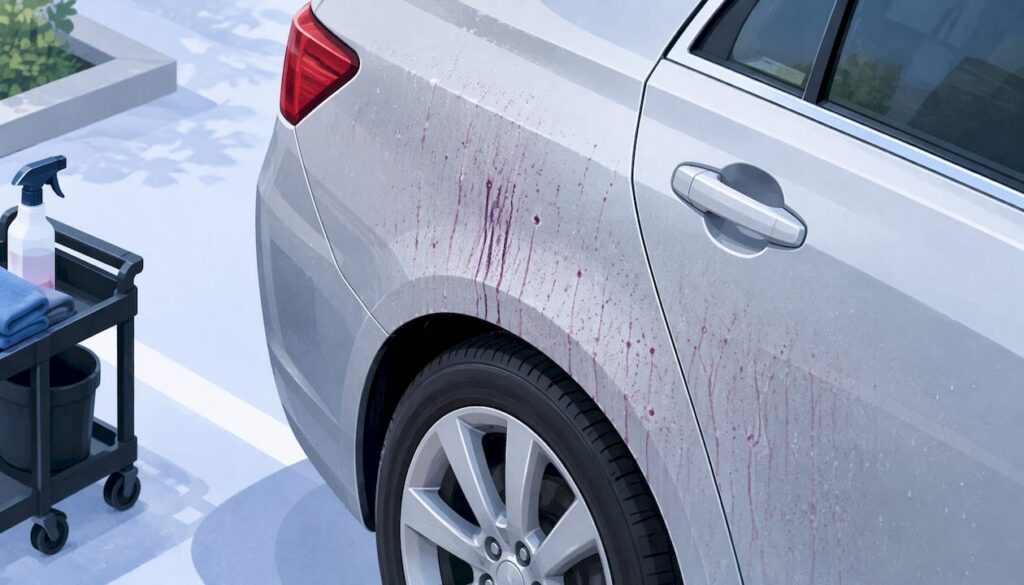
Iron removal for car paint is a chemical step: you spray a thiol-based iron remover on clean paint, let it dwell without drying, watch it turn purple where it reacts with embedded iron particles, and rinse it off. It goes before a clay bar, not instead of one. The two do different jobs, and a full decontamination wash uses both, with the iron remover first.
Below you’ll find where the iron on your paint comes from, how to check for it, a step-by-step method, how it compares with clay, and when it makes sense to hand the job to a professional mobile detailer.
Table of Contents
- Where iron on your paint comes from
- How to tell if your paint has iron contamination
- What an iron remover actually does
- Iron remover vs. clay bar
- What a decontamination wash includes
- How to use iron remover on car paint, step by step
- Why it matters before a ceramic coating
- Safety notes
- What to do when iron removal is not the problem
- When to hire a mobile detailer
- Common mistakes to avoid
- FAQ
- Sources
Where iron on your paint comes from
Most of it comes from your own brakes and everyone else’s. Brake pads and rotors shed fine metallic particles when they rub together. EuroLuxe Detailing explains that these particles are superheated, and when they land on paint they partly embed, cool and oxidize. Over time they can wedge into the clear coat and leave tiny pits around themselves.
Brakes are not the only source. Industrial fallout and rail dust do the same thing. Auto Laundry News describes rail dust as ferrous oxide particles thrown off where steel train wheels grind against iron rails. Cars that sit near rail lines, factories or busy highways collect more of it. Cars that travel by rail car on the way to a dealership can pick it up before the first owner ever drives them.
A few things follow from this:
- The lower half of the car, behind the wheels and around the wheel arches, usually collects the most.
- Washing alone does not remove it. A wash lifts loose dirt, but embedded particles are bonded to the surface.
- A brand-new car is not automatically clean. Transport can leave fallout on it.
How to tell if your paint has iron contamination
You can check in about ten minutes after a wash, and you do not need any product to do it.
Look for specks
On light paint, iron often shows up as scattered orange, brown or rust-colored pinpoints. On white vehicles, Auto Laundry News notes there can be a brown ring around a particle, less than 1/32 of an inch across, while on darker vehicles the ring may look iridescent. Hold a bright flashlight at a low angle to the panel. Tiny points that stand out against the paint are the usual sign.
Feel the surface
Dark paint hides iron well, so touch matters more than sight. Wash and dry the car, put your hand inside a thin plastic sandwich bag, and glide your fingertips lightly over the hood or roof. The bag exaggerates texture. Smooth, glassy paint means little is bonded to it. A gritty, sandy feel means something is stuck in or on the paint.
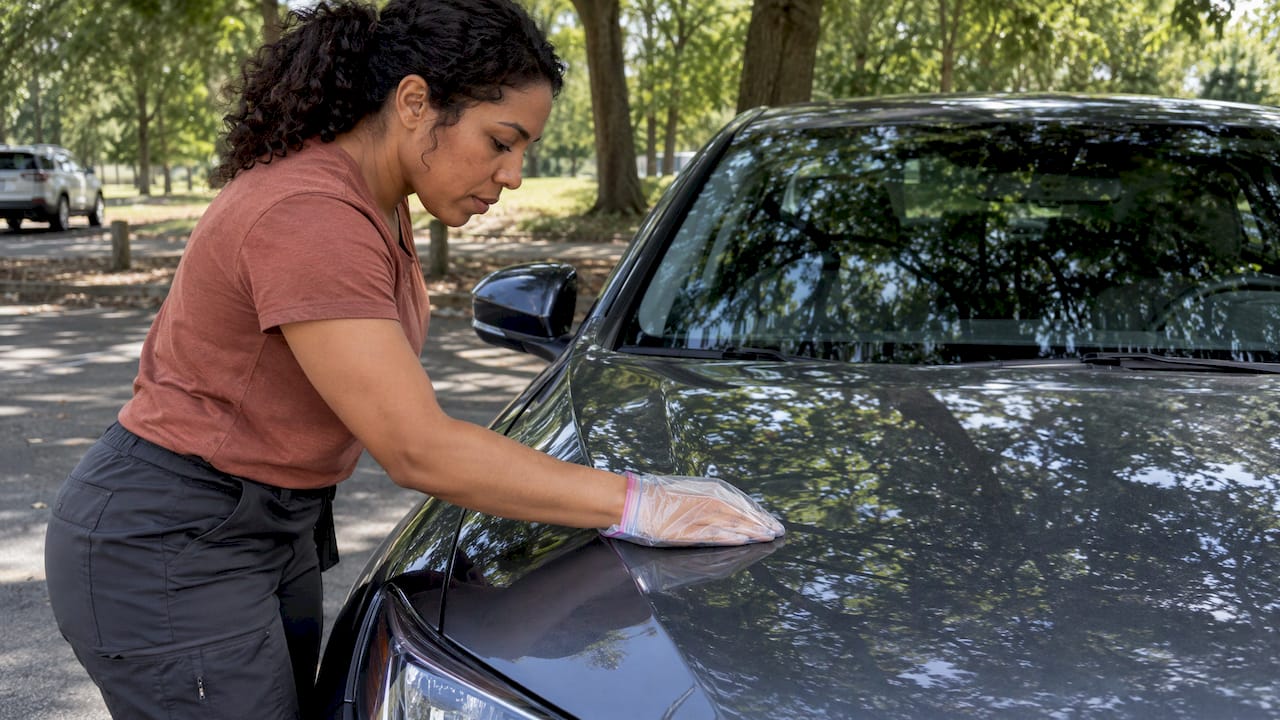
This test cannot tell you what the particles are. Iron is one possibility. Tar, sap, overspray and industrial grit feel similar, which is why the order of steps below matters.
What an iron remover actually does
An iron remover is a pH-balanced chemical, sprayed on a clean panel. Its active ingredient is typically ammonium thioglycolate or a similar compound. According to EuroLuxe Detailing, it reacts with oxidized iron and converts it to a water-soluble compound that rinses away. As that happens, the liquid turns purple or dark red.
Adam’s Polishes, a product maker, describes the same chemistry: the thioglycolate targets ferrous deposits embedded in the paint, and you see the dots turn reddish-purple as it works them out of the clear coat. That is the manufacturer’s explanation of its own product, so read it as how the product is designed to work, not as independent lab proof.
Two practical points about the color change:
- Purple is a sign of reaction, not a score. A guide from Mile Deep says a dramatic color shift can indicate iron contamination, but the amount of color is not a precise measure of how clean the surface is. Do not keep respraying until the purple stops.
- No color is not a failure. If nothing turns purple, the car may simply have been decontaminated recently or may not have much iron on it.
The smell is normal too. These products are sulfur-based and often smell like rotten eggs. Detailed Image says manufacturers have improved the odor over time, but it can still be strong. That is a reason to work outdoors or in a space with good airflow.
Iron remover vs. clay bar
The short answer: they remove different things, and they work best in sequence.
| Iron remover | Clay bar | |
|---|---|---|
| How it works | Chemical reaction that dissolves iron particles | Mechanical: glides over lubricated paint and pulls off what sticks up |
| Best at | Brake dust, rail dust, industrial iron fallout | Tar, sap, overspray, bonded grit |
| Touches the paint | Spray and rinse, no rubbing | Yes, with lubricant, section by section |
| Risk if misused | Drying on the panel, contact with sensitive trim | Marring if the paint is dirty or the lube runs out |
| Typical order | First | Second |
Pad & Polish, a paint-prep supplier, makes the point that the two are not competing products. Using only one leaves a category of contamination behind, and using clay first makes it drag particles it cannot dissolve across the paint.
Detailed Image adds that a clay bar may remove some iron, but not reliably on its own. Depending on how bad the contamination is, some iron can stay behind, and clay alone on heavy iron can cause more micro-scratching.
If you want to see how the clay half of the job goes, our guide to clay bar treatment and test-spot steps walks through it. If what you’re fighting is paint overspray rather than iron, start with clay-first overspray removal instead.
What a decontamination wash includes
A decontamination wash is a wash plus the steps that remove what washing leaves behind. The usual order, as laid out by Pad & Polish for a car heading toward polish, wax or a coating, is:
- Wash with a pH-neutral shampoo and rinse thoroughly.
- Apply iron remover to the paint and wheels, let it dwell without drying, then rinse.
- Use tar remover on visible tar spots only.
- Clay with generous lubrication, in small sections, checking the clay as you go.
- Rinse and dry, then wipe the panels down if a coating is going on.
The wash comes first for a reason. Mile Deep’s guide stresses never claying a dirty vehicle, and recommends a proper pre-wash and a careful two-bucket contact wash before any decontamination.
After decontamination, the paint is bare. Seal it with wax, a sealant or a ceramic coating so it is protected again.
How to use iron remover on car paint, step by step
This is the general method. Always follow the label on your specific product, because dwell times and application instructions differ.
Before you start
- Pick a cool day and a shaded spot. Never apply iron remover in direct sun or on a hot panel.
- Wear nitrile gloves and eye protection, especially on wheels where spray can bounce back.
- Make sure you have airflow. The smell is strong.
- Check the label before using it on wheels with special finishes, and keep it off brightwork and unsealed trim.
The steps
- Wash and rinse the car. You want the surface free of loose dirt so the product reaches the embedded particles.
- Work in sections. Gyeon’s guidance for its own iron product is to mist two or three panels at a time, not the whole car. Smaller sections make it easier to keep the product from drying.
- Spray an even mist. You do not need to flood the panel.
- Let it dwell. Times vary by product. Gyeon says about a minute for its product; another maker’s label, as relayed by Testarossa Motors, says 3 to 5 minutes. Use whatever your label says, and never let it dry.
- Watch for color. Purple or red streaks running down the panel mean the product is reacting.
- Rinse thoroughly. Rinse every panel, plus door jambs, mirrors and wheel faces, before moving on.
- Go to the clay step. Then rinse, dry and protect.
Wet or dry panel?
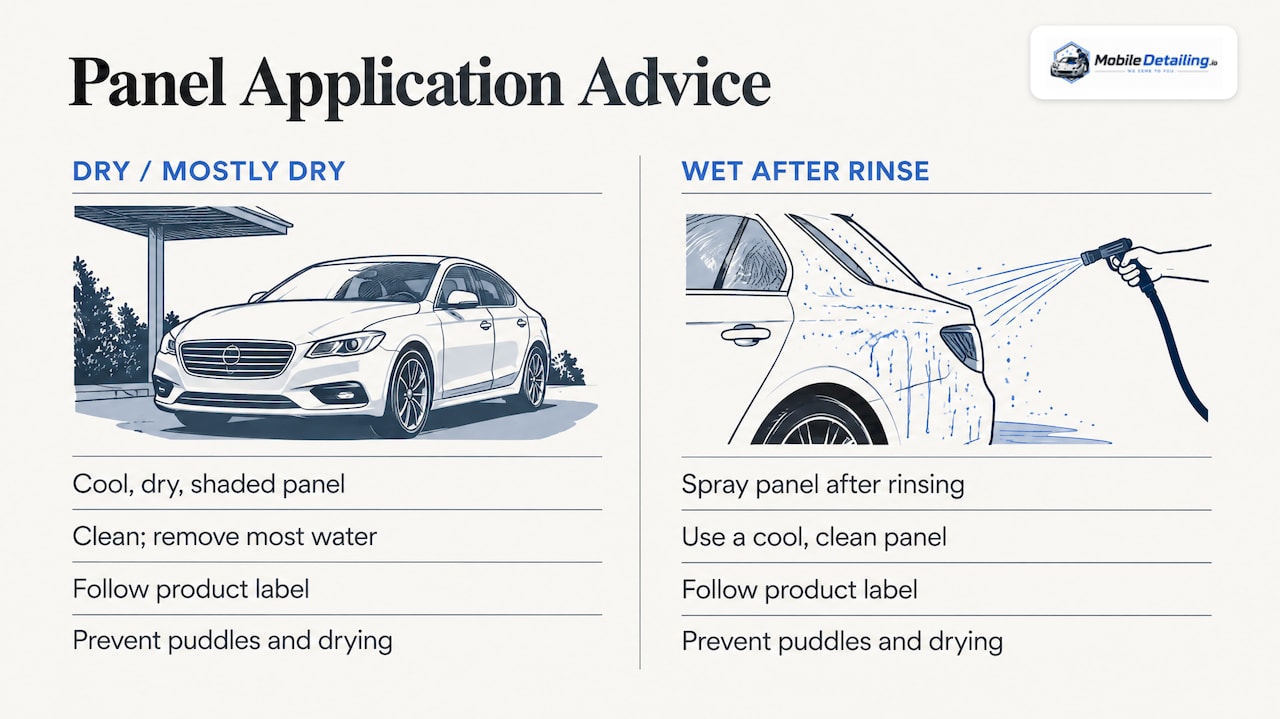
The advice is not uniform, so follow your product’s label. Gyeon recommends applying its iron remover to a cool, dry surface out of direct sunlight. Adam’s Polishes says its product works best on a clean panel with most of the water removed, because heavy water or soap can dilute the chemical. Other guides spray onto wet panels right after the rinse. The common ground is: cool panel, clean surface, no puddles running off, and never allowed to dry.
How often
Gyeon suggests working iron remover into your wash routine every 6 to 12 months, depending on climate and driving habits. Drivers who park near rail lines or rack up a lot of highway miles may want the shorter end. Beyond that schedule, do it before any polish or coating.
Why it matters before a ceramic coating
This is the case where skipping iron removal costs the most. Pad & Polish warns that wax, sealant or a coating applied over embedded iron seals it in, so the iron can keep rusting under the film. The result it describes is early, uneven failure of whatever went on top. A coating bonds to the paint, so anything left underneath stays there.
That is why decontamination is a standard part of coating prep, and why coating, paint correction and wet sanding are jobs best left to a professional. They involve judgment about how much clear coat you have, which products are compatible, and how to avoid sealing in problems. If you already have a coating, don’t assume an iron remover is always the right move. Check with the installer first, and see our ceramic coating maintenance steps for how to keep one in good shape.
Safety notes
Iron removers are chemicals, so treat them as such.
- Keep it off your skin and out of your eyes. Wear nitrile gloves and eye protection.
- Rinse well and do not let it dry on paint, wheels or trim.
- Keep it away from brightwork and unsealed trim.
- Store the bottle tightly closed and away from children and pets, following the label.
- If product gets in your eyes or you feel unwell from the fumes, follow the first-aid directions on the label and contact poison control or a doctor.
If you are dealing with hazardous chemical work beyond a consumer-grade spray, such as acid-based wheel cleaners or heavy industrial fallout, bring in a professional.
What to do when iron removal is not the problem
Gritty paint is not always iron. Some other common culprits have their own fixes:
- Tree sap needs a dedicated approach. See our guide to safe sap removal before it etches.
- Water spots are mineral deposits, not iron. Our page on diagnosing water spots first explains how to tell what you have.
- Overspray is paint or coating mist that clay generally handles better than a chemical iron remover.
If the paint still feels rough after an iron remover and a careful clay pass, the surface may have etching or damage that only paint correction can address. That is professional work.
When to hire a mobile detailer
A DIY iron decontamination is manageable for many owners with a hose, a shady driveway and a free afternoon. It makes sense to hire a pro when:
- You plan a ceramic coating or paint correction, since decontamination is the foundation of both.
- The car is dark and you can’t tell what is on the paint.
- You do not have shade, a hose or space to work, as in an apartment complex or office parking lot.
- The vehicle is a boat, RV or aircraft, where surface and chemical compatibility vary.
- You would rather not handle sulfur-smelling chemicals.
A mobile detailer comes to your home or workplace, so you do not have to drop the car off. On MobileDetailing.io you can search detailers by location, compare their services and send a quote request. Using the directory is free for vehicle owners. If you’re in a big metro, our pages for exterior detailing in Atlanta and exterior detailing in Boston are a good place to start. Or request a local quote directly and describe what you want done.
When you contact a detailer, mention what you’re after. “Iron decontamination and clay before a ceramic coating” is a clearer request than “a wash,” and it helps the detailer give you an accurate quote. Ask what is included, whether the car needs to be in shade, and whether they have water and power access or need yours. You can browse all detailing categories from the MobileDetailing.io homepage.
Common mistakes to avoid
- Skipping the wash. Product on top of road film works poorly and clay on a dirty car can mar paint.
- Letting it dry. On a warm panel, many products flash quickly. Work in small sections and rinse promptly.
- Spraying it everywhere without reading the label. Wheel finishes, trim and brightwork can react differently.
- Using clay first. Auto Laundry News says most technicians default to clay for iron oxide, but a portion of a particle can stay embedded. The Track Ahead, a personal detailing blog, notes that iron picked up by clay can clog it faster and raise the chance of scratching. Chemical first is the safer order.
- Forgetting to protect afterward. Bare paint needs wax, sealant or a coating.
- Treating the purple as a result to chase. It confirms a reaction. It does not measure how clean the paint is.
FAQ
Does iron remover go on a wet or dry car?
It depends on the product, so follow the label. Gyeon recommends a cool, dry surface, while Adam’s Polishes says to remove most of the water first because heavy water can dilute the product. Either way, the paint should be washed, cool and out of direct sun, and the product should never dry on the panel.
Can I use iron remover instead of a clay bar?
Not for a full decontamination. Iron remover dissolves iron chemically, while clay pulls off other bonded material such as tar, sap and overspray. Use the iron remover first, rinse, then clay, then protect the paint.
How often should I use iron remover?
Gyeon suggests every 6 to 12 months, depending on your climate and driving habits. Also use it before any polish, wax, sealant or ceramic coating, so you do not seal contamination under the protection.
Is iron remover safe for car paint?
Products made for automotive paint are designed to be used on it when applied according to the label. Gyeon says its product is pH-neutral after reacting, which it describes as safe for almost all exterior finishes. Work in shade on cool panels, rinse thoroughly and keep it off unsealed trim. Wear nitrile gloves and eye protection.
Why does iron remover smell like rotten eggs?
The active ingredient is sulfur-based, so the smell is normal. Detailed Image says it is common across these products. Work with good airflow and rinse promptly.
Sources
- Iron fallout and brake dust: what they do to your paint (EuroLuxe Detailing)
- Paint Correction and Protection, Part I (Auto Laundry News)
- How To Remove Paint Overspray, Tree Sap, Road Tar and Iron Contamination (Adam’s Polishes)
- Ask DI: How Do I Remove Iron Deposits? (Detailed Image)
- Decontamination: Part 2, Why Iron Removers? (Detailed Image)
- Iron Remover vs Clay Bar: Which Does Your Car Need? (Pad & Polish)
- The GYEON Guide to Q²M Iron (Gyeon Quartz USA)
Recommended
- Stop Before You Strip Clear Coat: Clay First Car Overspray Removal
- Fix Sap Before It Etches: Safe Sap Removal for U.S. Car Paint
- Finish Clay Bar Treatment in 45–120 Minutes: Safe Test Spot Steps for DIYers
- Car Owners: Diagnose Water Spots First, Try a 30–60s Vinegar Fix
MobileDetailing.io provides general educational information. Products, surfaces and vehicle finishes vary. Follow manufacturer instructions and consult a qualified detailing professional before using abrasive processes or chemical treatments.