Two-Step Paint Correction: What It Is, Costs and Time
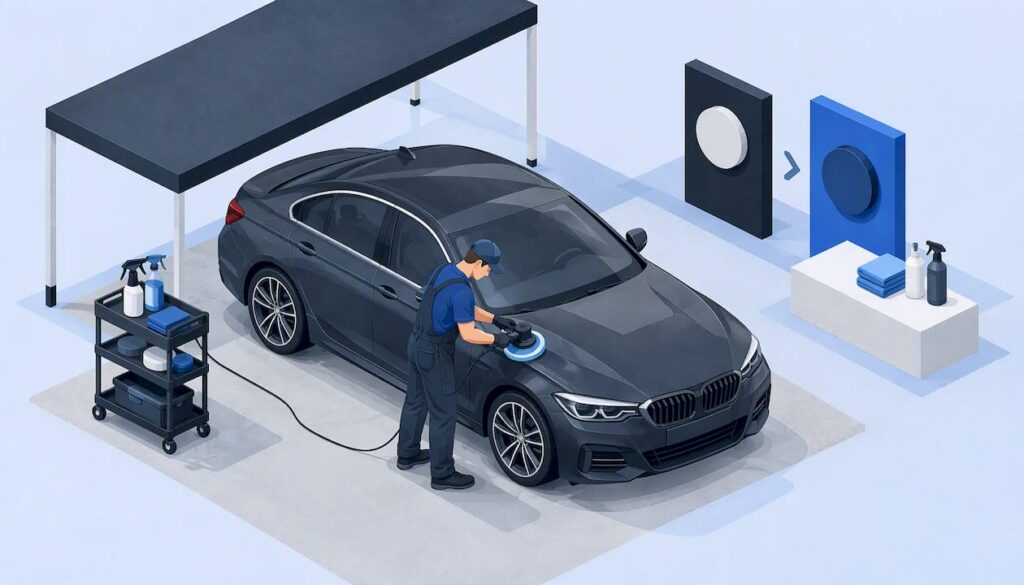
Two-step paint correction is a professional polishing job in two stages. The first stage uses a cutting compound to level out swirl marks and light to moderate scratches. The second uses a finer polish to remove the haze the compound leaves behind and bring back gloss. It suits paint with visible defects that a single pass will not clear, and it usually takes a full day or more of skilled labor. Prices often start around $1,200 and climb with vehicle size and paint condition.
This guide explains what happens at each stage, what the process can and cannot fix, how it differs from one-step and three-step work, and what to ask before you book a detailer to do it at your home or office.
Table of Contents
- What two-step paint correction does
- How the two stages work
- Two-step vs. one-step vs. three-step
- How long it takes
- What it costs in the U.S.
- Risks and limits to understand
- Protecting the finish afterward
- Choosing a mobile detailer for correction
- Find a detailer near you
- Frequently asked questions
- Sources
What two-step paint correction does
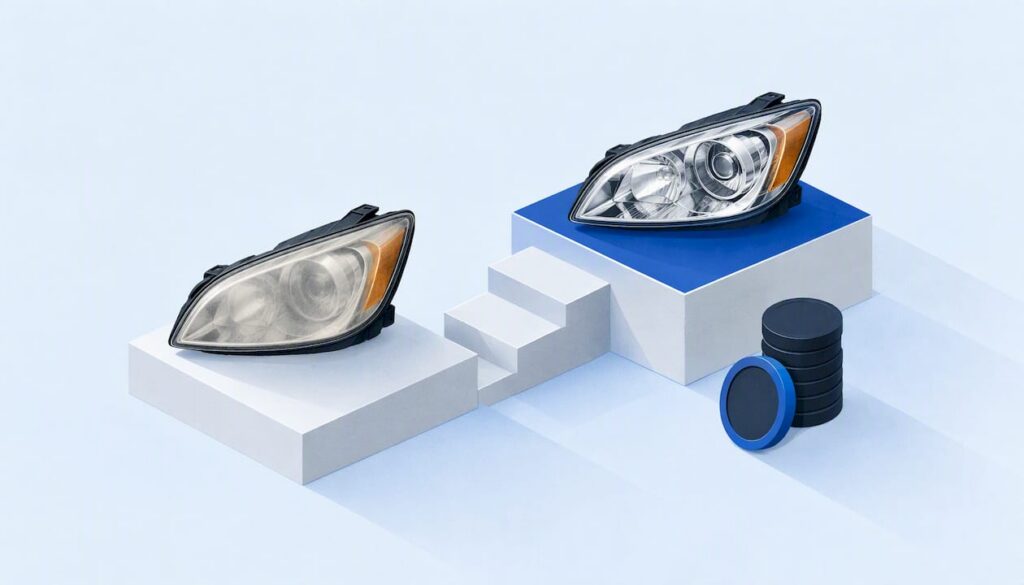
Paint correction removes a thin layer of clear coat so the surface becomes flat again. Swirl marks, wash marring and light scratches are tiny grooves in that clear coat. Light bounces off the edges of the grooves in every direction, and the paint looks dull or hazy in sunlight. Cut the surface down to the bottom of the groove and the groove is gone.
XPEL’s guide to the process describes paint correction as polishing away surface imperfections to restore the finish. It lists swirl marks, sun damage, light scratches, clear-coat haze and etching from acid rain, bugs and bird droppings among the defects it can address.
Two-step work splits the job into a cutting stage and a refining stage. One detailing company’s guide says it typically removes 80 to 95 percent of defects, including moderate to heavy swirls, visible wash marring, light to moderate scratches and water-spot etching. Treat that as a company estimate, not a guarantee. Results depend on your paint, and an honest detailer will tell you what is realistic after looking at the car.

What it cannot fix
Correction works only on the clear coat. A scratch you can catch with a fingernail has often gone through the clear coat into the color coat or primer. Polishing will soften its edges but will not erase it. Chips, peeling clear coat and rock damage need touch-up or a body shop.
Some scratches are also too deep to remove safely, or the clear coat is already thin. One mobile detailer says it takes paint measurements and judges what can be removed without compromising the paint. The same page frames safe correction as a compromise between defect removal and preserving the clear coat. The goal is a big visible improvement, not a flawless surface at any cost.
How the two stages work
The two steps are only part of the job. Most of the quality comes from what happens before and between them.
Washing and decontamination
A correction starts with a thorough wash and decontamination. CCPS Detail’s process guide calls for washing, chemical decontamination and mechanical decontamination before any polishing. Bonded contamination, such as industrial fallout and embedded grit, can otherwise be dragged across the clear coat and grind into it. In practice that means an iron remover, then a clay bar or clay mitt.
The test spot
Good detailers do not start on the hood with a random pad. They pick a small area, try a pad and compound, and check the result. Veros describes this step as verifying the best pad and compound for that paint. Paint hardness varies by manufacturer and even by panel, especially on repainted cars. If the test spot does not clear the defects, the detailer moves to a more aggressive combination. If it clears them easily, a gentler one may be enough.
Step one: compounding
The first stage uses a cutting compound and a firmer pad on a rotary or dual-action polisher. CCPS Detail describes working small sections, then wiping and inspecting each one before moving on. The abrasive does the heavy lifting here, and it can leave haziness or light marring. The paint often looks cleaner but a little cloudy at this point. That is normal.
One experienced detailer notes that the two-step process is not one-size-fits-all. It can be tailored by spending more time on the cutting stage for harder or more damaged paint.
Step two: finishing polish
The second stage switches to a finer polish and a softer foam pad. XPEL says this stage refines the paint and removes marring or holograms left by the first. Holograms are faint swirl-like trails that show up in direct light after aggressive cutting. This is the stage that creates the depth and gloss you see in photos.
Inspection and protection
After polishing, a detailer wipes the panels down to remove polishing oils and inspects them under strong lighting. Polishing oils can temporarily fill fine defects and make the result look better than it is. A panel-wipe step reveals what is really there. Then the paint needs protection, covered below.
Two-step vs. one-step vs. three-step
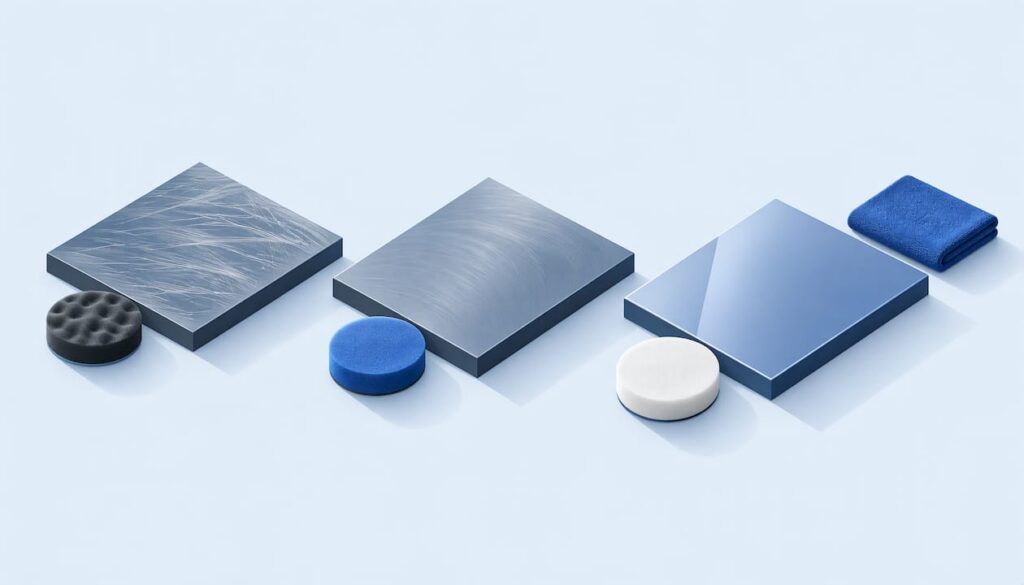
The terms describe how many compound-and-pad passes the detailer plans, not a standardized grade. One company’s guide describes it this way: one-step uses one combination, two-step uses a cutting compound then a finishing polish, and three-step adds an intermediate stage before the final polish.
| One-step | Two-step | Three-step | |
|---|---|---|---|
| What happens | One pass that cleans up light defects and adds gloss | Cutting stage, then finishing stage | Heavy cut, medium refinement, final finish |
| Best for | Newer or well-kept paint with light swirls | Visible swirls, wash marring, light to moderate scratches | Neglected paint with deeper defects, or show-level goals |
| Clear coat removed | Least | Moderate | Most |
| Time and cost | Lowest | Middle | Highest |
Don’t treat the number of steps as a measure of quality. XPEL’s view is that the stages should be chosen by the actual condition of the paint, and that modern products have streamlined the old three-stage rule. A detailer who recommends three steps for a three-year-old daily driver should be able to show you why. A detailer who recommends one step for a car with deep marring should be able to explain what you will still see afterward.
If your paint is in decent shape, start by reading about whether a one-step correction works on a daily driver. A test spot answers that question cheaply.
Which one fits your car
- Dark paint, a few years old, regular automatic car washes: two-step is a common recommendation, because dark colors show swirls clearly and automatic washes cause them.
- New car with dealer-installed marring: one-step is often enough.
- Older car, sun-faded or heavily scratched: two-step or more, after a paint-thickness measurement.
- Car you plan to ceramic coat: correction first, and the level depends on how much perfection you want sealed in.
How long it takes
Expect a long day or two. One detailing company puts a two-step correction at 8 to 12 hours for a standard sedan, often spread over two working days. Time rises with:
- Vehicle size. A full-size SUV or truck has far more surface than a coupe.
- Paint hardness. Hard paint resists the cut and needs more passes.
- Defect depth. Heavier damage means more time on the first stage.
- Prep needs. Heavy contamination, tar or overspray adds decontamination time.
- Your finish standard. Chasing the last 5 percent of defects takes disproportionate time.
Mobile detailing adds a practical note: the detailer needs a shaded or covered spot, power access and enough room to work around the car. Polishing in direct sun or wind makes the product dry unevenly and the results harder to judge. If you live in an apartment without covered parking, ask the detailer how they handle it before you book.
What it costs in the U.S.
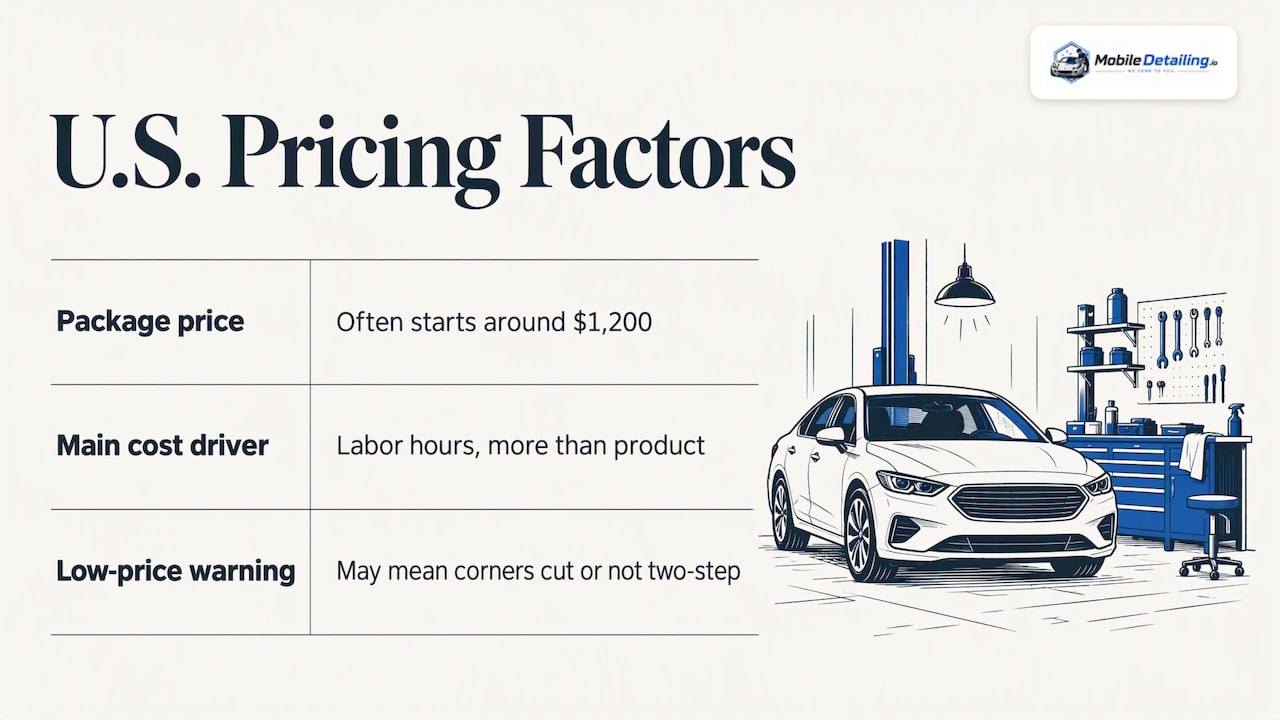
Prices vary by region, vehicle size and shop. One detailing company says comprehensive two-step packages often start around $1,200, depending on vehicle size. Treat that as a starting reference rather than a quote. Larger vehicles, heavily damaged paint and exotic or soft-paint cars cost more, and some markets run lower.
Two-step pricing usually reflects labor hours more than product. When a quote looks far below the market, ask how many hours are planned. A 10-hour job at a very low price probably means either corners are cut or the work is not really two-step.
For a wider look at how pricing works across levels, see our guide to what paint correction costs U.S. owners and the questions to ask. If you are a detailer working out your own rates, pricing detailing services covers the logic.
Risks and limits to understand
Polishing removes clear coat. It is a finite resource, typically a small fraction of the paint’s total thickness, and you cannot add it back without repainting. That is why the measuring step matters. A detailer uses a paint thickness gauge to find thin spots, edges and previously repainted panels, then decides how aggressive to be.
Pay attention to these risks:
- Edges and body lines. Paint is thinnest on creases and edges. Careless polishing can burn through there.
- Repainted panels. Aftermarket paint may be thinner or softer, or cured differently from the factory finish.
- Overpromising. Be skeptical of anyone who guarantees 100 percent removal of every scratch.
- Trapped defects. If you plan to coat the car, defects left in place get sealed under the coating. XPEL explains correction is commonly done first because blemishes can otherwise remain highlighted under a clear coating.
Leave this work to a professional. Aggressive machine polishing, wet sanding and chemical decontamination products all carry a risk of permanent paint damage or personal injury if done wrong. Even detailing hobbyists advise gloves, earplugs and a particle mask for polishing. If your car has deep scratches or you are tempted to wet sand a defect, get a professional’s assessment first.
Protecting the finish afterward
Freshly corrected paint is bare clear coat. Unprotected, it is vulnerable, and one local detailer notes swirl marks can return within weeks of normal driving and washing. The usual advice is a professional-grade ceramic coating or at least a quality paint sealant.
A coating does not make paint scratch-proof. Manufacturers’ marketing about hardness and longevity is not independent evidence, so ask a detailer what they actually apply and what maintenance it needs. If you want to understand your options, our pages on matte paint and ceramic coating and removing a ceramic coating safely cover two situations where the wrong product or process causes trouble.
Whatever you choose, how you wash matters more than anything:
- Use the two-bucket method with a clean wash mitt.
- Skip automatic brush washes.
- Dry with a clean microfiber towel or filtered air.
- Never wipe a dusty car with a dry cloth.
If you want to understand what causes the damage in the first place, this guide on how to remove swirl marks from paint covers the defects a two-step correction is designed to address.
Choosing a mobile detailer for correction
Correction is skill-heavy, so how you vet the detailer matters more than the label on the package. Ask these questions:
- Do you measure paint thickness before starting? The answer should be yes.
- Will you do a test spot? This shows what level the car actually needs.
- How many hours are planned? Compare against the ranges above.
- What defects will remain? A good answer is specific to your paint.
- What do you apply afterward, and what is the care routine?
- Do you carry insurance? Ask for proof. Don’t assume.
- Where will you work? Confirm shade, power and water needs.
Look at before-and-after photos taken under direct light on cars similar to yours, and read recent reviews that mention correction specifically. Listings on MobileDetailing.io show services, photos and reviews, which makes a first comparison easier. For example, you can look at VIP Auto Detailing in Cary, NC or Supreme Shine Auto in Anaheim, CA, both of which list paint correction and ceramic coating. Always confirm services and availability with the business directly.
Find a detailer near you
MobileDetailing.io is a free directory for vehicle owners. You search by location, compare businesses offering exterior detailing, paint correction, ceramic coating and more, and send a quote request. You do not pay MobileDetailing.io to use it. Start on the MobileDetailing.io homepage or go straight to a local quote request. Describe your vehicle, paint color and the defects you see, and mention that you want a two-step correction with a test spot first.
Frequently asked questions
What is the difference between two-step and three-step paint correction?
Two-step uses a cutting stage and a finishing stage. Three-step adds an intermediate stage, so the paint is cut, refined and then finished. The extra stage helps on heavily neglected paint or when the goal is show-level results. It also removes more clear coat and costs more, so it should be justified by the paint’s condition.
How long should a two-step paint correction take?
One detailing company estimates 8 to 12 hours for a standard sedan, often over two days. Larger vehicles, hard paint and deep defects take longer. A very short timeline for a full vehicle is worth questioning.
Does two-step paint correction remove all scratches?
No. It can remove light to moderate scratches, but deep ones that reach the color coat or primer will only be softened. A detailer should measure the paint and tell you what is safe to remove before work begins.
How much should I pay for two-step paint correction?
One company says packages often start around $1,200, depending on vehicle size. Your quote will vary by region, vehicle and paint condition. Get two or three written quotes that state the planned stages and hours.
Sources
- 1-Step vs. 2-Step vs. 3-Step Paint Correction Explained
- Paint Correction 101: Understanding the Process & Ceramic Coating (XPEL)
- Building a two-step correction from compounds to finishing (CCPS Detail)
- How to Paint Correct Your Car: Step-by-Step Guide (Veros)
- Ultimate Guide to Two-Step Paint Correction
- 1-step, 2-step: The Various Types of Polishing Processes
- True Paint Correction Service (Unique Werks)
- Paint Correction (How To Auto Detail)
- Paint Correction Cost in Las Vegas: 2026 Pricing
Recommended
- Save Your Clearcoat: Pro Motorcycle Paint Correction Workflow
- Daily Drivers: Test Spot to See If One Step Paint Correction Works
- $500–$2,500+: Paint Correction Cost U.S. Owners Pay and What to Ask
MobileDetailing.io provides general educational information. Products, surfaces and vehicle finishes vary. Follow manufacturer instructions and consult a qualified detailing professional before using abrasive processes or chemical treatments.